
In short, yes. While manufacturers often state that the labeled size of a Wellington boot does not change, the thickness of the internal lining absolutely affects the fit. A thicker lining, such as neoprene, will reduce the internal volume of the boot, making it feel tighter and potentially requiring you to adjust your sizing choice.
The core principle to understand is the difference between a boot's official size and its functional fit. The labeled size is a constant measurement, but the lining material directly impacts the available space inside, creating a snugger or looser feel for your foot.
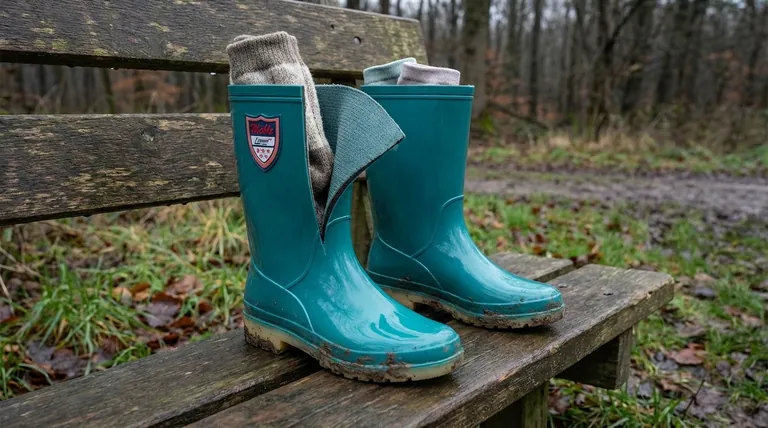
How Linings Influence Fit, Not Size
To make an informed decision, it's crucial to grasp why there appears to be conflicting advice on this topic. The confusion arises from the difference between how a boot is made and how it feels on your foot.
The Manufacturer's Perspective
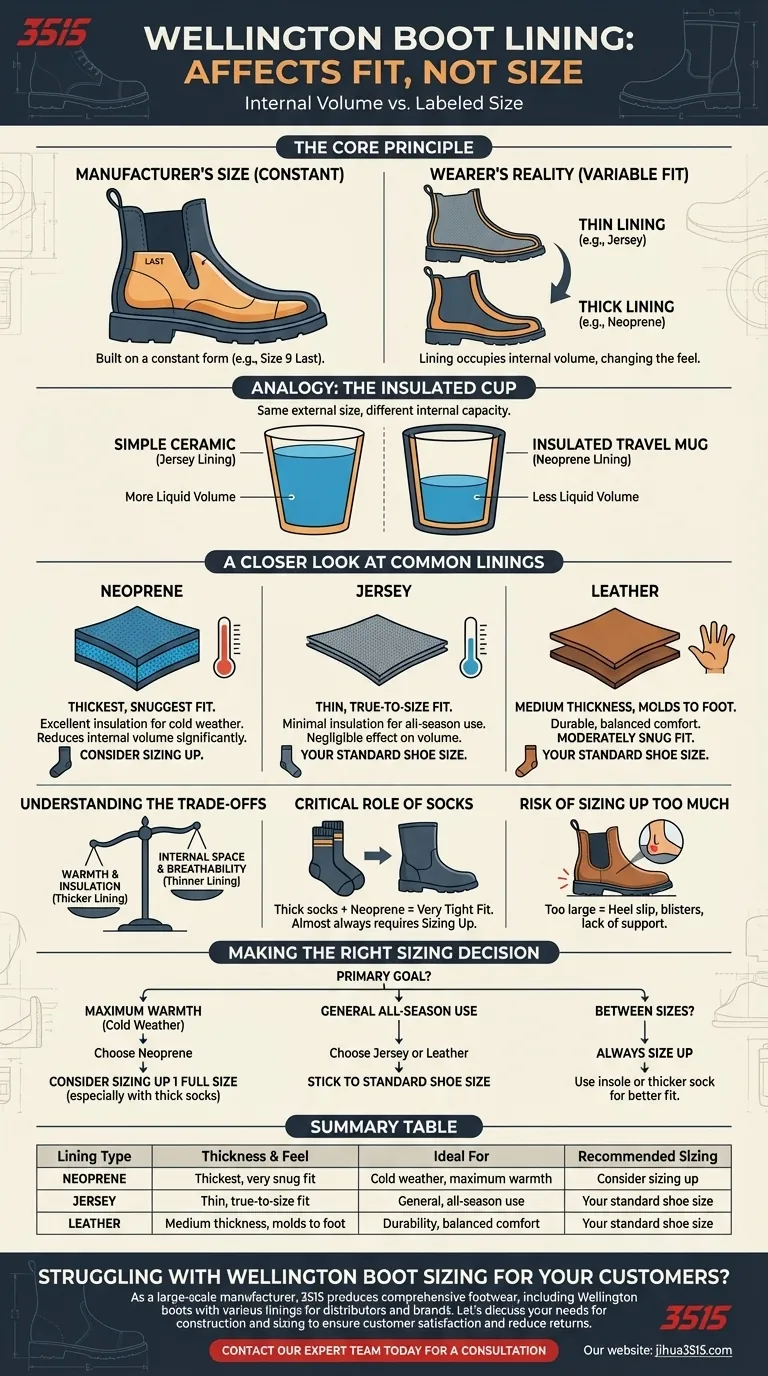
Boot manufacturers build their footwear around a standardized form called a "last." A size 9 boot is built on a size 9 last, regardless of whether the lining is thin jersey or thick neoprene. From their technical standpoint, the size has not changed.
The Wearer's Reality: Internal Volume
The reality for the wearer is all about the available space inside the boot. A thick, insulating lining takes up more of that internal volume. This means a neoprene-lined boot will feel significantly snugger than a jersey-lined boot of the exact same size.
An Analogy: The Insulated Cup
Think of it like an insulated travel mug versus a simple ceramic one. Both might have the same external height and width, but the thick insulating wall of the travel mug means it holds less liquid. Similarly, the thicker lining in a boot means less room for your foot.
A Closer Look at Common Linings
Each lining material has a distinct impact on the boot's internal feel and warmth, which is central to your sizing decision.
Neoprene Lining
This is the material used in wetsuits and is prized for its excellent insulation. It is typically the thickest lining option, providing significant warmth but also creating the snuggest fit.
Jersey Lining
A jersey lining is a thin, comfortable, and breathable fabric. It provides minimal insulation and has a negligible effect on the boot's internal volume, offering a more "true-to-size" feel.
Leather Lining
Calfskin leather is a premium option that is durable and molds to your foot over time. In terms of thickness, it generally sits between jersey and neoprene, offering a balance of comfort and a moderately snug fit.
Understanding the Trade-offs
Choosing the right boot means balancing your need for warmth against your need for space and considering your intended use.
The Warmth vs. Space Dilemma
The primary trade-off is simple: increased warmth comes at the cost of internal space. If you need a boot for cold weather, you will likely choose an insulated neoprene lining and must account for its thicker profile.
The Critical Role of Socks
The thickness of your socks is a vital factor. Wearing a pair of thick, woolen winter socks with an already-snug neoprene-lined boot is a common recipe for discomfort. This combination almost always requires sizing up.
The Risk of Sizing Up Too Much
While it can be tempting to simply go up a size, be cautious. A boot that is too large can be just as problematic as one that is too small. Your heel will slip, causing friction and blisters, and your foot will lack the support it needs.
Making the Right Sizing Decision
Use your primary goal to guide your final choice.
- If your primary focus is maximum warmth for cold weather: Choose a neoprene-lined boot and seriously consider going up one full size, especially if you plan to wear thick socks.
- If your primary focus is general, all-season use: Stick to your standard shoe size with a thinner jersey or leather-lined boot for a more accurate fit.
- If you are between sizes: Always size up to the next whole size, as a slightly roomier fit is far easier to manage with an insole or thicker sock than a boot that is too tight.
Ultimately, understanding how lining impacts internal volume is the key to achieving a perfect, comfortable fit.
Summary Table:
| Lining Type | Thickness & Feel | Ideal For | Recommended Sizing |
|---|---|---|---|
| Neoprene | Thickest, very snug fit | Cold weather, maximum warmth | Consider sizing up |
| Jersey | Thin, true-to-size fit | General, all-season use | Your standard shoe size |
| Leather | Medium thickness, molds to foot | Durability, balanced comfort | Your standard shoe size |
Struggling to find Wellington boots that fit perfectly for your customers?
As a large-scale manufacturer, 3515 produces a comprehensive range of footwear for distributors, brand owners, and bulk clients. Our production capabilities encompass all types of shoes and boots, including Wellington boots with various lining options. We can help you select the right boot construction and sizing for your target market, ensuring customer satisfaction and reducing returns.
Let's discuss your specific needs and how we can support your business. Contact our expert team today for a consultation!
Visual Guide
Related Products
- Durable Waterproof Rain Boots | Custom Manufacturer for Wholesale & Brands
- Durable Goodyear Welt Leather Work Boots for Wholesale & Private Label
- Wholesale Durable Leather Work Boots | 8-Inch Goodyear Welt Manufacturer
- High-Traction Suede Tactical Boots Wholesale & Custom Manufacturing
- Premium Wholesale Tactical Style Safety Shoes Boots with Quick Lacing
People Also Ask
- What are the main materials for waterproof rain boots? Choose the Right Material for Durability & Comfort
- What is the overall recommendation for choosing rain boot materials? A Guide to Rubber vs. PVC
- How does boot height affect waterproofing? Choose the Right Height for Ultimate Protection
- Why are rain boots more flexible and comfortable than snow boots? The Key Differences Explained
- What are the best types of shoes for different gardening conditions? Find Your Perfect Match.



















