
The recommended method for cleaning leather boots is a multi-step process that begins with dry brushing away loose debris, followed by a gentle cleaning with saddle soap or a dedicated leather cleaner, and finishing with a thorough wipe-down to remove all residue. This approach ensures a deep clean without damaging the leather's natural oils and finish.
The core principle of proper leather care is to clean gently and avoid harsh chemicals. The goal is not just to remove dirt, but to preserve the leather's integrity, ensuring your boots last for years.
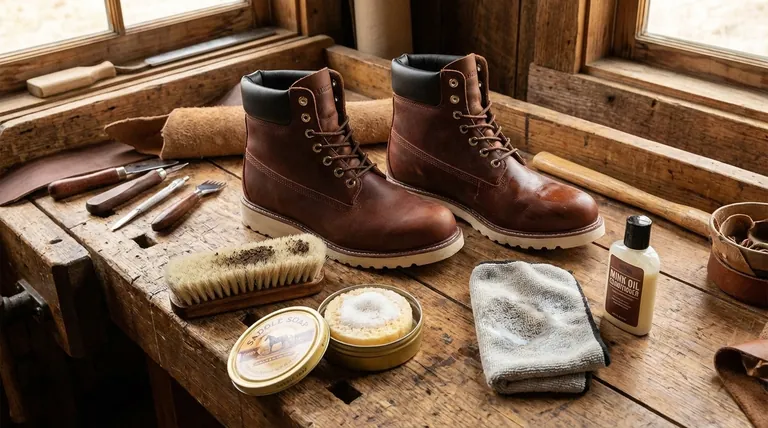
The Foundational Cleaning Process
Properly cleaning your leather boots is less about a single product and more about a systematic approach. Rushing the process or using the wrong tools can strip the leather of its essential oils, leading to cracking and premature aging.
Step 1: The Dry Clean
Before introducing any moisture, your first step is to remove all surface-level dirt and grime.
Use a soft-bristled brush, like one made from horsehair, to vigorously brush the entire boot. Pay special attention to the welt (the seam where the upper meets the sole) and any crevices where mud and dust accumulate.
This initial step prevents you from grinding abrasive dirt particles into the leather's pores during the wet cleaning phase.
Step 2: The Wet Clean
With the loose debris gone, you can now address the embedded dirt.
Choose a cleaner specifically designed for leather, such as saddle soap or a certified leather shoe cleaner. These are formulated to clean effectively without being overly harsh.
Apply a small amount of the cleaner to a damp cloth or soft brush. Gently work it into the leather using small, circular motions, cleaning the boot panel by panel to ensure even coverage. You should see a light lather form.
Step 3: Residue Removal
Leaving soap residue on the leather can dry it out and attract more dirt over time.
Using a clean, damp microfiber cloth, meticulously wipe away all traces of the soap lather from the boot's surface. You may need to rinse and wring out the cloth a few times to get the boots completely clean.
The final step is to let the boots air dry completely away from direct heat or sunlight, which can cause the leather to shrink or crack.
Understanding the Trade-offs and Common Pitfalls
While the process is straightforward, certain choices can have a significant impact on the outcome. Understanding these trade-offs is key to protecting your investment.
Harsh Chemicals vs. Dedicated Cleaners
Never use household cleaners, dish soap, or all-purpose detergents on your boots. These products contain harsh chemicals that can strip the leather's natural oils, leading to dryness, discoloration, and irreparable damage.
Saddle soap is a classic choice, but even it can be slightly drying if used too frequently. Modern pH-balanced leather cleaners are often a gentler alternative for regular maintenance.
Aerosol Sprays and Gels
Some products come in aerosol cans or as gels. While potentially convenient, these can be difficult to apply evenly and may contain propellants or solvents that are not ideal for high-quality leather. A traditional soap or lotion applied with a cloth gives you much greater control.
The Importance of Conditioning
Cleaning is only half the battle. After the boots are clean and fully dry, applying a conditioner like mink oil or a dedicated leather cream is crucial.
Conditioning replenishes the oils lost during cleaning and wearing, keeping the leather supple and preventing it from drying out and cracking. Think of it as moisturizing your skin—it's an essential step for long-term health.
Making the Right Choice for Your Goal
Your approach to cleaning should match the condition of your boots and your long-term goals.
- If your primary focus is routine maintenance after light wear: A simple dry brushing followed by a quick wipe-down with a damp cloth may be all that is required.
- If your primary focus is a deep clean for heavily soiled boots: Follow the full three-step process (dry brush, wet clean, residue removal) and always finish with a quality leather conditioner after they dry.
- If your primary focus is preserving a new or expensive pair of boots: Invest in a high-quality leather care kit that includes a soft brush, a pH-balanced cleaner, and a premium conditioner.
Ultimately, consistent, gentle care is the definitive path to extending the life and beauty of your leather boots.
Summary Table:
| Step | Action | Key Tool/Product | Purpose |
|---|---|---|---|
| 1 | Dry Clean | Soft-Bristled Brush | Remove loose dirt and debris to prevent grinding into leather. |
| 2 | Wet Clean | Saddle Soap / Leather Cleaner | Gently lift embedded grime without stripping natural oils. |
| 3 | Residue Removal & Dry | Microfiber Cloth | Wipe away soap residue; air dry completely to avoid damage. |
| 4 (Post-Clean) | Condition | Mink Oil / Leather Conditioner | Replenish oils to keep leather supple and prevent cracking. |
Need a reliable source for durable leather boots? As a large-scale manufacturer, 3515 produces a comprehensive range of footwear for distributors, brand owners, and bulk clients. Our production capabilities encompass all types of durable shoes and boots, built to withstand rigorous cleaning and conditioning. Contact us today to discuss your footwear needs and benefit from our expert manufacturing solutions.
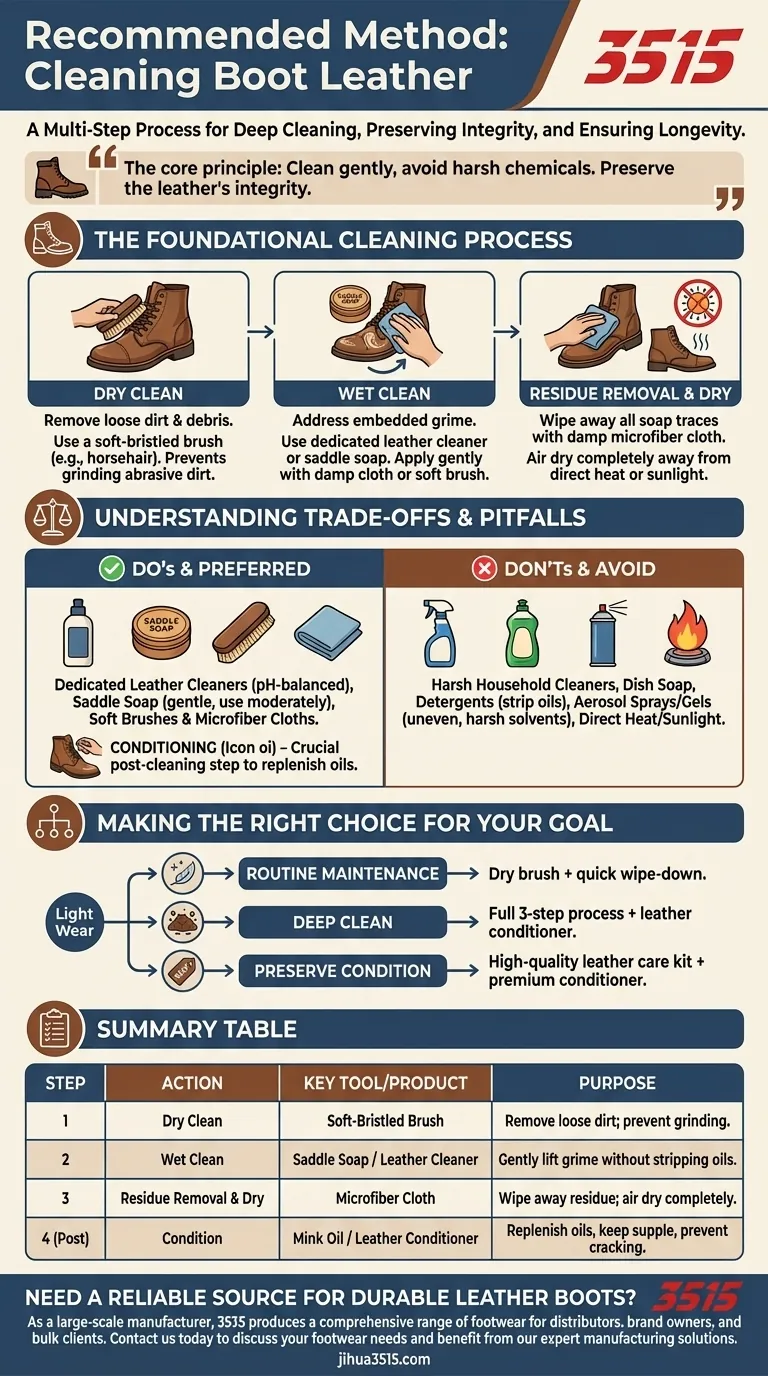
Visual Guide
Related Products
- Wholesale Leather Work Boots with Customizable Wedge Sole for Brands
- Durable Leather Work Boots for Wholesale & Custom OEM Manufacturing
- Durable Leather Work Boots for Wholesale & Custom Manufacturing
- Durable Leather Work Boots Wholesale Manufacturer & Custom Factory
- Durable Goodyear Welt Leather Work Boots for Wholesale & Private Label
People Also Ask
- What is the difference between full-grain and top-grain leather? Premium Material Guide for Boot Manufacturers
- What are the advantages of leather as an upper material for work boots? Unmatched Durability & Custom Comfort
- How can leather work boots be protected from environmental elements? A 3-Step Guide to Lasting Durability
- What is the complete process for deep cleaning leather work boots? A Step-by-Step Guide to Preserve Your Investment
- What are the key qualities of leather for work boots? Superior Durability, Breathability & Custom Fit

















