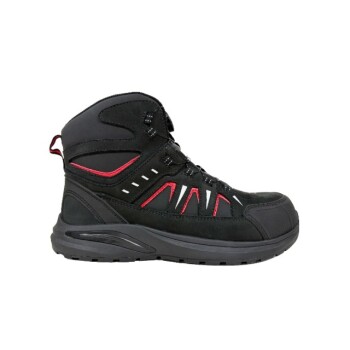
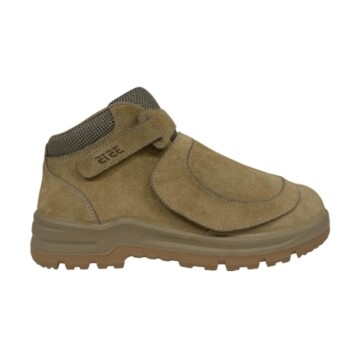
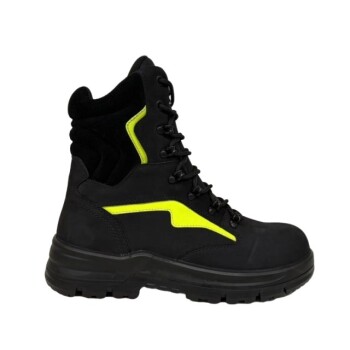
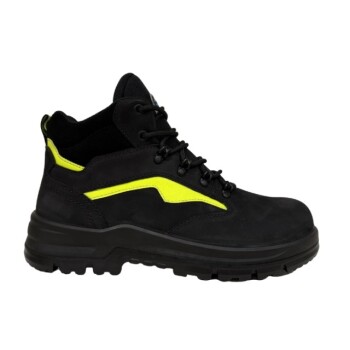
At their core, men's safety toe work boots serve one critical purpose: to protect your toes from being crushed or broken by heavy falling or rolling objects. This is achieved through a reinforced toe cap, making them an essential piece of personal protective equipment (PPE) in any environment with impact or compression hazards.
While the reinforced toe is their defining feature, the true purpose of these boots is to provide a comprehensive safety system for your feet, mitigating a wide range of common worksite dangers far beyond simple impact.
The Anatomy of Protection: A Multi-Layered Defense
A common misconception is that a safety boot's job begins and ends with the reinforced toe. In reality, it is just one component in a system designed to address the most frequent causes of foot injuries on a worksite.
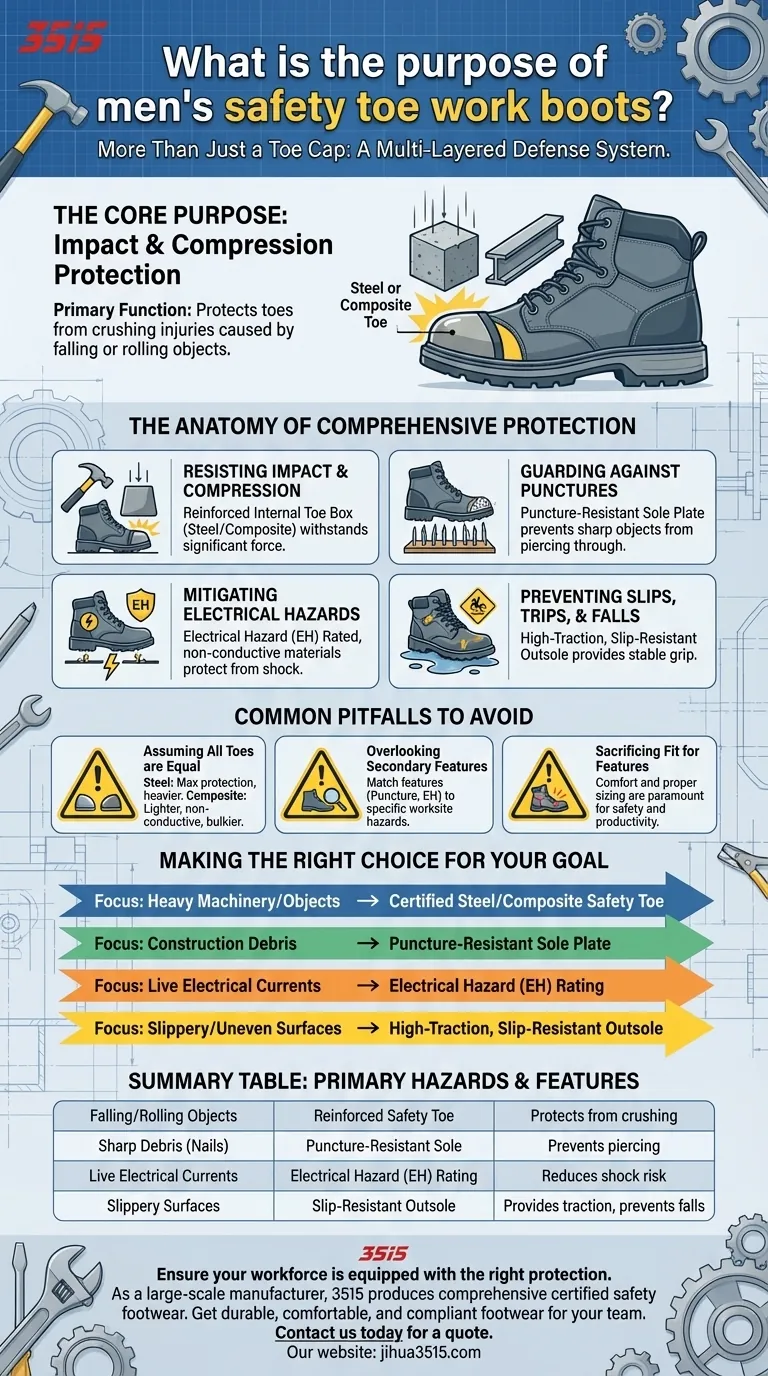
Resisting Impact and Compression
This is the primary function. An internal toe box, typically made of steel or composite materials, is built into the boot to withstand significant force.
This feature is designed to protect your feet from dropped tools, building materials, or the immense pressure of rolling equipment.
Guarding Against Punctures
Many job sites are littered with sharp objects like nails, screws, and metal shards.
Safety boots often incorporate puncture-resistant plates in the sole, preventing these hazards from piercing through the bottom of the boot and causing serious injury.
Mitigating Electrical Hazards
For those working around live electricity, specialized safety boots are essential.
These boots are constructed with non-conductive materials that protect the wearer from electric shock by preventing the flow of electricity through the foot. This is known as an Electrical Hazard (EH) rating.
Preventing Slips, Trips, and Falls
Foot injuries are not always caused by direct contact with a hazard. Unstable footing is one of the most common causes of accidents.
Safety boots are designed with high-traction, slip-resistant outsoles to provide a stable grip on wet, oily, or uneven surfaces, significantly reducing the risk of falls.
Common Pitfalls to Avoid
Understanding the full scope of a safety boot helps in selecting the right one. Simply choosing any boot with a safety toe can leave you exposed to other environmental risks.
Assuming All Safety Toes are Equal
The choice between steel and composite toes involves trade-offs. Steel offers maximum protection but can be heavier and conducts temperature.
Composite materials are lighter, don't conduct electricity or temperature, but can be bulkier to achieve the same level of impact resistance as steel.
Overlooking Secondary Features
The most severe hazard on your worksite might not be a falling object. It could be a puncture risk or an electrical danger.
Failing to match the boot's full feature set—like puncture resistance or an EH rating—to your specific environment is a critical mistake.
Sacrificing Fit for Features
Even the most protective boot is ineffective if it's too uncomfortable to wear correctly or causes blisters that distract you from your work.
Modern safety boots are designed for comfort, but proper sizing and fit remain paramount to ensuring both safety and productivity.
Making the Right Choice for Your Goal
Selecting the correct boot is an investment in your personal safety. Base your decision on a clear understanding of your environment's specific hazards.
- If your primary focus is protection from heavy machinery or objects: Ensure your boot has a certified steel or composite safety toe to guard against critical impact and compression injuries.
- If your primary focus is working around construction or demolition debris: You must have a boot with a puncture-resistant sole to prevent injuries from nails and other sharp objects underfoot.
- If your primary focus is work near live electrical currents: Look for boots specifically designated with an Electrical Hazard (EH) rating for crucial shock protection.
- If your primary focus is navigating slippery or uneven surfaces: Prioritize a boot with a high-traction, slip-resistant outsole to prevent dangerous falls.
Ultimately, choosing the right safety boot is about accurately assessing your daily risks and selecting the equipment designed to defeat them.
Summary Table:
| Primary Hazard | Key Boot Feature | Purpose |
|---|---|---|
| Falling/Rolling Objects | Reinforced Safety Toe (Steel/Composite) | Protects toes from crushing injuries. |
| Sharp Debris (nails, shards) | Puncture-Resistant Sole Plate | Prevents sharp objects from piercing the foot. |
| Live Electrical Currents | Electrical Hazard (EH) Rating | Reduces risk of electric shock. |
| Slippery Surfaces | Slip-Resistant Outsole | Provides traction to prevent falls. |
Ensure your workforce is equipped with the right protection. As a large-scale manufacturer, 3515 produces a comprehensive range of certified safety footwear for distributors, brand owners, and bulk clients. Our production capabilities encompass all types of safety boots and shoes, designed to meet the specific hazards of your industry. Get durable, comfortable, and compliant footwear for your team. Contact us today for a quote and see how we can support your safety needs.
Visual Guide
Related Products
- Durable Leather Moc Toe Work Boots for Wholesale & Custom Manufacturing
- Heavy Duty Nubuck Safety Boots Safety Shoes for Global Distribution
- Premium Suede Metatarsal Guard Safety Boots Work Shoes
- Durable Moc-Toe Wedge Work Boots | Wholesale Manufacturing for Brands
- Premium Waterproof Nubuck Safety Boots for Wholesale
People Also Ask
- What are moc toe work boots designed for? Superior Comfort and Mobility for Tradespeople
- What are the key features to look for when purchasing moc toe boots? A Guide to Durability & Fit
- How did moc toe boots originate? A Legacy of Workwear Durability and Style
- What clothing items complement the Outdoorsman/Heritage Look with moc toe boots? Build a Timeless, Rugged Wardrobe
- What types of outfits can moc toe boots be worn with? Versatile Style Guide