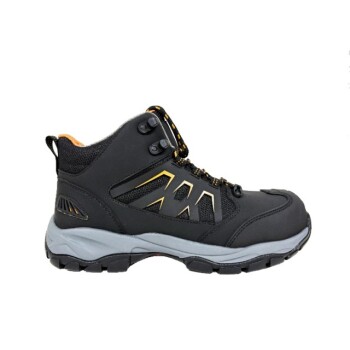
Steel toe shoes are the standard defensive equipment for environments where physical trauma to the foot is a significant risk. They are most commonly utilized in construction sites, manufacturing plants, warehouses, farms, and auto repair shops. Essentially, any location involving heavy machinery, moving vehicles, or the potential for falling debris mandates this specific form of protection.
The decision to use steel toe footwear is not dictated merely by the industry, but by the specific hazard profile of the workspace. If the environment involves heavy lifting, rolling equipment, or sharp materials, the impact and compression resistance of steel is the definitive safety requirement.
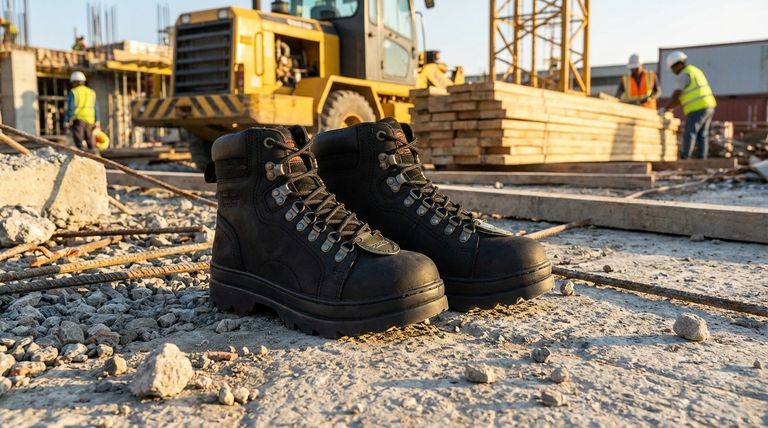
Identifying High-Risk Environments
Construction and Heavy Industry
Construction sites remain the primary use case for steel toe shoes. The chaotic nature of active building zones presents constant threats from falling debris and structural materials.
In these settings, the reinforced cap is critical for deflecting sudden impacts. It also protects against punctures from sharp objects often found on the ground, such as nails or scrap metal.
Warehousing and Logistics
While often viewed as less dangerous than construction, warehouses present distinct crushing hazards. Rolling objects and heavy pallets are the primary concern here.
Workers operating around forklifts or moving heavy inventory manually require protection against compression injuries. A steel toe prevents the foot from being crushed if a heavy load is dropped or rolls over the boot.
Manufacturing and Assembly
Factory floors and assembly lines often combine multiple hazards into one space. Workers here are exposed to heavy machinery parts and raw materials.
In these facilities, steel toe shoes provide a necessary barrier against dropped tools or machine components. They are also frequently used in auto repair shops, where heavy vehicle parts pose a constant risk to the mechanic's feet.
The Mechanics of Protection
Impact and Compression Resistance
The defining feature of this footwear is the steel capping over the toe box. This cap is engineered to withstand significant force, specifically targeting impact and compression injuries.
Impact rating refers to something falling on the foot, while compression rating refers to a heavy weight resting on or rolling over the foot. Steel offers superior performance in both metrics compared to soft-toe alternatives.
Durability in Harsh Conditions
Steel toe shoes are designed for longevity in abrasive environments. They are inherently durable, capable of withstanding cuts and scrapes that would destroy standard footwear.
This durability makes them a cost-effective choice for industrial sectors. They act as a shield, ensuring that the shoe takes the damage rather than the worker’s body.
Understanding the Trade-offs
Weight and Fatigue
The primary trade-off for the superior protection of steel is weight. References indicate that steel toe shoes are generally heavier than other types of safety footwear.
For workers covering long distances, such as those in large warehouses, this added weight can lead to faster fatigue. It is a necessary compromise for maximum protection.
Electrical Considerations
Metal is conductive, which historically posed risks in electrical work. However, modern steel toe shoes can be safe if the shoe is properly insulated.
If the specific model is rated for electrical hazard protection, the steel cap is isolated from the foot and the ground. However, one must verify the specific insulation rating before using them near live circuits.
Making the Right Choice for Your Goal
When selecting safety footwear, you must balance the level of risk against comfort and mobility requirements.
- If your primary focus is maximum value and protection: Choose steel toe shoes, as they offer superior impact resistance and are typically less expensive than composite alternatives.
- If your primary focus is reducing daily fatigue: Consider researching composite or alloy toe alternatives, which offer similar protection but are lighter in weight.
- If your primary focus is specific hazard mitigation: Verify if you need additional features like slip resistance or specific electrical hazard insulation alongside the steel toe.
Select the tool that matches the intensity of your environment; a heavy boot is a burden in an office, but an absolute necessity on the shop floor.
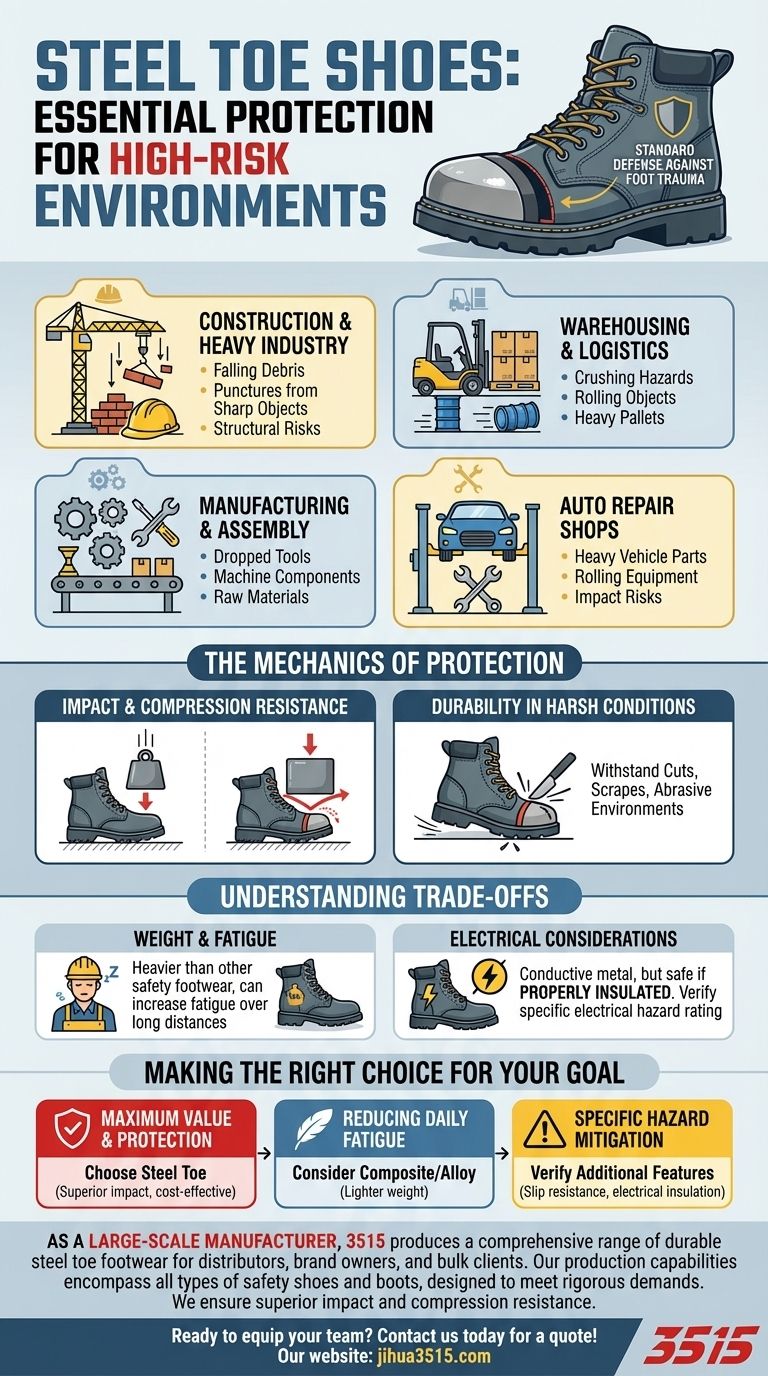
Summary Table:
| Industry | Primary Hazards Protected Against |
|---|---|
| Construction & Heavy Industry | Falling debris, punctures from sharp objects (nails, scrap metal) |
| Warehousing & Logistics | Crushing from rolling objects (forklifts) and heavy pallets |
| Manufacturing & Assembly | Dropped tools, heavy machine components, raw materials |
| Auto Repair Shops | Heavy vehicle parts, rolling equipment |
As a large-scale manufacturer, 3515 produces a comprehensive range of durable steel toe footwear for distributors, brand owners, and bulk clients.
Our production capabilities encompass all types of safety shoes and boots, designed to meet the rigorous demands of your high-risk work environments. We ensure superior impact and compression resistance, helping you protect your workforce effectively.
Ready to equip your team with reliable safety footwear? Contact us today to discuss your needs and get a quote!
Visual Guide
Related Products
- Durable Steel Toe Safety Boots Wholesale & Custom Manufacturing
- Wholesale Mesh Steel Toe Safety Shoes with Dial Closure Factory Production
- Wholesale Safety Footwear Manufacturer for Bulk & Custom OEM Orders
- Durable Leather Safety Boots for Wholesale & Custom OEM Manufacturing
- Premium Wheat Nubuck Safety Shoes for Bulk Distribution
People Also Ask
- Why are industrial safety boots with steel toes necessary for machine operators? Essential Foot Protection for Safety
- Why is it mandatory to wear safety shoes with steel toe protection during metal loading? Prevent Crushing Injuries
- What are the main materials used in steel toe safety shoes? A Guide to Protective Footwear Construction
- What are the characteristics of steel toe safety boots? Maximum Protection, Key Trade-offs
- Is it true that steel toes can cause toes to get cut off? Debunking the Dangerous Myth