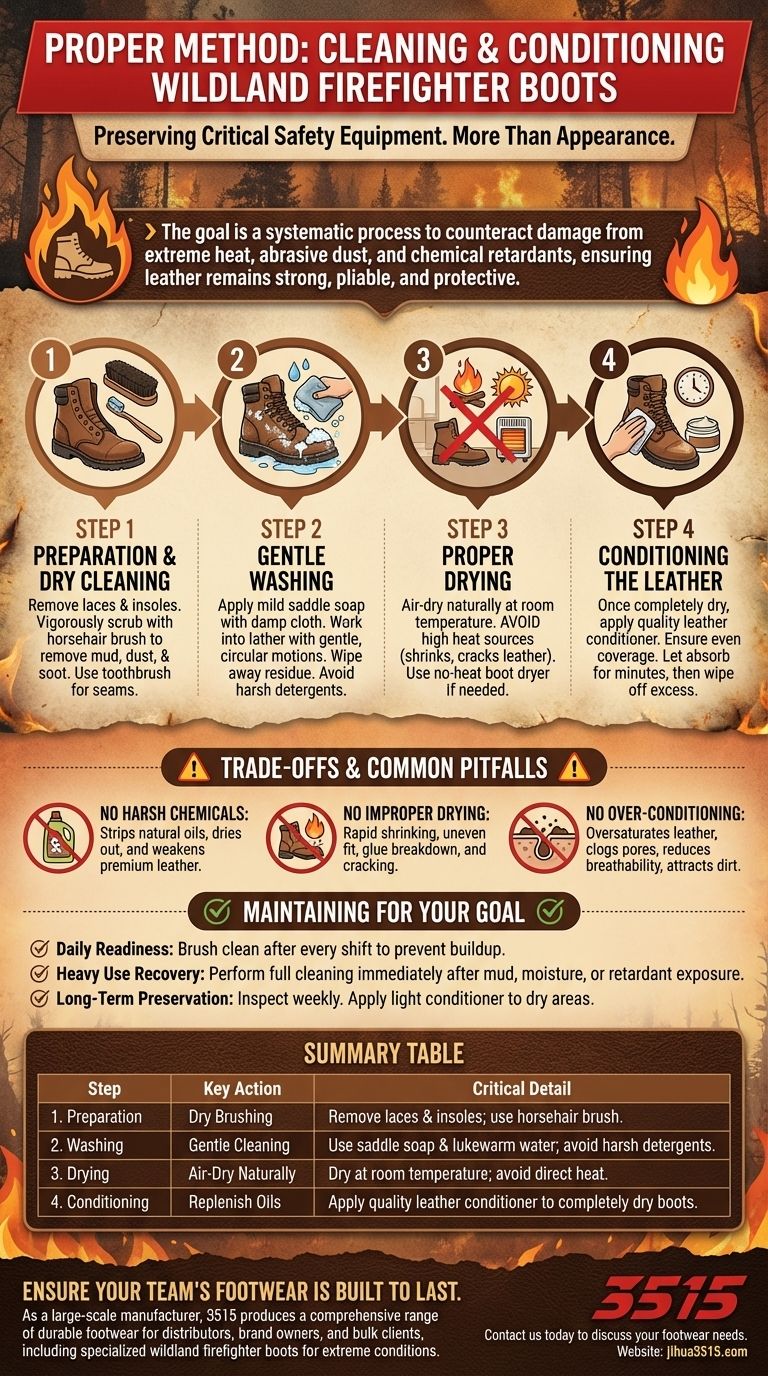
Properly maintaining your wildland boots is not about appearance; it's about preserving a critical piece of your safety equipment. The correct method involves a multi-step process: first, use a horsehair or soft nylon brush to remove all loose dirt and debris. Next, clean the leather with a gentle product like saddle soap and lukewarm water, then allow the boots to air-dry completely away from high heat. Finally, apply a quality leather conditioner to restore moisture and maintain the leather's flexibility and durability.
The goal of cleaning wildland boots is not just to remove surface grime. It is a systematic process to counteract the damage from extreme heat, abrasive dust, and chemical retardants, ensuring the leather remains strong, pliable, and protective.
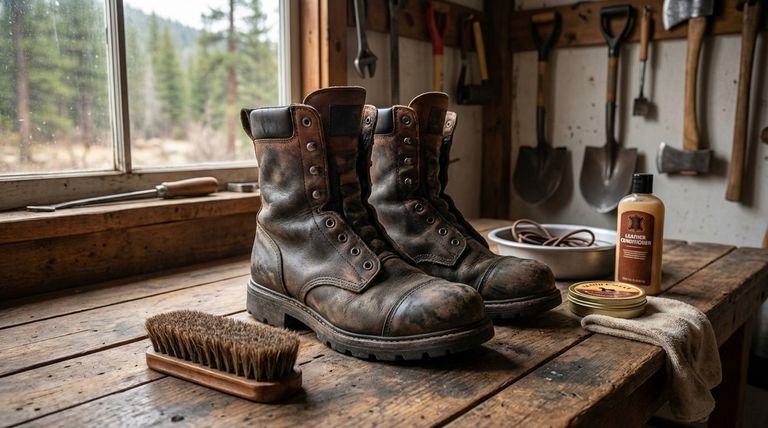
The Step-by-Step Cleaning and Conditioning Process
Follow these steps precisely to ensure you preserve the integrity of your boots without causing unintended damage. Rushing any step, especially drying, can compromise the materials.
Step 1: Preparation and Dry Cleaning
Before introducing any water, you must remove all loose surface contaminants. This prevents you from grinding abrasive particles into the leather.
First, remove the laces and any removable insoles. Soaking the laces separately in a mild soap solution is an effective way to clean them.
Next, use a horsehair brush or a soft nylon brush to vigorously scrub away all caked-on mud, dust, and soot. An old toothbrush is ideal for cleaning the tight areas along the seams and welt.
Step 2: Gentle Washing
With the heavy debris gone, you can now perform a deeper cleaning. The key is to use a mild cleaner that won't strip the leather's essential natural oils.
Apply saddle soap or a similar pH-neutral leather cleaner with a damp cloth or soft brush. Work the soap into a lather using gentle, circular motions across the entire boot.
Wipe away the soap residue with a clean, damp cloth. Avoid using harsh detergents or dish soaps, which can dry out and damage the leather.
Step 3: Proper Drying
How you dry your boots is one of the most critical steps. Improper drying can shrink, crack, and permanently damage the leather.
Let the boots air-dry naturally at room temperature. Do not place them near a campfire, heater, or in direct, intense sunlight. High heat is the enemy of leather.
If you use a boot dryer, ensure it is on a no-heat or very low-heat setting that relies on air circulation rather than high temperatures.
Step 4: Conditioning the Leather
Cleaning removes dirt, but it also removes some of the leather's essential oils. Conditioning replenishes them, preventing the leather from becoming brittle and cracked.
Once the boots are completely dry, apply a leather conditioner with a soft, clean cloth. Rub a small amount into the leather in circular motions, ensuring even coverage across the entire surface, including the tongue and seams.
Let the conditioner absorb for several minutes, then wipe away any excess with another clean cloth. This prevents a sticky buildup that can attract more dirt.
Understanding the Trade-offs and Common Pitfalls
Knowing what not to do is as important as knowing the correct procedure. Simple mistakes can drastically shorten the lifespan of your boots.
The Danger of Harsh Chemicals
Using household detergents, solvents, or other aggressive chemicals is a common mistake. These products are designed to strip oils and can severely dry out and weaken the premium vegetable-tanned leather used in wildland boots.
The Risk of Improper Drying
Patience during the drying phase is non-negotiable. Exposing wet leather to high heat causes it to shrink rapidly and unevenly. This can ruin the fit, break down the glues, and cause the leather to crack, creating a critical failure point.
The Problem of Over-Conditioning
While conditioning is vital, more is not better. Applying too much oil or a heavy, waxy conditioner can oversaturate the leather. This can clog the pores, reduce breathability, and create a sticky surface that attracts and holds onto abrasive dust and dirt.
Making the Right Choice for Your Goal
Your maintenance schedule should adapt to your level of use and exposure. A proactive approach is always better than a reactive one.
- If your primary focus is daily readiness: Quickly brush your boots clean after every shift to remove the day's accumulation of dust and prevent buildup.
- If your primary focus is recovery from heavy use: Perform the full cleaning and conditioning process immediately after exposure to significant mud, moisture, or fire retardant.
- If your primary focus is long-term preservation: Inspect your boots weekly, even if they haven't been used heavily. Apply a light coat of conditioner to any areas that look dry to keep the leather nourished.
Consistent, correct care is the single best way to ensure your boots protect you season after season.
Summary Table:
| Step | Key Action | Critical Detail |
|---|---|---|
| 1. Preparation | Dry Brushing | Remove laces & insoles; use a horsehair brush to remove all loose dirt. |
| 2. Washing | Gentle Cleaning | Use saddle soap & lukewarm water; avoid harsh detergents. |
| 3. Drying | Air-Dry Naturally | Dry at room temperature; avoid direct heat sources. |
| 4. Conditioning | Replenish Oils | Apply a quality leather conditioner once boots are completely dry. |
Ensure your team's footwear is built to last and maintained correctly.
As a large-scale manufacturer, 3515 produces a comprehensive range of durable footwear for distributors, brand owners, and bulk clients. Our production capabilities encompass all types of safety boots and shoes, including specialized wildland firefighter boots designed to withstand extreme conditions.
We provide high-quality, reliable footwear that meets the demanding needs of professionals. Let us help you equip your team with the best.
Contact us today to discuss your footwear needs and learn more about our products and capabilities.
Visual Guide
Related Products
- High Performance Fire-Retardant Waterproof Safety Boots
- Premium Flame-Retardant Waterproof Safety Boots and Shoes
- Wholesale Lightweight Tactical Boots Custom Manufacturer for Desert & Combat Use
- Durable Military Combat Boots with Water Drainage for Wholesale & OEM
- Durable Leather Tactical Boots Wholesale & Custom Manufacturing for Brands
People Also Ask
- Why are waterproof safety boots recommended for certain work environments? Essential Protection for Wet & Hazardous Jobs
- What roles do 3D vision systems and industrial robots play in the manufacturing of fire safety boots? Smart Automation
- What are the drawbacks of waterproof boots? The Breathability vs. Protection Trade-Off
- What should you look for to ensure boots are fully waterproof? The Essential 2-Part System
- What is the difference between waterproof, water-resistant, and water-repellent boots? Choose the Right Protection for Your Feet