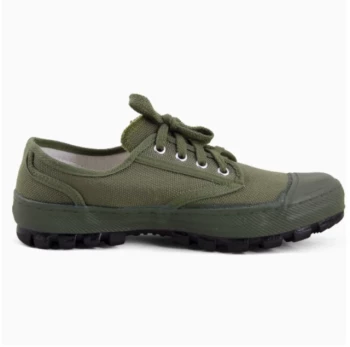
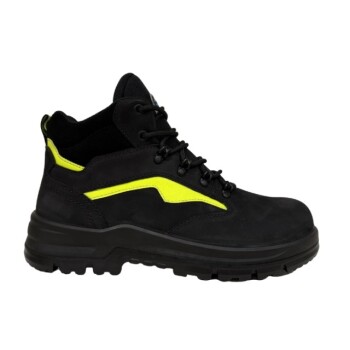
Choosing the right work boots is a critical decision that directly impacts your safety, comfort, and ability to perform your job effectively. The wrong footwear can lead to immediate pain in your back and legs, significantly reducing your efficiency and increasing your risk of injury on site.
Your work boots are not just footwear; they are a fundamental piece of personal protective equipment (PPE). Selecting the correct pair is an investment in your daily well-being and your long-term health, ensuring you are properly equipped to handle the demands of your job safely.
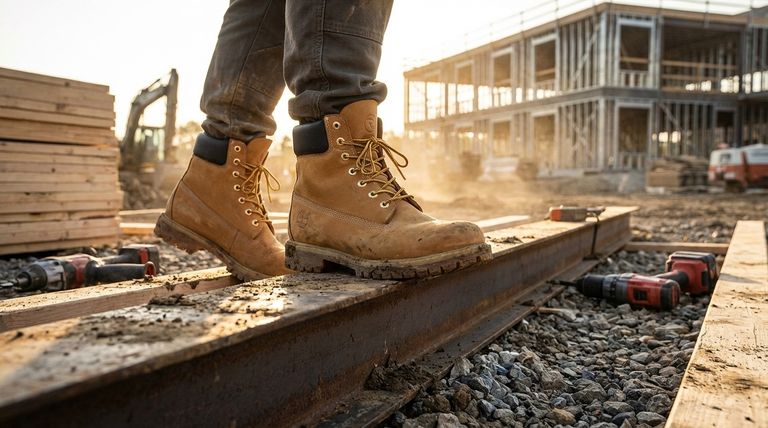
The Core Functions of a Work Boot
A high-quality work boot serves as a multi-function tool for your feet. Its design is a deliberate system of protection, support, and environmental control that goes far beyond what standard shoes can offer.
Foundational Safety and Protection
The most obvious function of a work boot is to prevent acute injury. This is accomplished through several key safety features.
They often include steel or composite toes to shield you from falling objects and compression. The soles are engineered to be non-slip, reducing the danger of falls on slick surfaces, while some are rated to provide insulation against electrical hazards.
All-Day Comfort and Ergonomic Support
Work boots are designed to combat the fatigue that comes from being on your feet all day. Their high-cut design provides crucial ankle support, protecting you from twists and abrasions.
Inside, they feature reinforced arches that are essential for tasks like climbing ladders and providing a stable foundation that reduces strain on your legs and back.
Environmental Control for Your Feet
Keeping your feet dry is essential for both comfort and health. Work boots are typically made from moisture-resistant materials like treated leather to keep water out.
Simultaneously, they incorporate moisture-wicking linings on the inside to pull sweat away from your skin, preventing blisters and discomfort during long shifts.
The Consequences of a Poor Choice
Ignoring the importance of proper footwear can have both immediate and long-term negative effects. The wrong boot compromises your safety and actively works against your body.
Chronic Pain and Fatigue
The most common result of wearing inadequate boots is physical pain. Without proper arch support and cushioning, your feet, ankles, and legs absorb excessive shock, leading to aching legs and a sore back by the end of the day.
Reduced Focus and Productivity
When you are constantly distracted by discomfort or worried about slipping, you cannot give your full attention to the task at hand. This lack of focus can diminish the quality of your work and increase the likelihood of mistakes or accidents.
Premature Wear and Tear
A poor fit doesn't just hurt you; it hurts the boot. If your foot slides around inside, it causes friction that can prematurely wear out the lining and distort the boot's shape, leading to uneven wear and forcing you to replace them sooner.
Maximizing Your Boot's Effectiveness
Simply buying a good boot isn't enough. You must ensure it functions as part of a complete system to get the full benefit.
A Proper Fit is Non-Negotiable
Even the most advanced safety features are useless if the boot doesn't fit correctly. A boot that is too loose will fail to provide adequate support, while one that is too tight will cause pain and circulation issues.
The Right Socks and Insoles
Think of your socks and insoles as critical components. Moisture-wicking socks work with the boot's lining to keep your feet dry. For those needing more tailored support, custom insoles can dramatically improve arch support and overall comfort.
Lacing for Stability
How you tie your boots matters. Properly tightening your laces ensures a snug fit, locking your heel in place and preventing the internal sliding that causes instability and premature wear.
Making the Right Choice for Your Goal
To select the best boot, identify the primary challenge of your work environment.
- If your primary focus is protection from impact: Prioritize boots with a certified steel or composite safety toe.
- If your primary focus is all-day comfort while standing or walking: Look for superior arch support and cushioning, and consider adding custom insoles.
- If your primary focus is stability in hazardous conditions: Ensure your boots feature aggressive, non-slip soles and moisture-resistant construction.
Ultimately, investing in the right work boots is a direct investment in your personal health, safety, and professional capability.
Summary Table:
| Key Consideration | Why It Matters |
|---|---|
| Safety Toe (Steel/Composite) | Protects feet from falling objects and compression injuries. |
| Non-Slip Sole | Reduces the risk of slips and falls on slick or hazardous surfaces. |
| Ankle & Arch Support | Prevents fatigue, reduces strain on legs and back, and improves stability. |
| Moisture Management | Keeps feet dry and comfortable, preventing blisters and discomfort. |
| Proper Fit | Ensures all safety and comfort features function correctly and prevents pain. |
Ready to equip your team with superior work boots?
As a large-scale manufacturer, 3515 produces a comprehensive range of durable and safety-compliant footwear for distributors, brand owners, and bulk clients. Our production capabilities encompass all types of work boots and shoes, ensuring you get the perfect combination of protection, comfort, and value.
Contact 3515 today for a consultation and discover how our footwear can enhance your team's safety and productivity.
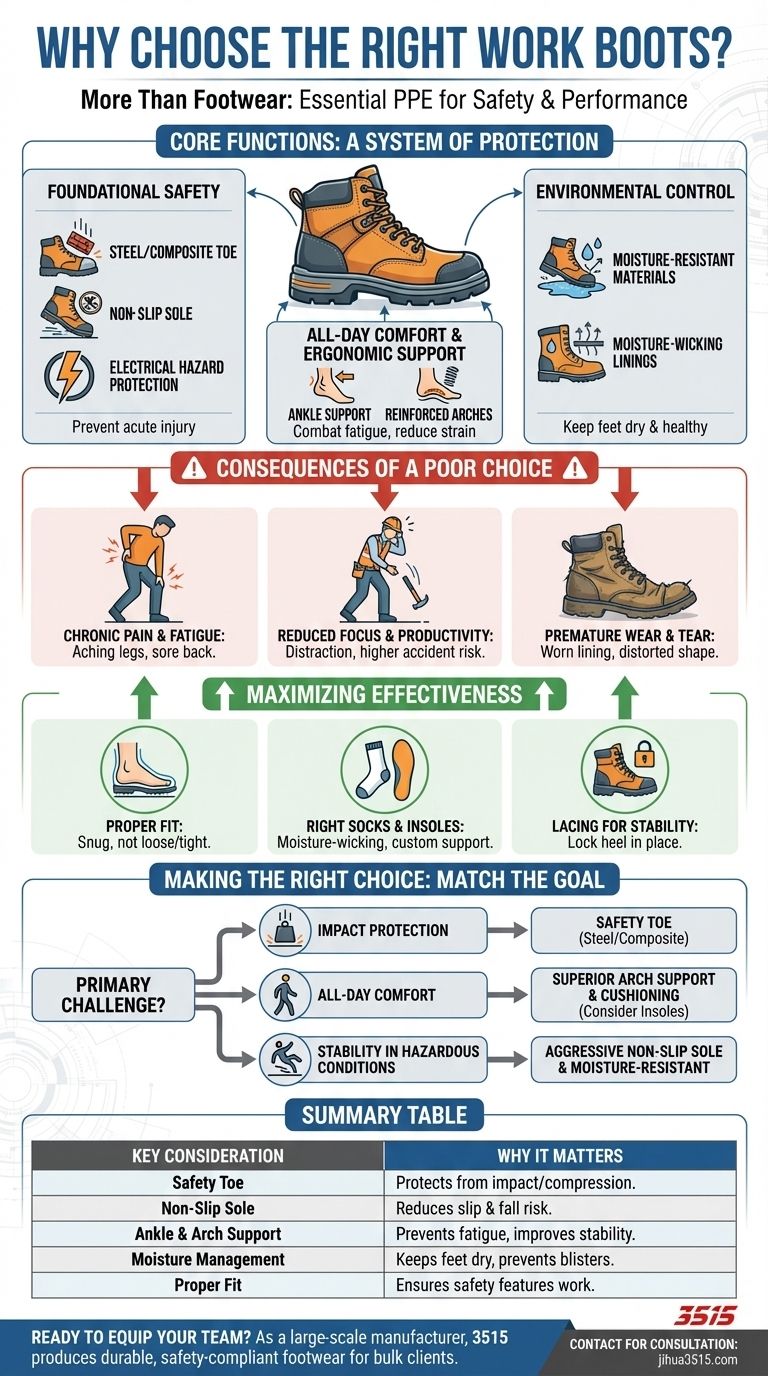
Visual Guide
Related Products
- Durable Leather Work Boots for Wholesale & Custom Manufacturing
- Durable Leather Work Boots for Wholesale & Custom OEM Manufacturing
- Durable Leather Work Boots Wholesale Manufacturer & Custom Factory
- Durable Leather Moc Toe Work Boots for Wholesale & Custom Manufacturing
- Wholesale Leather Work Boots with Customizable Wedge Sole for Brands
People Also Ask
- What is the difference between full-grain and top-grain leather? Premium Material Guide for Boot Manufacturers
- What are the common workplace hazards that can be mitigated with the right work boots? Protect Your Workforce
- What are the common foot issues workers face due to uncomfortable work boots? Prevent Pain & Deformities
- What are the advantages of leather versus synthetic work boots? A Guide to Choosing the Right Material
- What are the key components of modern work boots? Engineered for Ultimate Durability and Comfort