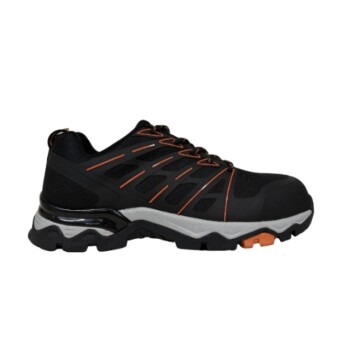
The primary function of the structural support system in industrial safety shoes is to provide essential mechanical stability to the foot and ankle complex. By utilizing components such as reinforced shanks and rigid ankle collars, this system maintains the structural integrity of the lower limb, preventing bone displacement under heavy loads and ensuring safe movement across uneven terrain.
While protective elements like steel toes shield against external impact, the structural support system acts as an internal chassis. It preserves the foot's natural alignment during weight-bearing tasks to prevent long-term musculoskeletal injury.
The Mechanics of Stability
Preventing Bone Displacement
When a worker carries heavy loads, the immense pressure can force the bones of the foot out of their natural alignment.
The structural support system creates a rigid framework that contains the foot. This prevents the displacement of foot bones, ensuring the skeletal structure remains aligned even under extreme stress.
Navigating Uneven Surfaces
Industrial environments rarely offer perfectly flat walking surfaces.
Rigid ankle collars play a critical role here by locking the ankle in a vertical position. This minimizes the risk of rolling or twisting the ankle when traversing debris, grates, or irregular ground.
Reducing Musculoskeletal Strain
The ultimate goal of this support is the prevention of chronic injury.
By stabilizing the lower limb structure, the shoe absorbs and distributes stress that would otherwise damage joints and soft tissue. This significantly reduces the risk of musculoskeletal injuries caused by long-term weight-bearing.
Distinguishing Support from Impact Protection
The Role of Structural Components
It is vital to distinguish between stability and impact resistance.
The structural system, including reinforced shanks, focuses on how the foot carries weight and moves. Its job is biomechanical alignment and fatigue reduction.
The Role of Protective Barriers
Conversely, impact protection handles external threats.
As noted in supplementary industry standards, components like high-strength steel toes or composite materials serve as physical barriers. They are designed specifically to resist crushing forces and heavy object impacts, acting as a shield rather than a support structure.
Understanding the Trade-offs
Rigidity vs. Agility
A shoe with a highly robust structural system offers maximum stability but often sacrifices flexibility.
Workers requiring extreme agility or frequent crouching may find that the rigid ankle collars and stiff shanks limit their range of motion, potentially causing fatigue in different muscle groups.
Weight Considerations
Structural reinforcement adds material density to the footwear.
While modern composites help, a fully supported boot with a reinforced shank will generally be heavier than a standard work shoe. This added weight can contribute to leg fatigue over the course of a 12-hour shift if the level of support exceeds the user's actual needs.
Making the Right Choice for Your Goal
Selecting the correct footwear requires balancing immediate protection against long-term biomechanical health.
- If your primary focus is heavy lifting and uneven terrain: Prioritize footwear with a robust structural system (shanks and rigid collars) to prevent bone displacement and ankle instability.
- If your primary focus is falling object hazards: Ensure the footwear meets stringent standards for steel or composite toe caps to provide a sufficient physical barrier against crushing.
True industrial safety requires a boot that protects the foot from both the crushing weight of a falling object and the crushing weight of the worker's own load.
Summary Table:
| Component | Primary Function | Key Benefit |
|---|---|---|
| Reinforced Shank | Provides longitudinal rigidity | Prevents foot bone displacement under heavy loads |
| Rigid Ankle Collar | Locks ankle in vertical position | Minimizes risks of rolling or twisting on uneven terrain |
| Steel/Composite Toe | Acts as a physical barrier | Protects against external crushing and falling impacts |
| Structural Chassis | Maintains skeletal alignment | Reduces long-term musculoskeletal fatigue and strain |
Partner with 3515 for Premium Industrial Footwear Solutions
As a large-scale manufacturer serving global distributors and brand owners, 3515 offers comprehensive production capabilities for all footwear types. Our flagship Safety Shoes series is engineered with advanced structural support systems to ensure maximum stability and worker health. Beyond safety, our extensive portfolio includes:
- Work & Tactical Boots for high-intensity environments.
- Outdoor & Training Shoes designed for durability and agility.
- Sneakers & Dress/Formal Shoes to meet diverse bulk procurement requirements.
Leverage our manufacturing expertise to provide your customers with superior protection and ergonomic comfort. Contact us today to discuss your bulk requirements and customized manufacturing needs.
References
- Charul Dandale, Pratik Phansopkar. Effect of Physiotherapeutic Rehabilitation on a Patient With an Iliac Fracture and Superior and Inferior Pubic Rami Fracture With Foot Drop: A Case Report. DOI: 10.7759/cureus.33709
This article is also based on technical information from 3515 Knowledge Base .
Related Products
- Premium Suede Sport Safety Shoes for Wholesale & Bulk Orders
- Premium Lightweight Safety Shoes for Wholesale & Bulk Orders
- Wholesale Anti-Smash & Puncture-Proof Safety Shoes Custom Manufacturing for Brands
- Premium KPU Injection Athletic Style Safety Shoes
- Premium Safety Shoes with Rotating Buckle Safety Sneakers
People Also Ask
- What are the primary functions of professional safety shoes? Maximize Safety in Water Supply Confined Spaces
- What industries have specific OSHA footwear requirements? Ensure Compliance & Protect Your Workforce
- What role do specialized safety shoes play in preventing falls? Engineering Stability in Industrial Environments
- How does professional industrial cleaning equipment maintain the performance stability of safety shoes? Pro Maintenance
- Why are customized foot sensors or professional safety shoes incorporated into biomechanical testing? Precision Insights