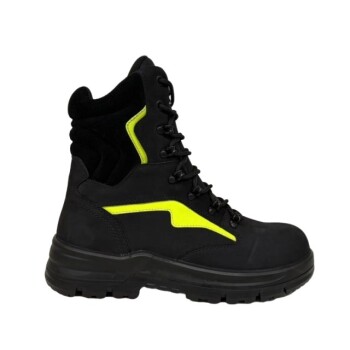
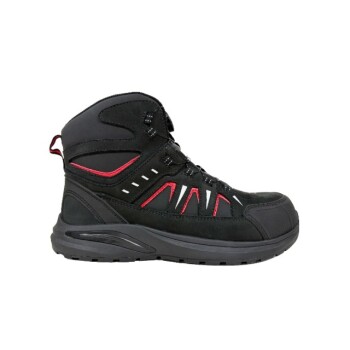
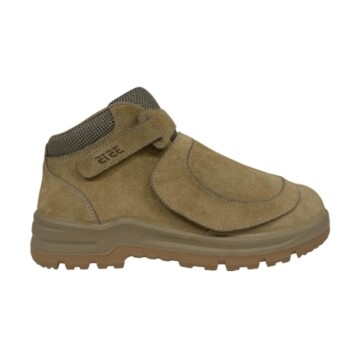
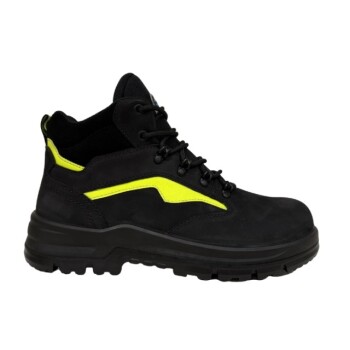
The primary logic for using industrial-grade footwear in diabetic care relies on structural volume and adaptability. High-performance tactical or work boots offer deep internal space and high-top construction that, when properly modified, replicate the protective functions of specialized medical-grade footwear.
Core Takeaway Standard industrial boots serve as a robust chassis that can be engineered into a therapeutic device. By retrofitting them with medical-grade offloading liners and rocker-soles, clinicians can provide diabetic patients with essential pressure protection that withstands labor-intensive environments.
The Structural Advantage
Deep Internal Volume
The defining feature of suitable industrial footwear is its deep internal capacity.
Unlike standard shoes, these boots are designed to accommodate thick socks or safety inserts. This extra space is critical for diabetic care, as it allows for the insertion of custom medical-grade offloading liners without constricting the foot.
High-Top Support
Diabetic patients often suffer from instability due to neuropathy or structural changes in the foot.
The high-top construction inherent in tactical and work boots provides rigid ankle support. This stabilizes the joint and reduces shear forces that can lead to tissue breakdown during active work.
Essential Modifications for Safety
A standard work boot is not ready for diabetic use "out of the box." The logic holds true only when specific modifications are applied to the industrial chassis.
The Necessity of Rocker Soles
To mimic medical footwear, the rigid sole of a work boot must often be modified with a rocker profile.
This curvature alters the biomechanics of walking, reducing peak pressure on the forefoot. It allows the patient to maintain vocational productivity while offloading vulnerable areas.
Custom Offloading Liners
The interior hard surfaces of a safety boot pose a risk of compression injury.
Replacing standard insoles with medical-grade liners provides necessary cushioning. This creates a protective interface between the foot and the boot's rigid safety features.
Material Considerations and The Microenvironment
Controlling the Microenvironment
Infection control is as vital as pressure management.
The ideal industrial boot must utilize high-breathability materials to manage the temperature and humidity inside the shoe. This inhibits the growth of fungi and bacteria, significantly reducing infection risks in warm, moist environments.
Elasticity and Compliance
Rigid materials can cause ulcers if the foot swells.
High-elasticity composite fabrics are preferred because they provide superior compliance. These materials adapt to common diabetic foot deformities or edema (swelling) throughout the workday, preventing pressure ulcers caused by unyielding upper materials.
Understanding the Trade-offs
The Risk of Unqualified Selection
There is a significant danger when patients select protective footwear without professional oversight.
Patients often lack the technical knowledge regarding material hardness, sizing, and entry specifications. Wearing industrial boots that have not been vetted or modified by a professional can lead to foot compression injuries rather than protection.
Balancing Protection and Weight
While industrial boots offer superior protection, they are often heavier than medical shoes.
Clinicians must weigh the benefit of physical protection against the fatigue caused by heavier footwear. The goal is to enable vocational activity, not hinder it.
Making the Right Choice for Your Goal
To successfully integrate industrial footwear into a care plan, you must define the patient's primary daily activity.
- If your primary focus is labor-intensive vocational retention: Select high-volume tactical boots and immediately retrofit them with custom offloading liners and rocker soles to ensure safety without compromising job performance.
- If your primary focus is preventing infection in humid environments: Prioritize boots constructed with high-breathability composite fabrics to strictly control the internal temperature and moisture levels.
- If your primary focus is accommodating significant swelling or deformity: Choose footwear with high-elasticity upper materials that can expand and adapt to the foot's changing shape throughout the day.
The most effective diabetic footwear solution is one that balances medical necessity with the patient's reality, turning a safety boot into a precision medical instrument.
Summary Table:
| Feature | Clinical Benefit for Diabetic Feet | Necessary Modification |
|---|---|---|
| Deep Internal Volume | Accommodates edema and custom orthotics | Replace standard insoles with medical liners |
| High-Top Construction | Stabilizes ankle joints and reduces shear force | Ensure proper lacing for stability without constriction |
| Rigid Safety Chassis | Protects against external impact and trauma | Add rocker-sole profile to reduce forefoot pressure |
| Breathable Materials | Manages microenvironment to prevent infection | Use high-breathability composite fabrics |
| High-Elasticity Uppers | Adapts to foot deformity and daily swelling | Select compliant materials to avoid compression ulcers |
Partner with 3515 for High-Performance Protective Footwear
As a large-scale manufacturer serving distributors and brand owners, 3515 offers comprehensive production capabilities for all footwear types, anchored by our flagship Safety Shoes series. Our extensive portfolio covers work and tactical boots, outdoor shoes, training shoes, and sneakers, as well as Dress & Formal shoes to meet diverse bulk requirements.
Whether you need high-volume tactical boots engineered for medical modification or durable work boots for industrial safety, 3515 provides the manufacturing excellence and material innovation your brand demands. We help our partners deliver superior protection and comfort to target customers across the globe.
Ready to elevate your product line with precision-manufactured footwear?
Contact us today to discuss your bulk requirements!
References
- Malindu E. Fernando, Peter A Lazzarini. Australian guideline on offloading treatment for foot ulcers: part of the 2021 Australian evidence‐based guidelines for diabetes‐related foot disease. DOI: 10.1186/s13047-022-00538-3
This article is also based on technical information from 3515 Knowledge Base .
Related Products
- Customizable Anti-Smash Safety Boots for Wholesale & Private Label Manufacturing
- Wholesale Customizable Safety Boots Durable & Protective Footwear Manufacturing
- Premium Grain Leather Safety Boots for Bulk Supply
- Wholesale Durable Safety Boots | Custom Steel Toe & Puncture-Resistant Manufacturing
- Premium Waterproof Nubuck Safety Boots for Wholesale
People Also Ask
- What are the requirements of BS EN345 safety regulations for security guard safety boots? | EN ISO 20345 Guide
- What are the key performance benchmarks set by the EN ISO 20345 standard for safety boots? A Guide to Selecting the Right Protection
- What additional protections are defined by the EN ISO 20345 norm? Match Footwear to Specific Hazards
- How is compliance with the EN ISO 20345 standard certified? The Path to Independent Verification
- Why are industrial safety boots with steel toes necessary for machine operators? Essential Foot Protection for Safety