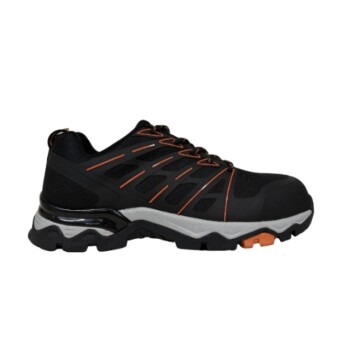
The protection of personnel is the absolute priority in industrial environments. Using safety shoes is critical when handling heavy equipment or performing maintenance because they act as the primary defense against severe mechanical injuries. Without them, workers are vulnerable to crushing impacts from falling objects and punctures from sharp debris, which can lead to debilitating injuries and operational stoppages.
Safety shoes equipped with steel toes and anti-puncture midsoles are essential personal protective equipment (PPE) that safeguard workers against crushing and puncture hazards, directly enhancing operational safety in logistics and maintenance environments.
Critical Protective Features
The importance of safety shoes lies in their specific engineering designed to mitigate high-risk hazards found in industrial settings.
Impact Resistance (Steel Toes)
Handling heavy equipment inherently involves the risk of dropped loads or shifting machinery.
Safety shoes equipped with steel toes provide a hardened barrier over the toes. This feature is vital for preventing crushing injuries if a heavy object falls directly onto the foot.
Puncture Prevention (Midsoles)
Facility maintenance and repair zones are frequently littered with hazardous materials.
Anti-puncture midsoles are essential in these environments. They create a shield within the sole of the shoe, stopping sharp debris—such as nails, glass, or metal shards—from penetrating the footwear and injuring the foot.
Enhancing Operational Integrity
Beyond individual protection, safety footwear plays a role in the broader scope of facility management.
Maintaining Workforce Availability
Severe foot injuries can lead to long-term medical leave for skilled workers.
By preventing these injuries, safety shoes help maintain consistent staffing levels. This ensures that logistical and maintenance operations continue without the disruption caused by preventable workplace accidents.
Common Misconceptions and Limitations
While safety shoes are vital, relying on them incorrectly can lead to gaps in safety protocols.
The Limits of Protection
Safety shoes reduce the severity of an injury, but they do not eliminate the hazard.
Do not assume invincibility. Wearing protective footwear is not a substitute for proper lifting techniques, clear communication, and safe equipment handling protocols.
Verification of Features
Not all work boots are safety shoes.
It is a common error to wear sturdy-looking boots that lack specific ratings. You must verify that the footwear explicitly includes steel toes and anti-puncture technology; standard leather boots offer no protection against crushing weights or sharp spikes.
Ensuring Comprehensive Protection
Selecting the right gear requires matching the hazard to the protective feature to ensure your team is covered.
- If your primary focus is handling heavy loads: Prioritize footwear with certified steel toes to mitigate crushing hazards from potential drops and shifting equipment.
- If your primary focus is facility maintenance or repair: Ensure footwear includes anti-puncture midsoles to protect against sharp debris often found on repair floors.
By standardizing the use of specialized safety shoes, you secure both the physical well-being of your team and the efficiency of your operations.
Summary Table:
| Feature | Protection Benefit | Primary Use Case |
|---|---|---|
| Steel Toes | Prevents crushing injuries from heavy falling objects | Heavy machinery & logistics |
| Anti-Puncture Midsole | Guards against nails, glass, and metal shards | Maintenance & repair zones |
| Impact Resistance | Absorbs energy from shifting machinery | Industrial equipment handling |
| Workforce Stability | Reduces medical leave & operational disruptions | Facility management & safety compliance |
Secure Your Workforce with 3515 High-Performance Safety Footwear
Protect your team and ensure operational continuity with industry-leading protective gear. As a large-scale manufacturer serving distributors and brand owners, 3515 offers comprehensive production capabilities for all footwear types, anchored by our flagship Safety Shoes series. Our extensive portfolio covers work and tactical boots, outdoor shoes, training shoes, and sneakers, as well as Dress & Formal shoes to meet diverse bulk requirements.
Don't compromise on worker safety. Partner with 3515 for reliable, high-quality footwear solutions tailored to your industrial needs.
Contact Us Today to Discuss Your Bulk Requirements
References
- Narine Selumyan, Hayk Petrosyan. STUDY OF TYPES OF INJURIES AND CAUSES OF THEIR OCCURRENCE IN VARIOUS SPORTS. DOI: 10.53068/25792997-2023.1.8-135
This article is also based on technical information from 3515 Knowledge Base .
Related Products
- Premium Suede Sport Safety Shoes for Wholesale & Bulk Orders
- Premium Lightweight Safety Shoes for Wholesale & Bulk Orders
- Wholesale Anti-Smash & Puncture-Proof Safety Shoes Custom Manufacturing for Brands
- Premium KPU Injection Athletic Style Safety Shoes
- Premium Safety Shoes with Rotating Buckle Safety Sneakers
People Also Ask
- What are the primary functions of professional safety shoes? Maximize Safety in Water Supply Confined Spaces
- What industries have specific OSHA footwear requirements? Ensure Compliance & Protect Your Workforce
- What role do specialized safety shoes play in preventing falls? Engineering Stability in Industrial Environments
- How do specialized safety shoes protect against battery maintenance injuries? Prevent Impact and Chemical Burns
- How do the 3R principles influence green footwear design? Master Sustainable Safety Shoe Manufacturing