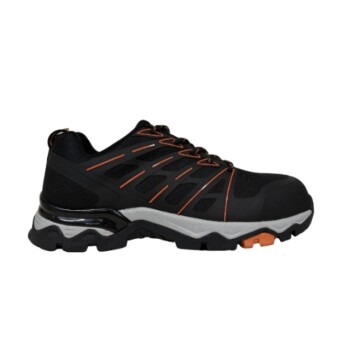
Professional safety shoes function as a comprehensive personal protective system, engineered to shield workers from mechanical, environmental, and physiological hazards. Their core utility lies in providing a reinforced physical barrier against impact and punctures, ensuring traction stability on dangerous surfaces, and minimizing physical fatigue through ergonomic support.
The Essential Takeaway Professional safety shoes are not merely uniform requirements; they are critical risk-mitigation tools that serve as the final line of defense against permanent injury. By integrating impact resistance, puncture defense, and ergonomic support, they directly protect worker health while safeguarding projects against the legal and operational costs of industrial accidents.
The Core Protective Mechanisms
Impact and Compression Defense
The most fundamental function of a safety shoe is protecting the toes and feet from crushing injuries. Reinforced toe caps, typically made of steel or composite materials, provide a hardened shield.
This feature is critical in environments involving heavy machinery or material handling. It prevents fractures and crushing wounds caused by falling heavy objects or shifting loads.
Puncture and Penetration Resistance
Construction sites are frequently littered with sharp debris, such as nails, glass, or scrap metal. Professional footwear employs puncture-resistant midsoles to create an impenetrable barrier between the sole and the foot.
This prevents sharp objects from piercing the shoe and entering the foot. This protection is essential for workers navigating complex ground surfaces where hazards are often concealed.
Stability and Slip Prevention
Falls on slippery or uneven surfaces are a leading cause of workplace injury. Industrial-grade shoes feature slip-resistant outsoles designed with specialized tread patterns and materials to maximize traction.
These outsoles ensure stability on wet, oily, or uneven terrain. By maintaining grip, they directly reduce the frequency of slip-and-fall accidents in high-risk zones.
Environmental Hazard Shielding
Beyond physical trauma, safety shoes protect against invisible or chemical threats. Depending on the specific rating (e.g., S3, S5), they offer defense against chemical splashes and contact with hazardous solutions.
Furthermore, specialized insulating shoes provide electrical resistance. This blocks current circuits, serving as a vital defense against electrocution for workers dealing with high-voltage risks.
Fatigue Reduction and Ergonomics
Worker safety extends beyond preventing acute accidents; it includes managing long-term health. The comfortable inner lining of professional safety shoes is engineered to cushion the foot during prolonged standing.
Proper support alleviates strain on the legs and back. This reduces physical fatigue, which helps maintain worker focus and prevents injuries related to exhaustion or repetitive stress.
Understanding the Trade-offs
While maximum protection is desirable, it often comes at the cost of weight and flexibility. Heavy-duty shoes with steel components and thick puncture plates can be heavier, potentially contributing to leg fatigue over extremely long shifts if not properly fitted.
Additionally, shoes designed for chemical or water resistance often sacrifice breathability. In hot environments, this can lead to discomfort or foot health issues (such as moisture buildup) if the user does not select a model with appropriate moisture-wicking linings.
Making the Right Choice for Your Goal
Selecting the correct safety footwear requires matching the specific protective function to the dominant risks of your environment.
- If your primary focus is heavy construction or demolition: Prioritize S3 or S5 rated footwear with steel toe caps and puncture-resistant midsoles to withstand falling debris and sharp ground objects.
- If your primary focus is electrical safety: Ensure the footwear is explicitly classified as insulating shoes to provide high electrical resistance and block current circuits.
- If your primary focus is wet or oily environments: Look for high-traction slip-resistant outsoles and chemical-resistant materials to prevent falls and burns.
- If your primary focus is minimizing worker fatigue: Select shoes with composite toe caps (lighter than steel) and advanced ergonomic inner linings to support prolonged standing.
True safety is achieved when the protective features of the footwear align perfectly with the specific hazards of the job site.
Summary Table:
| Core Function | Protective Mechanism | Primary Benefit |
|---|---|---|
| Impact Defense | Reinforced Steel/Composite Toe Caps | Prevents crushing injuries from falling objects |
| Puncture Resistance | Puncture-resistant Midsoles | Blocks sharp debris like nails or scrap metal |
| Traction Stability | Slip-resistant Outsoles | Reduces falls on wet, oily, or uneven surfaces |
| Hazard Shielding | Electrical & Chemical Resistance | Protects against electrocution and chemical burns |
| Ergonomic Support | Cushioned Linings & Support | Minimizes physical fatigue and repetitive stress |
Partner with 3515 for High-Performance Industrial Footwear
As a large-scale manufacturer serving distributors and brand owners worldwide, 3515 offers comprehensive production capabilities for all footwear types, anchored by our flagship Safety Shoes series. Whether you are looking to secure a high-volume supply of S3/S5 rated construction boots or specialized electrical insulating shoes, we provide the scale and precision your business demands.
Our extensive portfolio covers work and tactical boots, outdoor shoes, training shoes, and sneakers, as well as Dress & Formal shoes to meet diverse bulk requirements.
Ready to elevate your inventory with industry-leading safety standards? Contact our team today to discuss your bulk requirements and see how our manufacturing expertise can drive your brand's success.
References
- Levi Anatolia S.M. Exposto, Rogerio Fontes. MONITORING THE USE OF PERSONAL PROTECTIVE EQUIPMENT ON EMPLOYERS’ HEALTH AND SAFETY. DOI: 10.55324/ijoms.v1i4.66
This article is also based on technical information from 3515 Knowledge Base .
Related Products
- Premium Suede Sport Safety Shoes for Wholesale & Bulk Orders
- Premium Lightweight Safety Shoes for Wholesale & Bulk Orders
- Premium KPU Injection Athletic Style Safety Shoes
- Advanced KPU Athletic Safety Shoe with Steel Toe Cap Anti-Slip Rotary Lacing System
- Premium KPU Athletic Safety Shoes for Wholesale
People Also Ask
- What are the primary functions of professional safety shoes? Maximize Safety in Water Supply Confined Spaces
- What industries have specific OSHA footwear requirements? Ensure Compliance & Protect Your Workforce
- What role do specialized safety shoes play in preventing falls? Engineering Stability in Industrial Environments
- How does professional industrial cleaning equipment maintain the performance stability of safety shoes? Pro Maintenance
- Why is barefoot walking used as a baseline in gait safety research? Unlocking Natural Biomechanics for Shoe Design