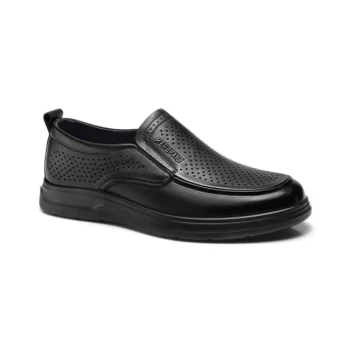
The ability to simulate realistic heel-to-ground contact is the defining factor in accurate footwear safety testing. A manual angle adjustment mechanism allows testers to set the specific angle at which a shoe strikes the surface, typically ranging from 2 to 20 degrees. Because different footwear categories—such as formal shoes versus training shoes—exhibit unique force profiles during a slip, this adjustment is necessary to capture valid friction performance data under realistic conditions.
By manually tuning the contact angle, you move beyond generic testing to simulate the exact biomechanical stresses a specific shoe faces during a slip. This ensures that the friction data collected reflects the shoe's performance under the extreme conditions where accidents are most likely to occur.
Simulating Realistic Biomechanics
Replicating Heel Strike Variations
In real-world scenarios, a pedestrian rarely slips while their foot is perfectly flat. The critical moment of a slip usually occurs when the heel strikes the ground at an angle.
A manual adjustment mechanism allows the test equipment to mimic this geometry. By offering a range of 2 to 20 degrees, the tester can replicate the specific angle at which a user is most vulnerable to losing traction.
Addressing Unique Force Profiles
Not all shoes interact with the ground in the same way. A rigid formal shoe delivers force to the floor differently than a cushioned training shoe.
The manual adjustment allows the operator to account for these distinct force profiles. This customization ensures that the test conditions align with the structural design of the specific footwear being evaluated.
Capturing Critical Performance Data
Isolating Friction Limits
To determine if a shoe is safe, you must identify its breaking point in terms of grip. This is known as critical friction performance.
Fixed-angle tests may miss this data point if the angle does not align with the shoe's design. Manual adjustment ensures the test captures friction at the exact orientation where the shoe is being pushed to its limit.
Testing Under Extreme Conditions
Safety testing is not about simulating an easy walk; it is about simulating a failure. The primary reference notes the importance of testing under extreme slipping conditions.
By manually increasing the angle, a tester can subject the footwear to aggressive scenarios. This validates that the shoe can maintain grip even when the wearer's biomechanics are stressed.
Understanding the Trade-offs
Reliance on Operator Expertise
While manual adjustment offers precision, it introduces a variable: the operator. The accuracy of the test depends on the tester correctly selecting the appropriate angle for the specific shoe type.
Complexity of Setup
Unlike automated or fixed systems, manual mechanisms require physical setup time. This adds a layer of complexity to the testing procedure but is a necessary trade-off for achieving biomechanical fidelity.
Making the Right Choice for Your Goal
To maximize the value of your friction testing, align the angle adjustment with your specific safety objectives:
- If your primary focus is Formal Footwear: Use the adjustment to simulate steeper contact angles, as these shoes often have smaller heel contact areas that create high pressure points.
- If your primary focus is Athletic/Training Shoes: Utilize the full range of angles to account for the complex tread patterns and heel compression typical of soft-sole footwear.
Precision in the testing lab translates directly to reliability on the street.
Summary Table:
| Feature | Benefit for Slip Resistance Testing |
|---|---|
| Angle Range (2-20°) | Replicates realistic heel strike geometry for various foot strikes. |
| Force Profile Tuning | Accounts for structural differences between rigid formal shoes and cushioned sneakers. |
| Friction Isolation | Identifies the critical breaking point of grip under extreme slipping conditions. |
| Biomechanical Fidelity | Simulates real-world failure scenarios rather than static, flat-foot testing. |
Partner with 3515 for Precision-Engineered Footwear Solutions
At 3515, we understand that reliable slip resistance is the cornerstone of footwear safety. As a large-scale manufacturer serving global distributors and brand owners, we leverage advanced testing insights to deliver high-performance products across our entire range.
Whether you need our flagship Safety Shoes, tactical boots, athletic sneakers, or premium Dress & Formal shoes, our comprehensive production capabilities ensure every pair meets rigorous biomechanical standards. We provide the bulk manufacturing expertise and technical precision your brand needs to succeed in demanding markets.
Ready to elevate your product line with industry-leading footwear? Contact us today to discuss your bulk requirements!
References
- Shubham Gupta, Arnab Chanda. Development of a Portable Device for Surface Traction Characterization at the Shoe–Floor Interface. DOI: 10.3390/surfaces5040036
This article is also based on technical information from 3515 Knowledge Base .
Related Products
- Premium Suede Sport Safety Shoes for Wholesale & Bulk Orders
- Heavy-Duty Waterproof Nubuck Safety Boots Safety Shoes for Bulk Supply
- Wholesale Durable 6-Inch Work Boots | Custom & Private Label Manufacturer
- Durable Goodyear Welt Leather Work Boots for Wholesale & Private Label
- Durable Leather Moc Toe Work Boots for Wholesale & Custom Manufacturing
People Also Ask
- What are the primary functions of professional safety shoes? Maximize Safety in Water Supply Confined Spaces
- What industries have specific OSHA footwear requirements? Ensure Compliance & Protect Your Workforce
- What role do specialized safety shoes play in preventing falls? Engineering Stability in Industrial Environments
- Why are customized foot sensors or professional safety shoes incorporated into biomechanical testing? Precision Insights
- What happens during the cutting stage of safety shoes manufacturing? Precision, Process & Quality