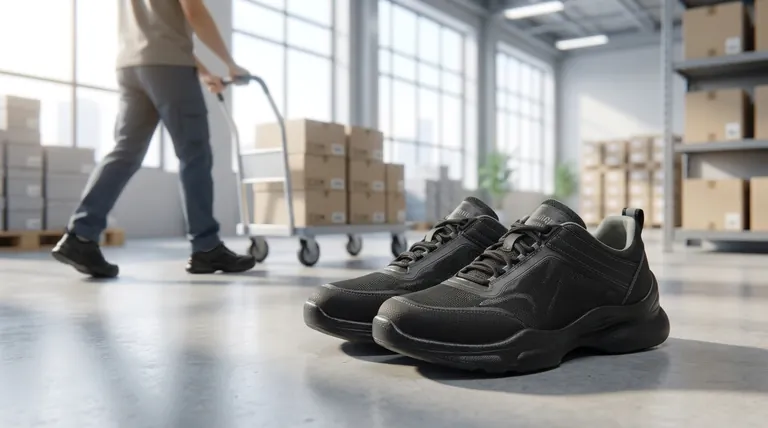
The primary advantages of mesh work shoes are their exceptional breathability, flexibility, and lightweight construction. These characteristics directly address the most common sources of foot discomfort in low-hazard work environments: heat, moisture buildup, and fatigue from heavy, restrictive footwear. They allow for natural foot movement and keep feet cooler and drier throughout a long shift.
Mesh work shoes prioritize comfort by sacrificing durability and protection. They are the ideal solution for reducing fatigue and improving airflow in roles where the risk of physical impact, punctures, or moisture exposure is minimal.
The Core Benefits of Mesh Construction
Understanding why mesh is used requires looking at how its physical properties translate into tangible, all-day benefits for the wearer.
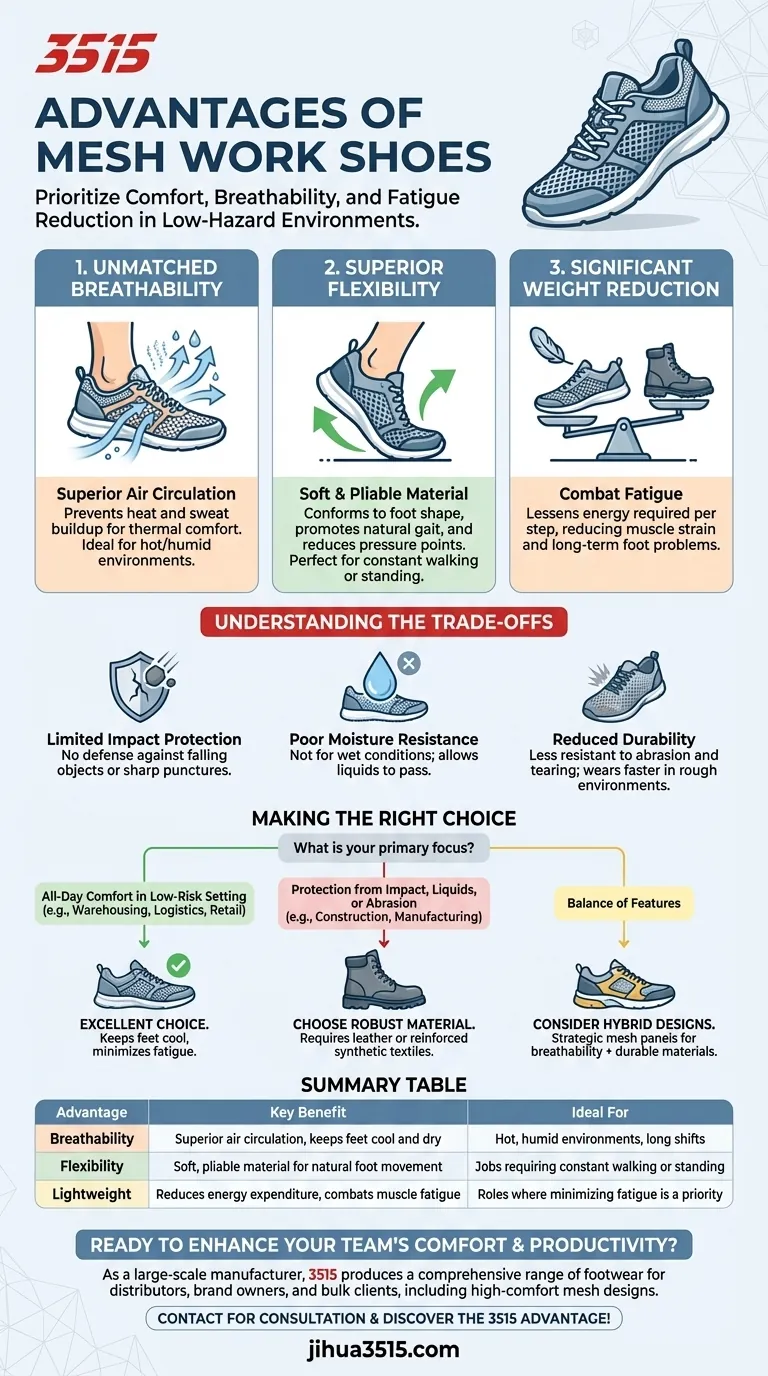
Unmatched Breathability for Thermal Comfort
The defining feature of mesh is its open-weave structure, which allows air to circulate freely in and out of the shoe. This ventilation is critical for preventing the buildup of heat and sweat.
This makes mesh footwear exceptionally well-suited for hot or humid work environments, significantly improving comfort and reducing the likelihood of skin issues.
Superior Flexibility for Natural Movement
Unlike rigid leather or synthetic uppers, mesh fabric is soft and pliable. It conforms to the shape of your foot and flexes easily with each step.
This promotes a more natural gait and reduces restrictive pressure points, which is especially valuable for jobs that require constant walking, standing, or squatting.
Significant Weight Reduction to Combat Fatigue
Mesh is inherently lighter than traditional materials like leather. While the difference per shoe may seem small, it compounds over thousands of steps taken during a workday.
This reduction in weight lessens the energy required for each step, which directly translates to reduced muscle fatigue and a lower long-term risk of chronic foot problems.
Understanding the Trade-offs
The advantages of mesh come with necessary compromises. Its focus on comfort means it is not a suitable choice for every work environment.
Limited Protection from Workplace Hazards
The soft, open weave of mesh offers virtually no protection against impacts from falling objects or sharp punctures from below. It is not the correct material for construction sites, heavy manufacturing, or any environment with significant physical risks.
Poor Resistance to Moisture
The same porousness that provides excellent breathability also allows water, chemicals, and other liquids to pass through easily. Mesh shoes will not keep your feet dry in wet conditions.
Reduced Long-Term Durability
Compared to full-grain leather or heavy-duty synthetics, mesh fabric is far less resistant to abrasion and tearing. In environments with rough surfaces or frequent scuffing, mesh shoes will wear out much more quickly.
Making the Right Choice for Your Work Environment
Selecting the right footwear is a matter of accurately matching the material's properties to your job's specific demands.
- If your primary focus is all-day comfort in a low-risk setting: Mesh is an excellent choice for keeping your feet cool and minimizing fatigue in environments like warehousing, logistics, or retail.
- If your primary focus is protection from impact, liquids, or abrasion: You must choose a shoe made from a more robust material like leather or reinforced synthetic textiles.
- If you need a balance of features: Consider hybrid designs that strategically place mesh panels for breathability while using durable materials in high-wear and critical-protection zones.
Ultimately, choosing the right work shoe is about correctly identifying the most significant daily challenge your feet will face.
Summary Table:
| Advantage | Key Benefit | Ideal For |
|---|---|---|
| Breathability | Superior air circulation keeps feet cool and dry | Hot, humid environments, long shifts |
| Flexibility | Soft, pliable material allows for natural foot movement | Jobs requiring constant walking or standing |
| Lightweight | Reduces energy expenditure and combats muscle fatigue | Roles where minimizing fatigue is a priority |
Ready to Enhance Your Team's Comfort and Productivity?
As a large-scale manufacturer, 3515 produces a comprehensive range of footwear for distributors, brand owners, and bulk clients. Our production capabilities encompass all types of shoes and boots, including high-comfort mesh designs perfect for your operations.
Let us help you equip your workforce with the right footwear to boost morale and efficiency. Contact our team today for a consultation and discover the 3515 advantage!
Visual Guide
Related Products
- Wholesale Breathable Training Shoes Custom Athletic Footwear Manufacturer
- Wholesale Lightweight Cushioned Athletic Sneakers for Custom Bulk Production
- Durable Canvas Work Shoes with Rubber Lug Sole | Wholesale Manufacturer
- Wholesale Breathable & Cushioned Training Shoes Custom Factory Production
- Durable Leather Moc Toe Work Boots for Wholesale & Custom Manufacturing
People Also Ask
- Why are professional-grade training shoes essential for physical therapy? Ensure Patient Safety and Gait Stability
- Why are the slip-resistance and stability performance of training shoes critical in gait analysis? Ensure Data Accuracy
- What is the primary role of specialized training or orthopedic shoes? Enhance Safety in Elderly Balance Training
- Why is specialized athletic footwear necessary for ankle rehab? Unlock Safety and Stability in Recovery
- Why is sole stiffness testing using a force gauge necessary? Build Superior Training Shoes with Precision