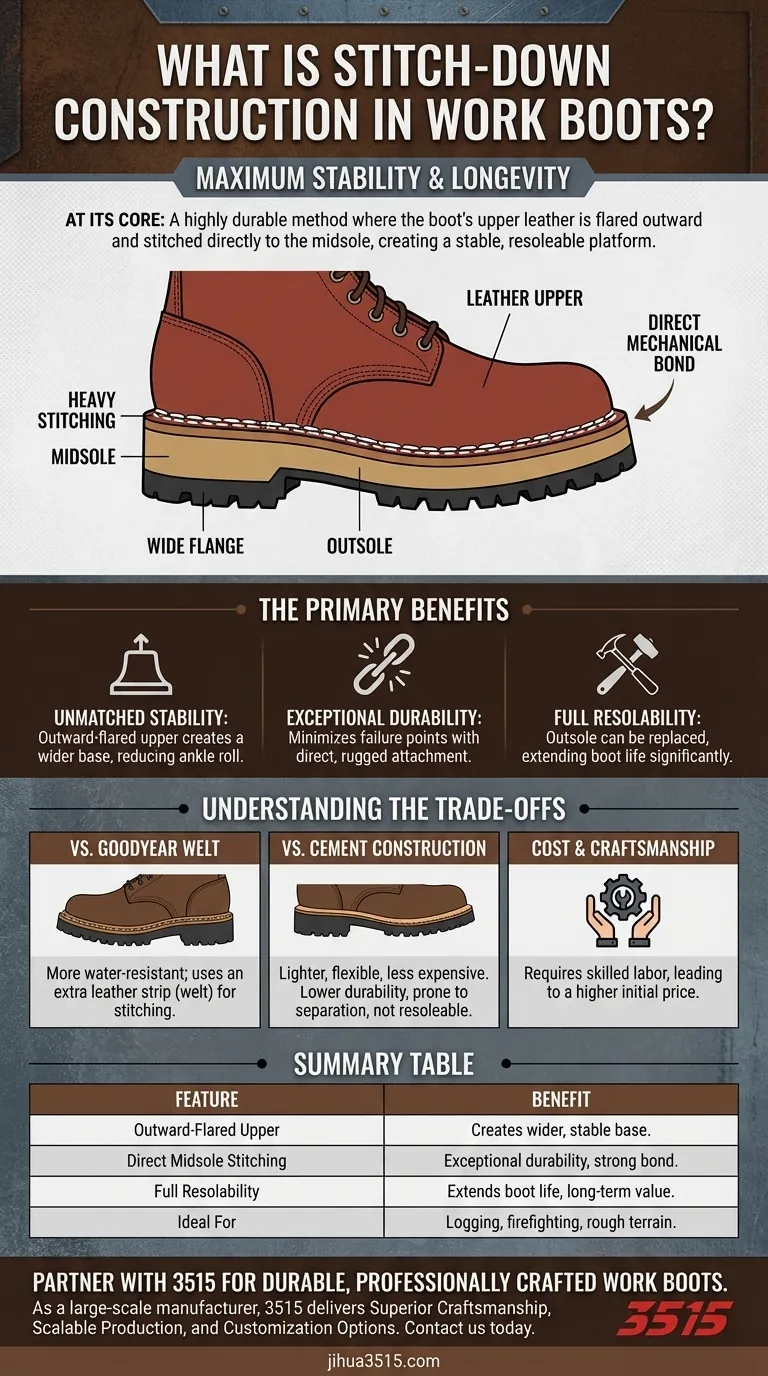
At its core, stitch-down construction is a highly durable method where the boot's upper leather is flared outward and stitched directly to the midsole. This process, performed by skilled craftspeople, creates an exceptionally stable and robust platform that can be resoled multiple times, significantly extending the life of the boot.
The critical takeaway is that stitch-down construction prioritizes maximum stability and longevity. It is a premium, labor-intensive method chosen for the most demanding work environments where a solid footing is non-negotiable.
How Stitch-Down Construction Works
The stitch-down method is defined by its unique approach to uniting the boot's upper with its sole, creating a distinct and highly functional structure.
The Outward-Flared Upper
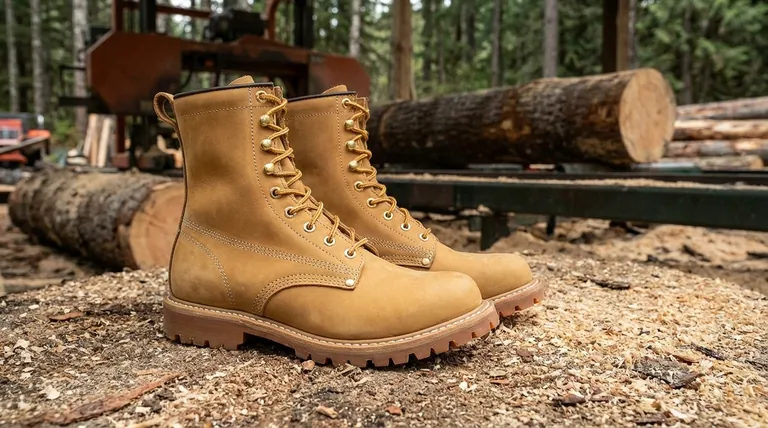
The defining characteristic of this method is how the leather upper is handled. Instead of being tucked under, the leather is splayed or flared outward, creating a wide flange around the base of the boot.
Direct Midsole and Outsole Attachment
This flared leather is then stitched directly through to the midsole using heavy, durable thread. This creates an incredibly strong mechanical bond. Finally, the outsole is cemented and often stitched to this secure midsole platform.
The Primary Benefits of Stitch-Down Boots
Choosing a stitch-down boot is an investment in specific performance characteristics. The construction method delivers tangible advantages in demanding conditions.
Unmatched Stability
The outward-flared upper creates a wider, more stable base than most other construction types. This provides a very planted and secure feel, reducing the risk of ankle roll on uneven terrain.
Exceptional Durability
By stitching the upper directly to the midsole, the construction minimizes the number of potential failure points. This direct attachment is famously rugged and resistant to separating under high stress.
Full Resolability
Like other premium construction methods, stitch-down boots are fully resoleable. When the outsole wears down, a cobbler can remove it and attach a new one, giving the boots a second or even third life.
Understanding the Trade-offs
No construction method is superior in all aspects. The strengths of stitch-down construction come with specific trade-offs compared to other common methods.
Stitch-Down vs. Goodyear Welt
These are the two titans of durable boot construction. In a Goodyear welt, the upper is stitched to a leather strip (the welt), which is then stitched to the sole. In stitch-down, the upper is stitched directly to the midsole.
Goodyear welting is often considered more water-resistant due to the extra layers, while stitch-down provides that wider, more stable platform. Both are highly durable and resoleable.
Stitch-Down vs. Cement Construction
Cement construction is a common method where the sole is simply glued to the upper. This results in a lighter, more flexible, and less expensive boot.
The trade-off is a significant loss in durability. Cemented boots are prone to sole separation under hard use and are typically not resoleable.
Cost and Craftsmanship
Stitch-down construction requires significant skill and time to execute properly. This specialized labor directly translates to a higher initial purchase price compared to more automated methods.
Making the Right Choice for Your Work
Choosing the right construction is about matching the boot's design to your specific needs and priorities.
- If your primary focus is maximum stability and long-term durability: A stitch-down boot is an elite choice, ideal for logging, firefighting, or work on rough terrain.
- If your primary focus is a balance of durability, water resistance, and classic style: The industry-standard Goodyear welt is an excellent and widely available option.
- If your primary focus is lightweight comfort and affordability for light-duty tasks: Cement construction offers the most value and flexibility.
Understanding the construction of your boot is the first step toward investing in a true piece of professional equipment.
Summary Table:
| Feature | Benefit |
|---|---|
| Outward-Flared Upper | Creates a wider, more stable base for superior footing. |
| Direct Midsole Stitching | Provides exceptional durability and a strong mechanical bond. |
| Full Resolability | Extends boot life significantly, offering long-term value. |
| Ideal For | Demanding work like logging, firefighting, and rough terrain. |
Need Durable, Professionally Crafted Work Boots? Partner with 3515.
As a large-scale manufacturer, 3515 produces a comprehensive range of footwear for distributors, brand owners, and bulk clients. Our production capabilities encompass all types of durable shoes and boots, including premium stitch-down construction models built for the toughest jobs.
We deliver:
- Superior Craftsmanship: Boots designed for maximum stability and longevity.
- Scalable Production: Reliable supply to meet your business needs.
- Customization Options: Tailor styles and specifications for your market.
Contact us today to discuss how our manufacturing expertise can provide the durable footwear your customers rely on.
Get a Quote & Discuss Your Needs
Visual Guide
Related Products
- Durable Leather Work Boots Wholesale Manufacturer & Custom Factory
- Durable Leather Moc Toe Work Boots for Wholesale & Custom Manufacturing
- Durable Leather Work Boots for Wholesale & Custom Manufacturing
- Durable Leather Work Boots for Wholesale & Custom OEM Manufacturing
- Durable Moc-Toe Wedge Work Boots | Wholesale Manufacturing for Brands
People Also Ask
- What are the common workplace hazards that can be mitigated with the right work boots? Protect Your Workforce
- What are the main differences between 6 inch and 8 inch boots? Support vs. Mobility Explained
- What are the differences between Lace Up, Zip Sided, and Pull On work boots? Find Your Perfect Fit for Safety & Convenience
- How do PVC, neoprene, and rubber work boots compare in weight? Choose the Right Boot for All-Day Comfort
- How do subjective norms influence the marketing of work boots and tactical footwear? Leverage Social Identity for Sales