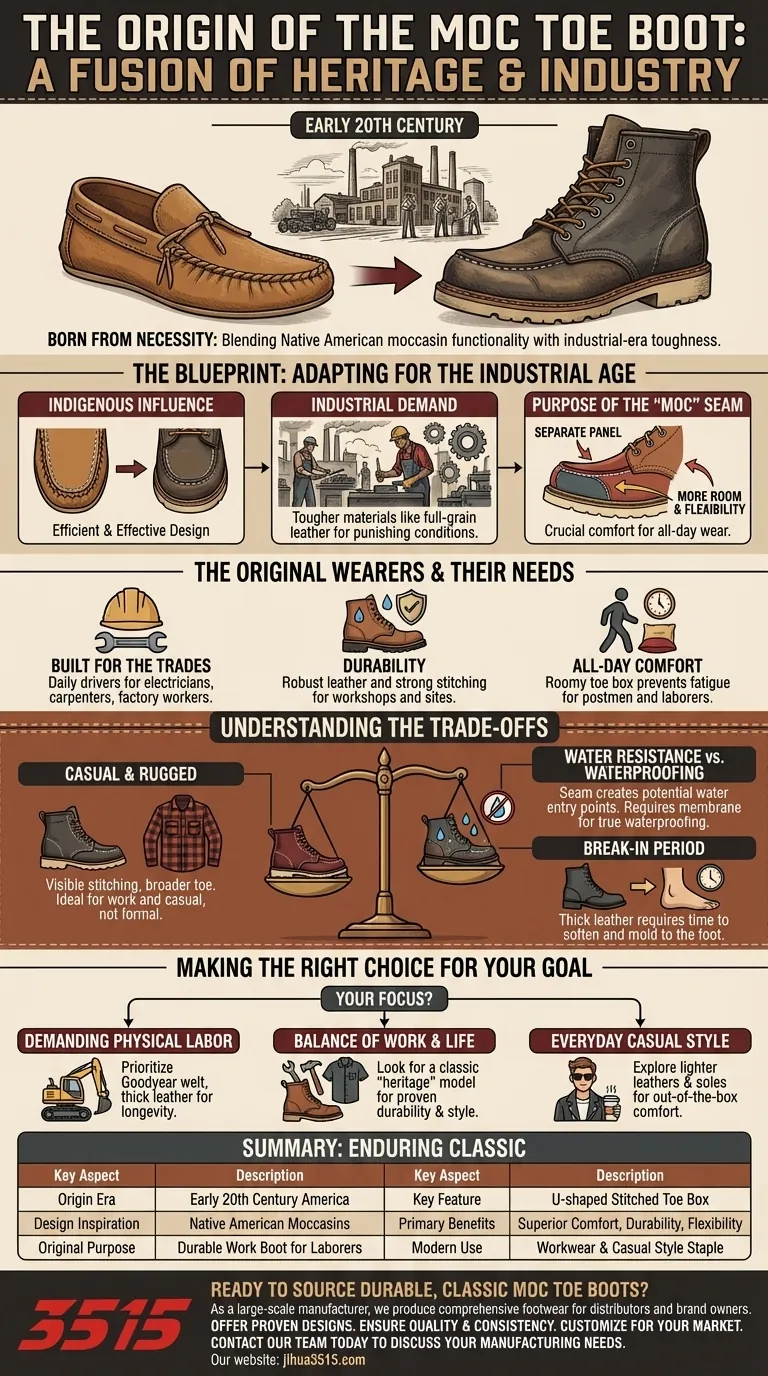
The moc toe boot was born from necessity. It originated in the early 20th century as a highly durable and comfortable work boot for American laborers. Its signature design, the U-shaped seam on the toe box, was directly inspired by the traditional moccasins worn by Native American peoples, blending ancient functionality with industrial-era toughness.
The moc toe’s distinct look is not merely aesthetic; it is a direct result of its functional heritage. This design provides a unique combination of durability and comfort that allowed it to transition flawlessly from the factory floor to a staple of modern style.
The Blueprint: From Moccasin to Work Boot
The moc toe's design is a story of practical adaptation. It took a time-tested concept and reinforced it for a new, more demanding environment.
The Indigenous Influence
The core design element—the U-shaped, stitched toe box—is a direct descendant of the moccasins historically crafted and worn by various Native American tribes. This construction method is both efficient and effective.
Adapting for the Industrial Age
As America industrialized, workers in factories, workshops, and on construction sites needed footwear that could withstand punishing conditions. Bootmakers adopted the moccasin toe design, applying it to much tougher materials like full-grain leather.
The Purpose of the "Moc" Seam
The seam creates a separate panel of leather over the top of the foot. This allows for more room and flexibility in the toe box compared to a single-piece design, providing crucial comfort for individuals who spend all day on their feet.
The Original Wearers and Their Needs
The moc toe wasn't designed for an office. It was built for professionals who relied on their tools, their hands, and their feet to get the job done.
Built for the Trades
These boots were the daily drivers for electricians, carpenters, plumbers, and factory workers. They needed footwear that wouldn't fail under constant stress and movement.
Durability as a Prerequisite
The combination of robust, often full-grain leather and strong stitching provided the strength and water resistance required to navigate workshops and building sites safely.
All-Day Comfort as a Priority
For postmen, mechanics, and other laborers, comfort was not a luxury; it was a necessity for performance. The roomier toe box and flexible design were key features that prevented fatigue over long shifts.
Understanding the Trade-offs
While exceptionally versatile, the moc toe design has inherent characteristics that create trade-offs when compared to other boot styles.
Water Resistance vs. True Waterproofing
The prominent seam on the toe box creates more potential points for water to enter than a plain-toe boot with a single-piece vamp. While the leather is often water-resistant, most traditional moc toes are not inherently waterproof without a dedicated membrane.
A More Casual Profile
The visible stitching and broader toe box lend the boot a rugged, informal appearance. It excels in work and casual settings but is not suitable for formal or business attire where a sleeker silhouette is required.
The Break-In Period
Like most high-quality work boots made from thick leather, a new pair of moc toes often requires a break-in period. The leather must soften and mold to the wearer's foot, which can cause initial discomfort.
Making the Right Choice for Your Goal
The moc toe's evolution from pure workwear to a style icon means there is a model suited for nearly any purpose.
- If your primary focus is demanding physical labor: Prioritize models with thick, full-grain leather and a Goodyear welt construction, which allows the boot to be resoled for maximum longevity.
- If your primary focus is everyday casual style: You can explore a wider range of leathers and lighter-weight soles that offer out-of-the-box comfort and a more refined look.
- If your primary focus is a balance of work and life: Look for a classic "heritage" model from a reputable brand, as these offer proven durability while being recognized as a timeless style staple.
Understanding its origin reveals the moc toe boot as a masterclass in functional design that has rightfully earned its place as an enduring classic.
Summary Table:
| Key Aspect | Description |
|---|---|
| Origin Era | Early 20th Century America |
| Design Inspiration | Native American Moccasins |
| Original Purpose | Durable Work Boot for Laborers |
| Key Feature | U-shaped Stitched Toe Box |
| Primary Benefits | Superior Comfort, Durability, Flexibility |
| Modern Use | Workwear & Casual Style Staple |
Ready to Source Durable, Classic Moc Toe Boots?
As a large-scale manufacturer, 3515 produces a comprehensive range of footwear for distributors, brand owners, and bulk clients. Our production capabilities encompass all types of durable shoes and boots, including time-tested moc toe designs.
We can help you:
- Offer Proven Designs: Provide your customers with boots built on a legacy of durability and comfort.
- Ensure Quality & Consistency: Leverage our large-scale manufacturing expertise for reliable, high-quality production.
- Customize for Your Market: Develop moc toe boots tailored to your brand's specific style and functional requirements.
Contact our team today to discuss your manufacturing needs and how we can bring durable, classic footwear to your customers.
Visual Guide
Related Products
- Durable Leather Moc Toe Work Boots for Wholesale & Custom Manufacturing
- Durable Moc Toe Wedge Sole Work Boots for Wholesale and Private Label
- Durable Moc-Toe Wedge Work Boots | Wholesale Manufacturing for Brands
- Wholesale Durable Safety Boots Manufacturer Customizable Steel Toe Work Boots
- Premium Suede Metatarsal Guard Safety Boots Work Shoes
People Also Ask
- What are moc toe work boots designed for? Superior Comfort and Mobility for Tradespeople
- What are the key features to look for when purchasing moc toe boots? A Guide to Durability & Fit
- What clothing items complement the Outdoorsman/Heritage Look with moc toe boots? Build a Timeless, Rugged Wardrobe
- What types of outfits can moc toe boots be worn with? Versatile Style Guide
- What distinguishes moc toe boots? The Ultimate Guide to Unmatched Comfort & Style