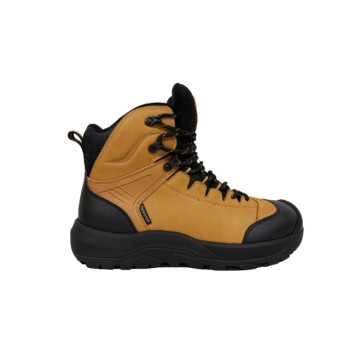
For moderate cold weather, boots with 400 grams (g) of insulation are the established standard. This level provides reliable warmth in temperatures ranging from approximately 10°F to 30°F, especially when you are engaged in medium-level physical activity like outdoor maintenance or hiking.
The most critical factor in choosing insulation is not just the temperature outside, but the balance between the weather and your personal activity level. The right choice prevents both freezing from too little insulation and dangerous moisture buildup from too much.
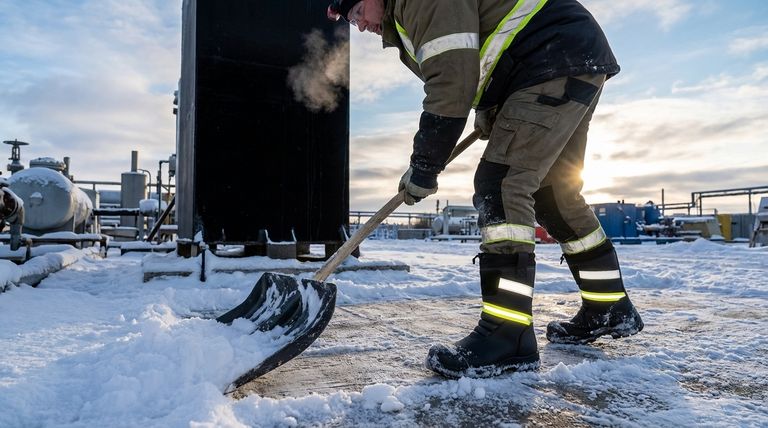
Decoding Insulation Levels: A Guide to Grams
Insulation in footwear is measured by the weight of the insulating material in a square meter, given in grams. A higher gram count means more material is packed in, trapping more air and providing greater warmth.
Mild Conditions (Up to 200g)
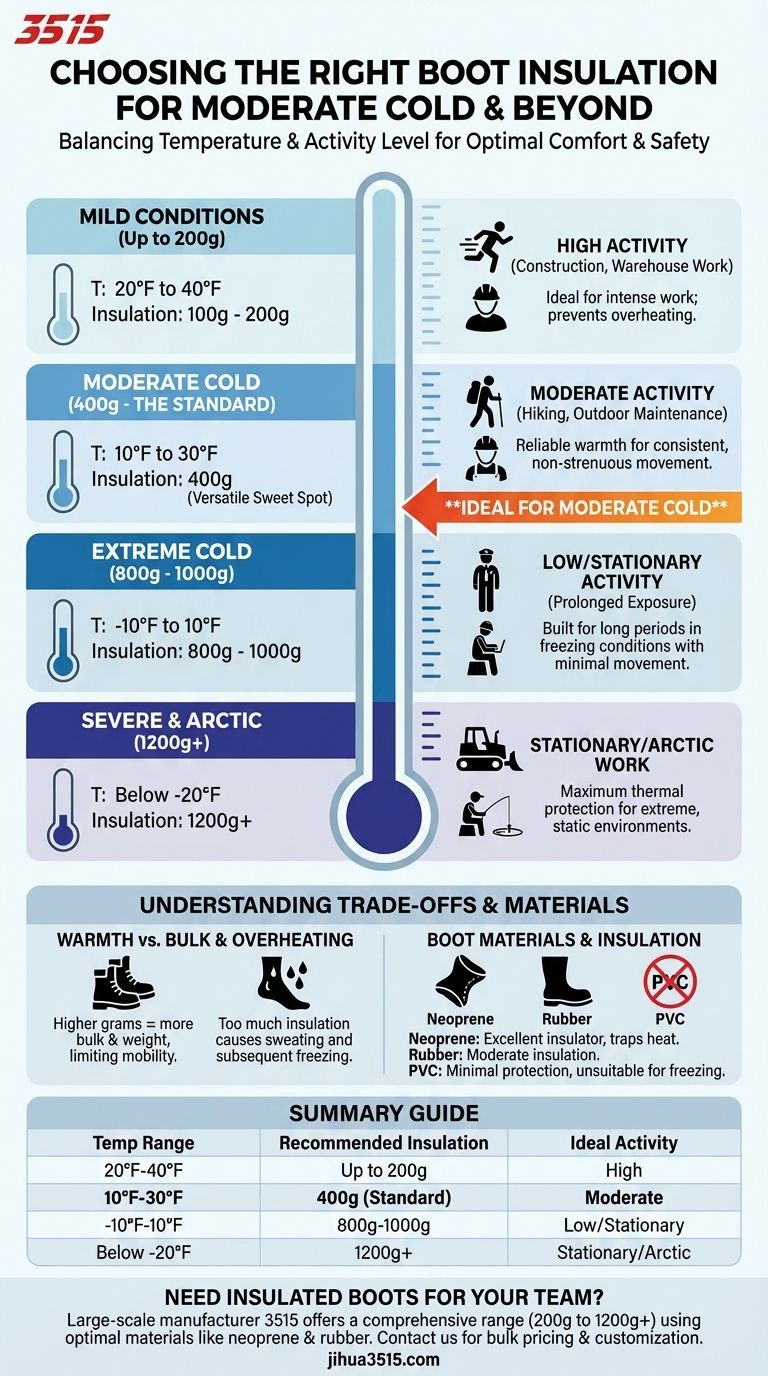
Footwear with 100g to 200g of insulation is designed for cool or mild winter conditions, typically between 20°F and 40°F.
This lighter insulation is ideal for high-activity tasks like construction or fast-paced warehouse work. Your body generates significant heat during intense work, so less insulation is needed to prevent your feet from sweating.
Moderate Cold (400g)
The 400g level is the versatile sweet spot for true winter weather, suitable for temperatures between 10°F and 30°F.
It offers substantial warmth for moderate activity levels where you are moving consistently but not strenuously. This makes it a common choice for forestry, winter hiking, and general outdoor work.
Extreme Cold (800g to 1000g)
When temperatures drop into the -10°F to 10°F range, 800g to 1000g of insulation becomes necessary.
This level is built for prolonged exposure to freezing conditions, particularly for those with low activity levels. Utility or security personnel who stand or sit for long periods rely on this higher insulation to stay warm.
Severe & Arctic Conditions (1200g+)
For the most severe cold, often below -20°F, insulation levels of 1200g and higher are required.
These boots are engineered for maximum thermal protection, usually for stationary work like operating heavy equipment in arctic environments or ice fishing.
Understanding the Trade-offs
Selecting the right insulation involves more than just matching a number to a temperature. You must consider the practical consequences of your choice.
Warmth vs. Bulk
Higher insulation levels mean a heavier and bulkier boot. While a 1200g boot offers incredible warmth, its weight and stiffness can cause fatigue and limit mobility during active use.
The Risk of Overheating
Choosing too much insulation for your activity level is a common mistake. If you wear 800g boots for a strenuous hike, your feet will sweat. That moisture gets trapped, eliminates the insulating properties of your socks, and can lead to dangerously cold feet once you stop moving.
The Role of Boot Materials
The material of the boot itself contributes to its insulating properties. Neoprene is an excellent insulator that conforms to your foot, trapping heat effectively.
Rubber offers moderate insulation, but it is less effective than neoprene. PVC, on the other hand, provides minimal protection and is generally unsuitable for freezing conditions.
Making the Right Choice for Your Goal
To select the correct insulation, always consider your most common use case.
- If your primary focus is active work in cool weather (20°F to 40°F): Choose up to 200g to balance warmth with the need for your feet to breathe.
- If your primary focus is all-purpose use in moderate winter (10°F to 30°F): Select 400g as the most versatile standard for average activity levels.
- If your primary focus is stationary work in deep cold (-10°F to 10°F): Opt for 800g or more to compensate for the lack of body heat you'll be generating.
By matching your insulation level to both the thermometer and your activity, you ensure optimal comfort and protection.
Summary Table:
| Temperature Range | Recommended Insulation | Ideal Activity Level |
|---|---|---|
| 20°F to 40°F | Up to 200g | High Activity (e.g., construction) |
| 10°F to 30°F | 400g (Standard) | Moderate Activity (e.g., hiking, outdoor work) |
| -10°F to 10°F | 800g - 1000g | Low/Stationary Activity |
| Below -20°F | 1200g+ | Stationary/Arctic Work |
Need the perfect insulated boots for your team or brand?
As a large-scale manufacturer, 3515 produces a comprehensive range of footwear for distributors, brand owners, and bulk clients. We expertly craft boots with the right insulation level—from 200g to 1200g+—using optimal materials like neoprene and rubber to ensure warmth, durability, and comfort for any condition and activity level.
Contact 3515 today for bulk pricing, customization options, and to discuss your specific needs.
Visual Guide
Related Products
- Premium Insulated Safety Boots and Shoes for Wholesale & Bulk Orders
- High Performance Fire-Retardant Waterproof Safety Boots
- Premium Wholesale Waterproof Safety Boots High Performance Protection for Industrial Markets
- Factory Direct Wholesale Rain Boots Durable Waterproof & Fully Customizable
- Wholesale Waterproof Tactical Boots Custom Suede & High-Traction Soles
People Also Ask
- What are the recommended insulation ratings for mild winter conditions? A Guide for Active & Stationary Workers
- How does insulation thickness correlate with temperature ranges? A Guide to Choosing the Right Warmth
- What insulation level is needed for severe cold and stationary work? 1200g or Higher is Essential
- What safety advantages do insulated boots offer beyond warmth? Dielectric Protection & Superior Grip
- How does fleece lining contribute to the warmth of insulated boots? Trapping Air for Superior Cold Protection