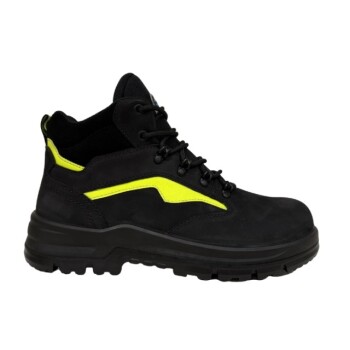
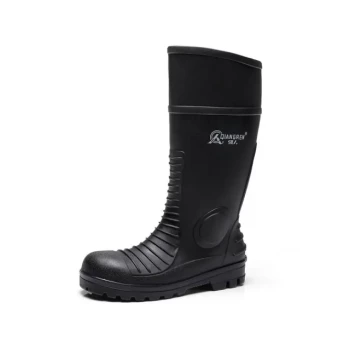
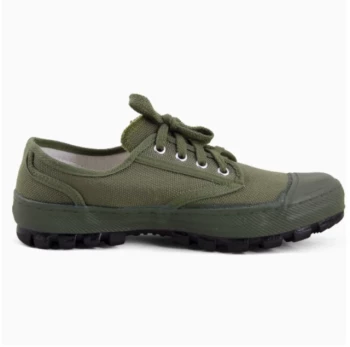
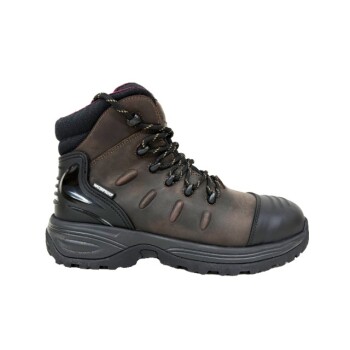
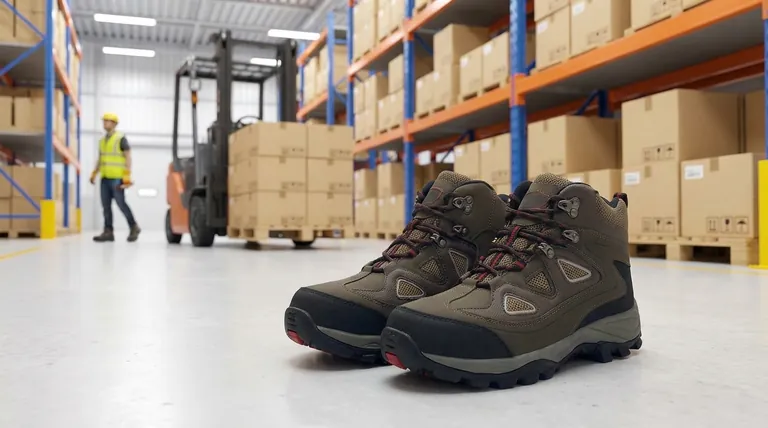
When selecting a work boot, the material dictates its core performance. Nylon work boots are characterized by their lightweight construction, exceptional breathability, and immediate, out-of-the-box comfort. They sacrifice the absolute durability of traditional leather to deliver agility and reduce foot fatigue over long shifts.
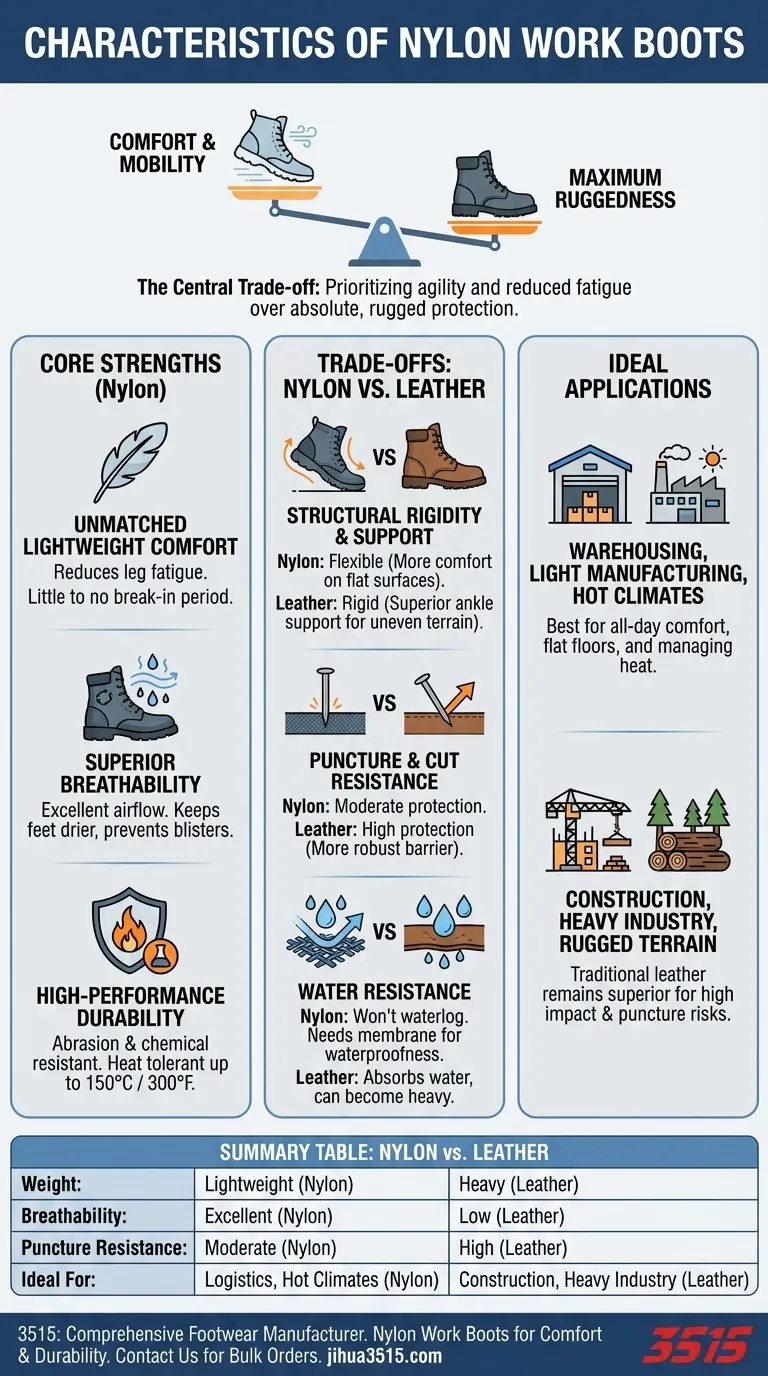
The central trade-off is clear: Nylon work boots prioritize comfort and mobility over maximum ruggedness. They excel in environments where airflow and reduced weight are more critical than protection from extreme physical hazards.
The Core Strengths of Nylon in Footwear
Nylon is a synthetic polyamide fiber engineered for specific performance traits. When used in work boots, these traits offer distinct advantages for certain jobs and environments.
Unmatched Lightweight Comfort
The most immediate benefit of a nylon boot is its reduced weight compared to an all-leather counterpart. This directly translates to less energy expended with every step.
This reduction in weight significantly decreases foot and leg fatigue over an 8- or 12-hour workday. The material is also soft and flexible, often requiring little to no break-in period.
Superior Breathability
Nylon uppers, particularly those featuring mesh panels, offer excellent airflow. This is critical for managing heat and moisture.
By allowing sweat to evaporate, nylon boots help keep feet drier and more comfortable, reducing the risk of blisters and fungal issues, especially in warm climates or indoor facilities.
High-Performance Durability
While often compared unfavorably to leather, high-quality nylon is an exceptionally durable textile. It boasts high resistance to abrasion, tearing, and chemical corrosion.
Nylon can also withstand high temperatures (up to 150°C / 300°F), making it suitable for certain high-heat work environments where leather might dry out and crack.
Understanding the Trade-offs: Nylon vs. Leather
Choosing nylon involves acknowledging its limitations. The decision to opt for nylon over leather is a calculated one based on your specific workplace hazards and comfort priorities.
Structural Rigidity and Support
Leather provides a rigid structure that offers superior ankle support and protection on uneven or hazardous terrain.
Nylon is inherently more flexible. While this enhances comfort on flat surfaces, it provides less support against twists and impacts, a critical factor in construction or logging.
Puncture and Cut Resistance
This is the most significant safety trade-off. A thick leather upper provides a much more robust barrier against punctures from nails, screws, and other sharp objects.
While nylon is tough, it does not offer the same level of protection from cuts and punctures as a solid piece of full-grain leather.
Water Resistance
Nylon fibers do not absorb water easily, which means the boot won't become waterlogged and heavy in damp conditions.
However, this does not make the boot waterproof. True waterproofing comes from a separate internal membrane (like Gore-Tex), which can be found in both nylon and leather boots. An untreated nylon weave will allow water to pass through.
How to Apply This to Your Project
Your daily tasks and work environment are the ultimate guide. Match the material's strengths to your needs to ensure safety and comfort.
- If your primary focus is all-day comfort and reducing fatigue: Nylon's lightweight and flexible nature is ideal, especially for work on concrete floors in logistics, warehousing, or light manufacturing.
- If your primary focus is maximum protection and durability: Traditional leather remains the superior choice for construction, heavy industry, or rugged outdoor work where impact and puncture risks are high.
- If your primary focus is working in a hot climate: The breathability of a nylon or nylon-mesh boot will provide significantly more comfort and help prevent moisture buildup.
Choosing the right boot material is the foundation of daily comfort and safety on the job.
Summary Table:
| Characteristic | Nylon Work Boots | Traditional Leather Boots |
|---|---|---|
| Weight | Lightweight | Heavy |
| Breathability | Excellent (High Airflow) | Low |
| Break-in Period | Minimal to None | Required |
| Ankle Support | Moderate (Flexible) | High (Rigid) |
| Puncture Resistance | Moderate | High |
| Ideal For | Warehousing, Light Manufacturing, Hot Climates | Construction, Heavy Industry, Rugged Terrain |
Need the right work boots for your team? As a large-scale manufacturer, 3515 produces a comprehensive range of footwear for distributors, brand owners, and bulk clients. Our production capabilities encompass all types of shoes and boots, including high-performance nylon work boots designed for comfort and durability. Let us help you equip your workforce with the perfect fit. Contact our experts today to discuss your project requirements!
Visual Guide
Related Products
- Durable Leather Moc Toe Work Boots for Wholesale & Custom Manufacturing
- Durable Moc-Toe Wedge Work Boots | Wholesale Manufacturing for Brands
- Wholesale Premium Waterproof Nubuck Safety Shoes Boots
- Durable Leather Work Boots for Wholesale & Custom OEM Manufacturing
- Durable Leather Work Boots for Wholesale & Custom Manufacturing
People Also Ask
- What are moc toe work boots designed for? Superior Comfort and Mobility for Tradespeople
- What are the key features to look for when purchasing moc toe boots? A Guide to Durability & Fit
- How did moc toe boots originate? A Legacy of Workwear Durability and Style
- What clothing items complement the Outdoorsman/Heritage Look with moc toe boots? Build a Timeless, Rugged Wardrobe
- What types of outfits can moc toe boots be worn with? Versatile Style Guide