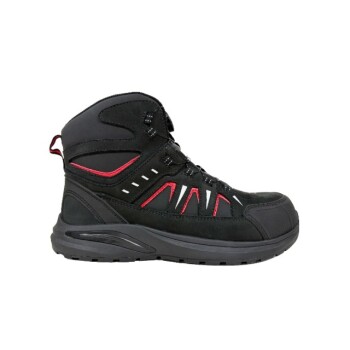
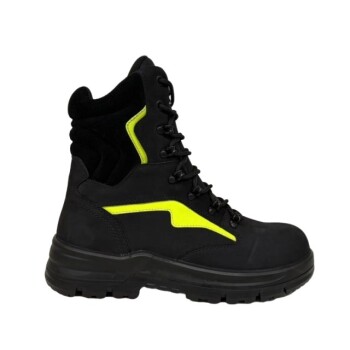
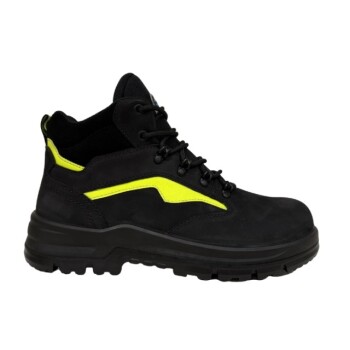
Yes, many PVC work boots include reinforced toe protection, but it is not a default feature. You must specifically look for models that are advertised and certified as "safety toe" or "steel toe" boots.
The term "PVC boot" describes the primary material used for waterproofing and chemical resistance. Whether it includes impact protection depends entirely on if it was manufactured to meet specific safety standards, which adds a protective steel or composite cap in the toe.
The Two Categories of PVC Boots
To select the right boot, you must first understand that they fall into two distinct categories based on their intended purpose. The presence of a safety toe is the primary differentiator.
General-Purpose PVC Boots
These are the most common type of PVC boots, often called gumboots or rain boots.
Their design prioritizes keeping the wearer's feet dry and protected from mud, water, and certain chemicals. They are ideal for agriculture, food processing, sanitation, and general outdoor work where impact hazards are not present.
Safety-Toe PVC Boots
These boots are engineered for hazardous environments. They combine the waterproof and chemical-resistant benefits of PVC with a reinforced toe cap.
This protective cap is typically made of steel or a lighter, non-metallic composite material. These boots are built for industries like construction, manufacturing, and utilities, where workers face both wet conditions and the risk of falling objects or compression.
How to Identify a Protective PVC Boot
You cannot determine if a boot has a safety toe by its appearance alone. You must verify its protective features through clear, standardized indicators.
Look for Safety Standard Markings
The most reliable method is to check for markings from a recognized safety authority. In the United States, this is typically an ASTM F2413 rating.
This standard will be stamped or printed on a label inside the boot, specifying its level of impact (I) and compression (C) resistance. Without this certification, you should assume the boot offers no formal toe protection.
Read the Product Description Carefully
Manufacturers will clearly state if a boot includes a protective toe. Look for explicit terms like "steel toe," "composite toe," or "safety toe" in the product name, description, and technical specifications.
Understand Material vs. Feature
Remember that PVC is the material providing the waterproof shell. Steel toe is the safety feature embedded within that shell. A boot can and often is both. Never assume a durable-looking PVC boot is a safety boot.
Understanding the Trade-offs
Choosing a safety-toe model involves balancing protection with other factors.
Protection vs. Comfort and Weight
A reinforced toe cap adds significant weight and rigidity to the boot. While essential for safety, this can make the boots heavier and less flexible than a standard, non-protective PVC boot.
Cost Considerations
The engineering, materials, and testing required to certify a safety boot invariably increase its cost. Safety-toe PVC boots are more expensive than their general-purpose counterparts.
Environment-Specific Needs
Steel toes are excellent conductors of temperature. In very cold environments, they can make your feet feel colder. Composite toes are a better choice for insulation against the cold and are also non-metallic, which is a requirement in certain high-security or electrical-hazard environments.
Making the Right Choice for Your Environment
Your decision must be based on a clear assessment of your workplace hazards.
- If your primary focus is waterproofing and chemical resistance in a low-impact area: A standard, non-rated PVC boot offers the most lightweight and cost-effective solution.
- If your primary focus is protection from falling objects, compression, or impact hazards: You must select a PVC boot explicitly marked with a certified safety toe rating, such as ASTM F2413.
Ultimately, verifying the boot's safety certification is the only way to ensure you have the correct protection for the job.
Summary Table:
| Feature | General-Purpose PVC Boots | Safety-Toe PVC Boots |
|---|---|---|
| Primary Use | Waterproofing, chemical resistance in low-risk environments | Hazardous environments with impact/compression risks |
| Toe Protection | None (unless specified) | Steel or composite toe cap (certified to ASTM F2413) |
| Ideal For | Agriculture, food processing, sanitation | Construction, manufacturing, utilities |
| Key Identifier | No safety rating markings | Clearly marked with safety standard (e.g., ASTM F2413) |
Need certified safety-toe PVC boots for your team?
As a large-scale manufacturer, 3515 produces a comprehensive range of PVC work boots with certified steel and composite toe protection for distributors, brand owners, and bulk clients. We ensure compliance with ASTM F2413 and other global standards, combining durability, safety, and comfort.
Contact us today for bulk pricing, custom specifications, and samples tailored to your industry's needs!
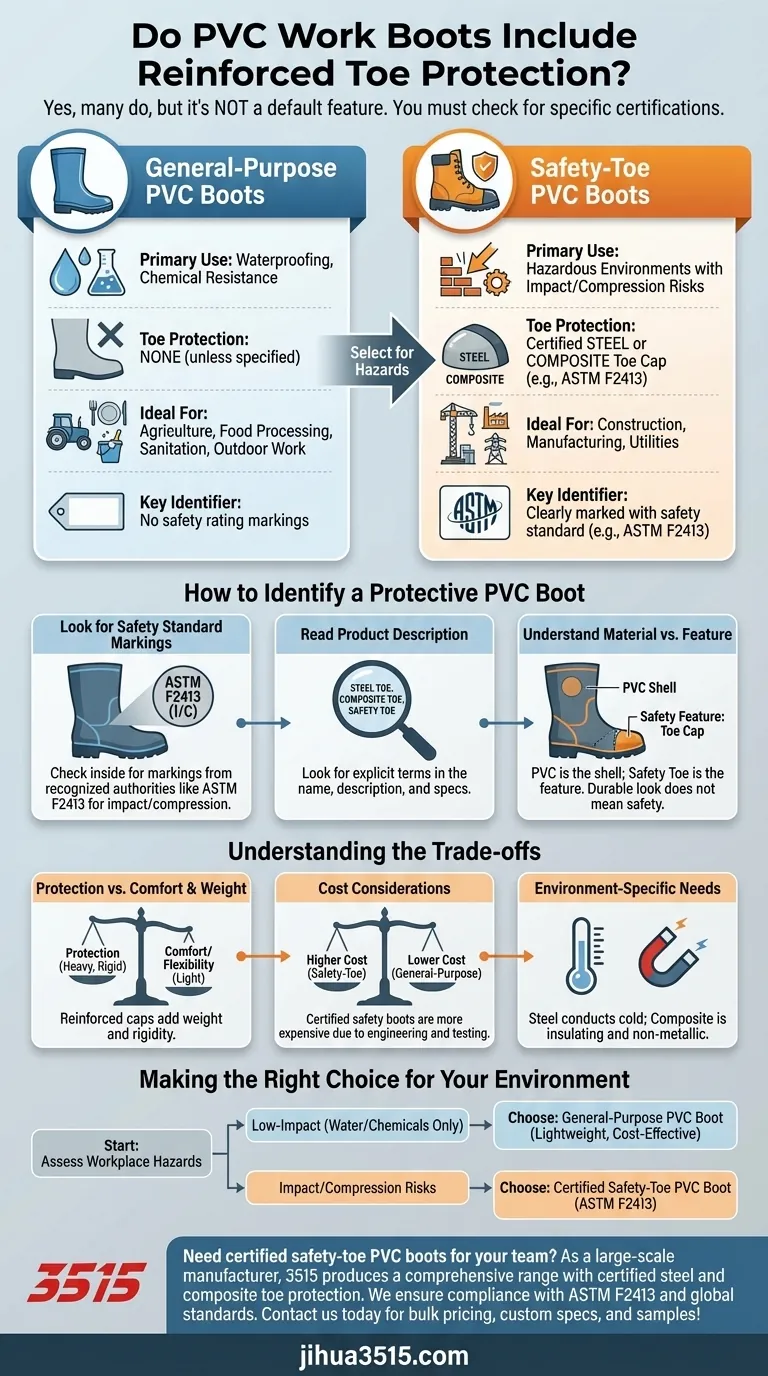
Visual Guide
Related Products
- Wholesale Durable 6-Inch Work Boots | Custom & Private Label Manufacturer
- Wholesale Customizable Safety Boots Durable & Protective Footwear Manufacturing
- Wholesale Durable Safety Boots Manufacturer Customizable Steel Toe Work Boots
- Wholesale Heavy-Duty Waterproof Steel Toe Work Boots OEM Manufacturer
- Wholesale Durable Breathable Safety Boots Custom OEM Manufacturer
People Also Ask
- What are the pros and cons of steel toe work boots? A Guide to Maximum Protection vs. Comfort
- What is the history of steel toe work boots? From German Invention to Modern Safety Standard
- What are the different types of steel toe work boots? Choose the Right Boot for Your Job
- How much weight can steel toe work boots withstand? Unpacking the 3,372 lb. Safety Standard
- Is there any truth to the myth about steel toe boots causing toe injuries upon impact? Debunking Common Safety Concerns