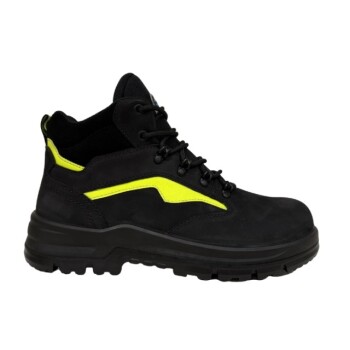
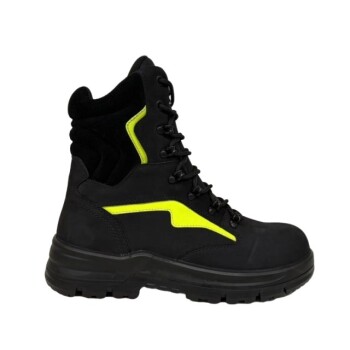
The short answer is that any industry where workers are exposed to petroleum-based products requires oil-resistant work boots. The most common industries include oil and gas, automotive manufacturing and repair, heavy manufacturing, and construction sites with heavy machinery. This specific feature is not a luxury; it is a critical component for both worker safety and the durability of the footwear itself.
The core issue is simple: common oils, fuels, and solvents actively degrade the materials used in standard boot soles, compromising their structural integrity and, most critically, their ability to provide traction on slick surfaces.

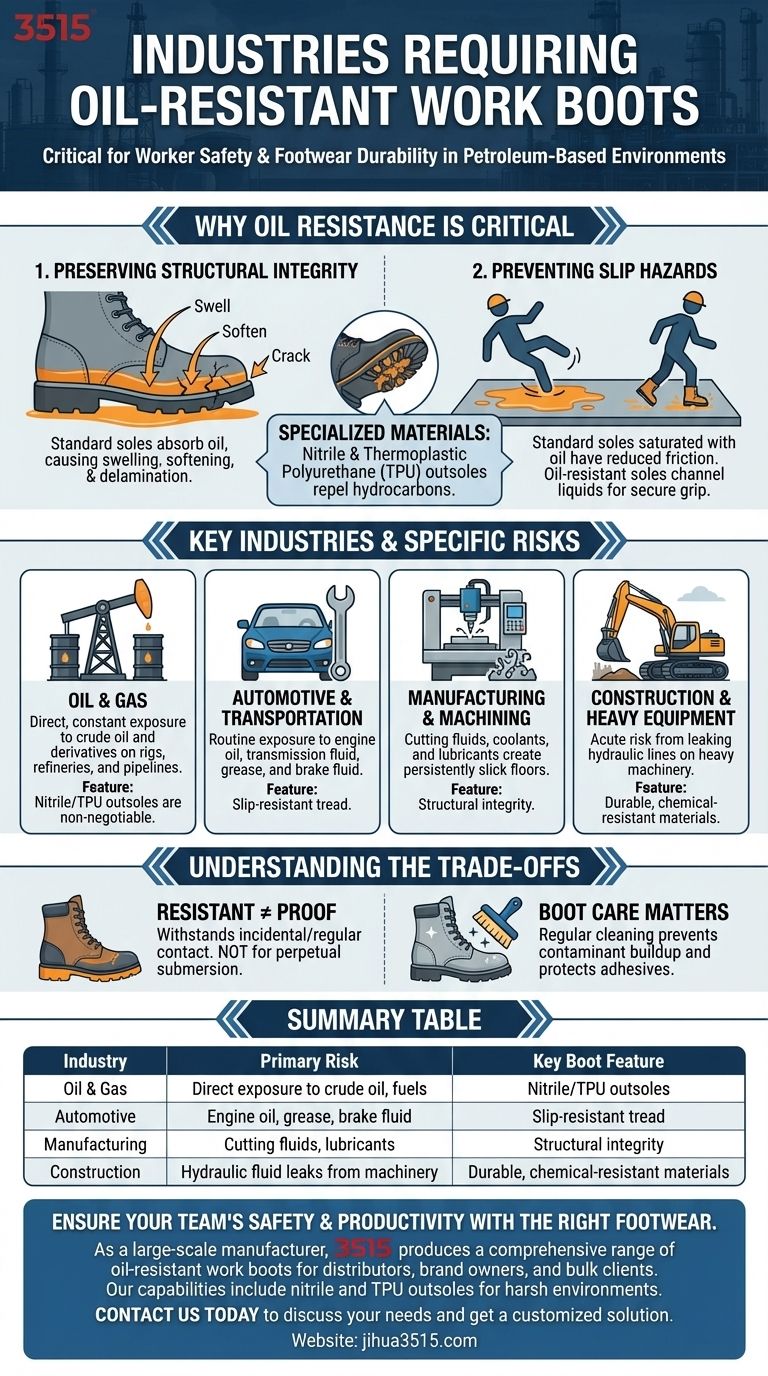
Why Oil Resistance is a Critical Safety Feature
Understanding the "why" behind this requirement clarifies its importance. Oil resistance is a functional characteristic that directly addresses two fundamental risks present in these work environments: material degradation and slip hazards.
Preserving Structural Integrity
Standard rubber and certain synthetic compounds used in boot outsoles can absorb oils and greases. This absorption causes the material to swell, soften, and eventually crumble or delaminate from the boot upper.
Oil-resistant boots use specialized outsole materials, such as Nitrile or Thermoplastic Polyurethane (TPU), that are formulated to repel these hydrocarbons and prevent this destructive breakdown.
Preventing Slip Hazards
A primary function of any work boot is to provide stable footing. When a standard sole becomes saturated with oil, its coefficient of friction drops dramatically, turning a workshop floor into a skating rink.
Oil-resistant soles are designed not only to resist material degradation but also to channel oils and liquids away from the contact surface, helping to maintain a secure grip even in slick conditions.
Protecting Against Other Hazards
A boot whose sole is compromised by oil is a boot that is failing in all its duties. It can no longer be trusted to provide adequate protection from impacts, punctures, or electrical hazards, as its core structure has been weakened.
Key Industries and Their Specific Risks
While the principle is universal, the specific risks vary by industry. Identifying your environment is key to selecting the right level of protection.
Oil & Gas
This is the most obvious sector. Workers on drilling rigs, in refineries, and along pipelines face constant, direct exposure to crude oil and its derivatives. Here, oil resistance is a non-negotiable baseline requirement.
Automotive & Transportation
Mechanics and assembly line workers are routinely exposed to a wide range of fluids, including engine oil, transmission fluid, grease, and brake fluid. These substances will rapidly destroy standard footwear.
Manufacturing & Machining
Industrial manufacturing environments, especially those involving metalworking or CNC machining, use cutting fluids, coolants, and lubricants. These materials create persistently slick floors and pose a chemical threat to boot soles.
Construction & Heavy Equipment
While not always as constant, the risk in construction is acute. A leaking hydraulic line on a piece of heavy machinery can instantly create a hazardous zone, making oil-resistant boots essential for operators and site workers.
Understanding the Trade-offs
It's important to recognize that "oil-resistant" is not the same as "oil-proof." This distinction impacts boot care and longevity.
The Meaning of "Resistant"
Oil-resistant implies that the material will withstand incidental and regular contact with oil without degrading significantly over its expected lifespan. It does not mean it can be perpetually submerged in oil without consequence.
The Limits of Protection
Even oil-resistant boots should be cleaned regularly to remove contaminant buildup. Heavy, prolonged saturation can still eventually affect the adhesives that bond the sole to the boot, even if the sole material itself remains intact.
The Importance of the Sole's Design
Beyond the material, look at the tread pattern. Effective oil-resistant boots often have channels and siping designed to move liquids away from the foot's contact patch, enhancing slip resistance.
Making the Right Choice for Your Environment
Ultimately, the decision comes down to a clear-eyed assessment of your daily tasks and potential exposures.
- If your primary work involves constant, direct contact with oils and chemicals: Oil-resistant boots are an absolute necessity for both your safety and the financial viability of your gear.
- If your work involves intermittent exposure to machine fluids or fuels: This feature is a critical investment to prevent premature boot failure and ensure reliable traction when you need it most.
- If your work is in a dry environment with no hydrocarbon exposure: Your focus can shift to other safety features like toe protection, puncture plates, or electrical hazard ratings that are more relevant to your risks.
Choosing the right boot means matching its protective technologies to the specific hazards you face every day.
Summary Table:
| Industry | Primary Risk | Key Boot Feature |
|---|---|---|
| Oil & Gas | Direct exposure to crude oil, fuels | Nitrile/TPU outsoles |
| Automotive | Engine oil, grease, brake fluid | Slip-resistant tread |
| Manufacturing | Cutting fluids, lubricants | Structural integrity |
| Construction | Hydraulic fluid leaks from machinery | Durable, chemical-resistant materials |
Ensure your team's safety and productivity with the right footwear.
As a large-scale manufacturer, 3515 produces a comprehensive range of oil-resistant work boots for distributors, brand owners, and bulk clients. Our production capabilities encompass all types of safety footwear, including specialized boots with nitrile or TPU outsoles designed to withstand harsh industrial environments.
We help you mitigate slip hazards, extend boot longevity, and protect your workforce. Contact us today to discuss your specific needs and receive a customized solution.
Visual Guide
Related Products
- Premium Oil Wax Leather Safety Boots for Bulk Purchase
- Durable Goodyear Welt Leather Work Boots for Wholesale & Private Label
- Durable Leather Moc Toe Work Boots for Wholesale & Custom Manufacturing
- Durable Leather Work Boots Wholesale Manufacturer & Custom Factory
- Wholesale Durable 6-Inch Work Boots | Custom & Private Label Manufacturer
People Also Ask
- What materials are commonly used for outsoles in safety boots? A Guide to Durability, Grip, and Comfort
- How do safety boots reduce cutting hazards? Essential Protection for Your Workforce
- What are the common types of safety boots and their primary uses? A Guide to Industrial Footwear
- Which organizations develop safety standards for work boots? Ensure Compliance & Worker Safety
- What primary protective functions do professional safety boots provide in urban solid waste recovery and waste picking processes? Discover Dual-Layer Protection.