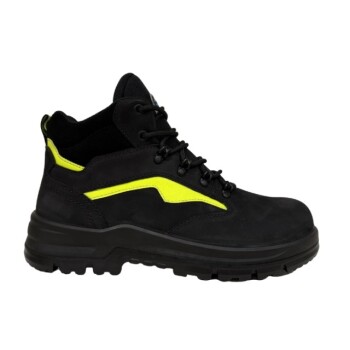
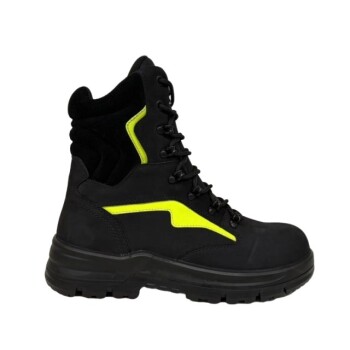
When selecting protective footwear, PVC work boots stand out for their exceptional combination of low cost, light weight, and complete waterproof protection. They provide a practical barrier against moisture and various chemicals, making them a highly economical choice for many work environments.
The core advantage of a PVC work boot is its unbeatable value proposition: it delivers essential waterproof and chemical protection at a fraction of the cost of rubber or neoprene boots. However, this affordability comes with critical trade-offs in long-term durability and flexibility.
The Core Advantages of PVC
PVC (Polyvinyl Chloride) is a synthetic plastic polymer whose properties make it highly suitable for certain types of protective footwear. Its primary benefits are clear and directly address common workplace needs.
Absolute Waterproof Protection
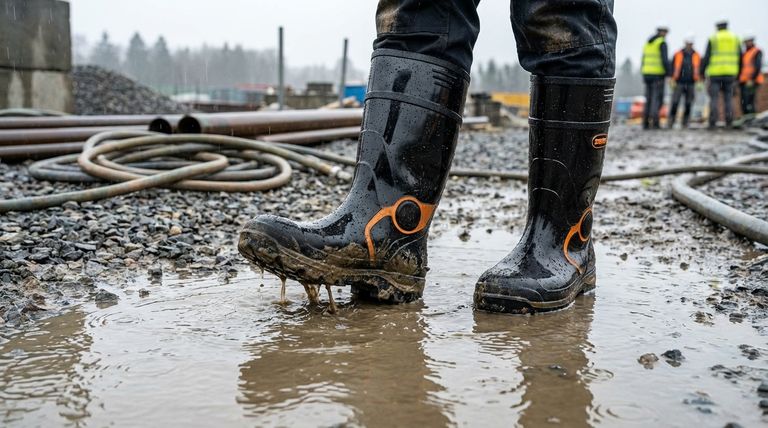
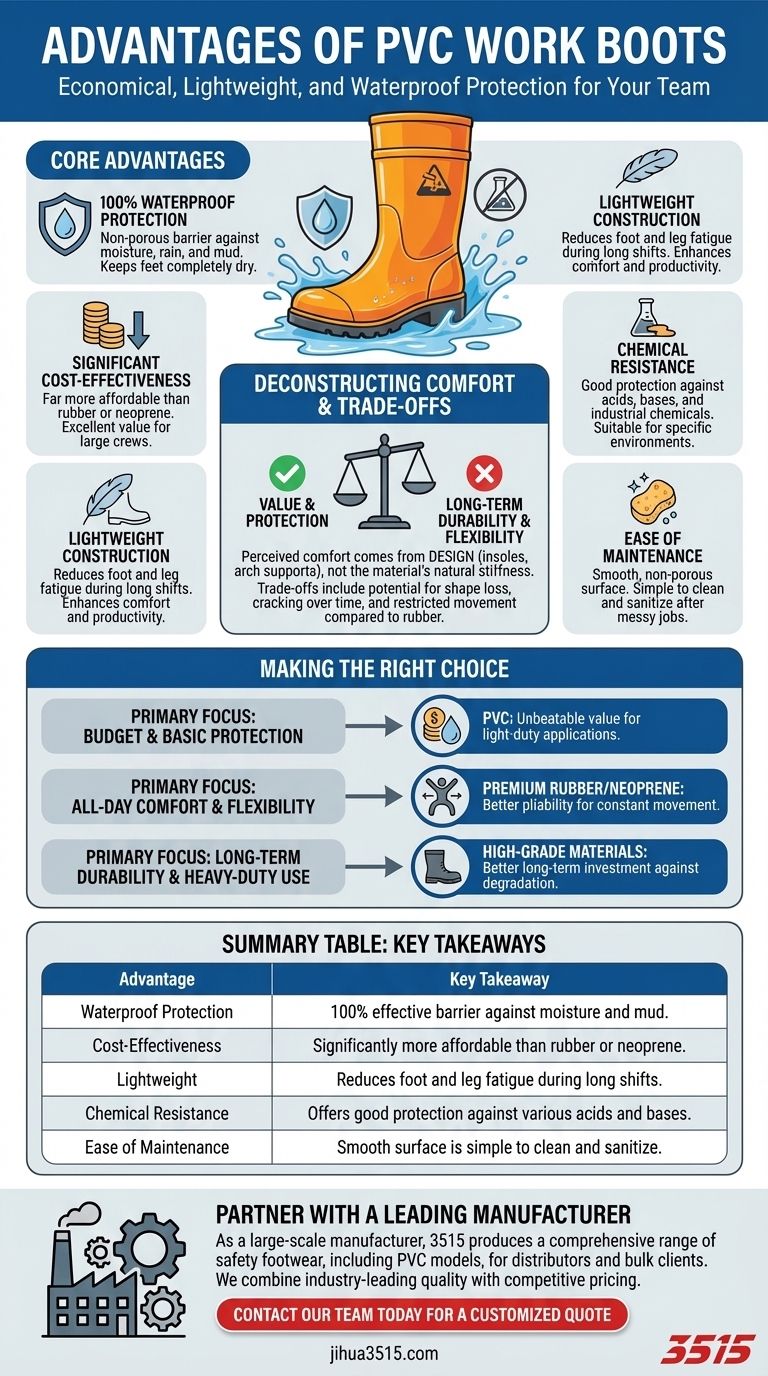
Because PVC is a non-porous plastic, it is 100% waterproof. This makes these boots ideal for work in consistently wet or muddy conditions, ensuring the user's feet remain completely dry.
Significant Cost-Effectiveness
The most significant driver for choosing PVC is often its price. These boots are generally far more affordable than their rubber or neoprene counterparts, making them an excellent option for large crews or for individuals who need reliable but infrequent protection.
Lightweight Construction
PVC boots are notably lightweight. This quality is crucial for reducing foot and leg fatigue during long shifts, enhancing overall comfort and productivity for workers who are on their feet all day.
Resistance to Chemicals
PVC offers good resistance to a range of chemicals, acids, and bases. This makes it a suitable material for specific agricultural, industrial, or sanitation environments where chemical splashes are a concern.
Ease of Maintenance
The smooth, non-porous surface of PVC is extremely easy to clean and sanitize. A simple rinse is often all that is needed to remove dirt and contaminants, which is a key benefit in messy job sites.
Deconstructing the Comfort Factor
While often marketed as comfortable, the source of that comfort in a PVC boot is more nuanced than the material itself.
The Myth of Material Softness
Compared to high-quality rubber, PVC as a material is actually stiffer and less flexible. While it may feel softer than a rigid leather boot, it does not have the natural pliability of rubber.
Comfort Through Design
The perceived comfort in modern PVC boots comes from design features, not the material. Manufacturers incorporate cushioned insoles, arch supports, and breathable linings to offset the material's natural rigidity and enhance the wearing experience.
Understanding the Trade-offs
No material is perfect, and the low cost of PVC is balanced by clear performance limitations. Understanding these is essential for making an informed decision.
Durability and Shape Retention
The biggest drawback of PVC is its durability. Over time and with heavy use, the material can lose its original shape, stretch, or crack, compromising its fit, support, and protective qualities.
Limited Flexibility
The inherent stiffness of PVC can restrict movement. For jobs that require frequent squatting, kneeling, or climbing, the lack of flexibility can become uncomfortable and limiting compared to more pliable materials.
The Importance of Safety Features
A boot's material is only one part of its safety profile. A true work boot must also incorporate features like a reinforced safety toe, a puncture-resistant sole, ankle support, and slip-resistant treads. A low-cost PVC boot without these features is simply a rain boot, not protective work equipment.
Making the Right Choice for Your Work
Choosing the right boot depends entirely on balancing your budget against your daily job requirements.
- If your primary focus is budget and basic wet-environment protection: PVC offers unbeatable value for keeping your feet dry at a low cost in light-duty applications.
- If your primary focus is all-day comfort and flexibility: You will likely find that premium rubber or neoprene boots provide better pliability for constant movement and activity.
- If your primary focus is long-term durability in heavy-duty use: Consider that PVC's tendency to degrade may make materials like high-grade rubber a better long-term investment.
By understanding these core trade-offs, you can confidently select the material that best serves your specific safety, performance, and budgetary needs.
Summary Table:
| Advantage | Key Takeaway |
|---|---|
| Waterproof Protection | 100% effective barrier against moisture and mud. |
| Cost-Effectiveness | Significantly more affordable than rubber or neoprene. |
| Lightweight | Reduces foot and leg fatigue during long shifts. |
| Chemical Resistance | Offers good protection against various acids and bases. |
| Ease of Maintenance | Smooth surface is simple to clean and sanitize. |
Ready to equip your team with durable, cost-effective work boots?
As a large-scale manufacturer, 3515 produces a comprehensive range of footwear for distributors, brand owners, and bulk clients. Our production capabilities encompass all types of safety shoes and boots, including PVC models that deliver the essential protection your business needs. We combine industry-leading quality with competitive pricing to maximize your value.
Contact our team today to discuss your specific requirements and receive a customized quote.
Visual Guide
Related Products
- Wholesale Customizable Safety Boots Durable & Protective Footwear Manufacturing
- Wholesale Heavy-Duty Waterproof Steel Toe Work Boots OEM Manufacturer
- Durable Leather Moc Toe Work Boots for Wholesale & Custom Manufacturing
- Durable Leather Work Boots for Wholesale & Custom Manufacturing
- Durable Leather Work Boots for Wholesale & Custom OEM Manufacturing
People Also Ask
- Why are industrial safety boots with steel toes necessary for machine operators? Essential Foot Protection for Safety
- What is the history of steel toe work boots? From German Invention to Modern Safety Standard
- What are the different types of steel toe work boots? Choose the Right Boot for Your Job
- What are the pros and cons of steel toe work boots? A Guide to Maximum Protection vs. Comfort
- What industries are safety toe work boots best suited for? Protect Your Feet in High-Risk Environments