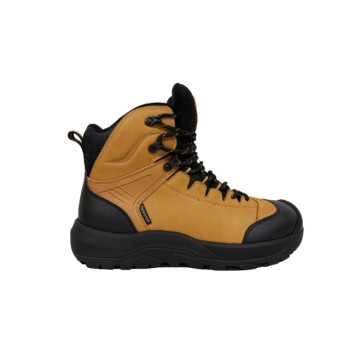
For winter mountain biking day rides, the ideal footwear is a dedicated, insulated cycling boot compatible with your pedal system. However, high-quality insulated hiking or snow boots are a highly effective and often more cost-effective alternative, especially for riders using flat pedals.
The core decision comes down to a single trade-off: bike-specific boots maximize pedaling efficiency and control, while general winter boots offer excellent warmth and versatility at a lower cost.
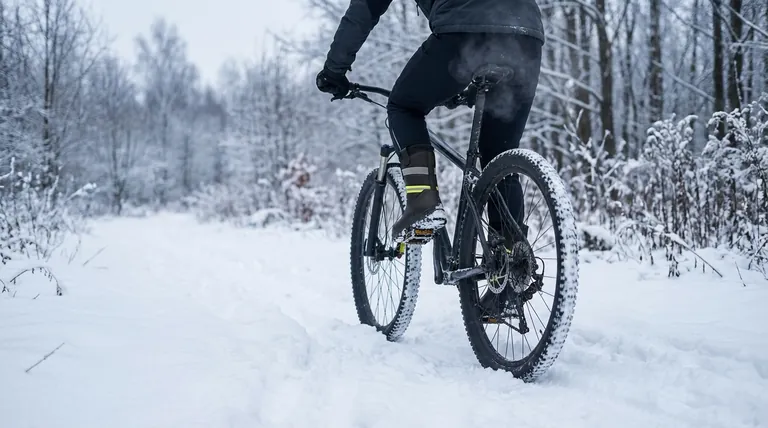
The Case for Bike-Specific Winter Boots
Dedicated winter cycling boots are engineered to solve the specific challenges of riding in the cold. They are the professional standard for a reason.
Optimized for Power Transfer
A key feature of any cycling shoe is a stiff sole. This rigidity prevents the shoe from flexing over the pedal, ensuring that all the power from your leg is transferred directly into the drivetrain.
Seamless Pedal Integration
These boots are designed from the ground up to work with modern pedal systems. Models like the 45North Wolfgar are built for clipless pedals, providing a secure and efficient connection to the bike.
Advanced Moisture Management
Top-tier cycling boots often feature removable liners. This allows you to easily dry them between rides, which is critical for preventing cold feet on subsequent outings.
Evaluating General-Purpose Winter Boots
Many riders, perhaps including yourself, already own footwear that is perfectly capable for winter riding. If your current snow hiking boots keep you warm, you are already solving the primary challenge.
Leveraging What You Already Own
Insulated winter hiking boots, snowshoeing boots, or even snowmobile boots are excellent options. They are designed for warmth in harsh conditions and often provide more than enough protection for a day ride.
Prioritizing Warmth and Fit
General winter boots often have more room for insulation. For extreme cold, wearing a boot one size larger with a thermal sock (like a Bama sock) is a proven strategy for creating an insulating pocket of warm air.
The Cost-Effectiveness Factor
The most significant advantage of using non-cycling boots is cost. A high-quality pair of winter hiking boots is typically far more affordable than a niche, bike-specific model.
Understanding the Trade-offs
Choosing footwear is about balancing competing priorities. There is no single "best" boot, only the best boot for your specific needs and budget.
The Efficiency Loss
The primary drawback of a hiking or snow boot is its flexible sole. This flexibility, designed for walking comfort, means some of your pedaling energy is lost as the boot bends over the pedal.
The Bulk and Interface Problem
General winter boots are bulkier. This can sometimes interfere with crank arms and makes it harder to feel the pedal, particularly when using flat pedals with traction pins.
The Cost of Specificity
While bike-specific boots perform better on the bike, they are a significant investment. They are also less versatile; you wouldn't choose them for a winter hike.
Making the Right Choice for Your Ride
Your ideal footwear depends entirely on your goals for winter riding.
- If your primary focus is performance and pedaling efficiency: Invest in a dedicated, insulated winter cycling boot that matches your clipless pedal system.
- If your primary focus is warmth, versatility, and budget: A quality pair of insulated winter hiking or snow boots used with flat pedals is an outstanding and practical solution.
- If you ride in extreme cold and prioritize warmth above all: Consider oversizing a pair of general winter boots to accommodate thick, thermal sock systems.
Ultimately, the right choice is the one that keeps your feet warm and dry, allowing you to focus on the trail ahead.
Summary Table:
| Footwear Type | Best For | Key Feature | Consideration |
|---|---|---|---|
| Insulated Cycling Boot | Performance & Pedaling Efficiency | Stiff sole for optimal power transfer | Higher cost, less versatile |
| Insulated Hiking/Snow Boot | Warmth, Versatility & Budget | Excellent insulation, often already owned | Flexible sole reduces pedaling efficiency |
Need a reliable supply of high-performance winter footwear?
As a large-scale manufacturer, 3515 produces a comprehensive range of insulated boots for distributors, brand owners, and bulk clients. Whether you need efficient cycling boots or versatile winter hiking boots, our production capabilities ensure top quality and consistent supply.
Contact us today to discuss your footwear needs and secure your winter inventory!
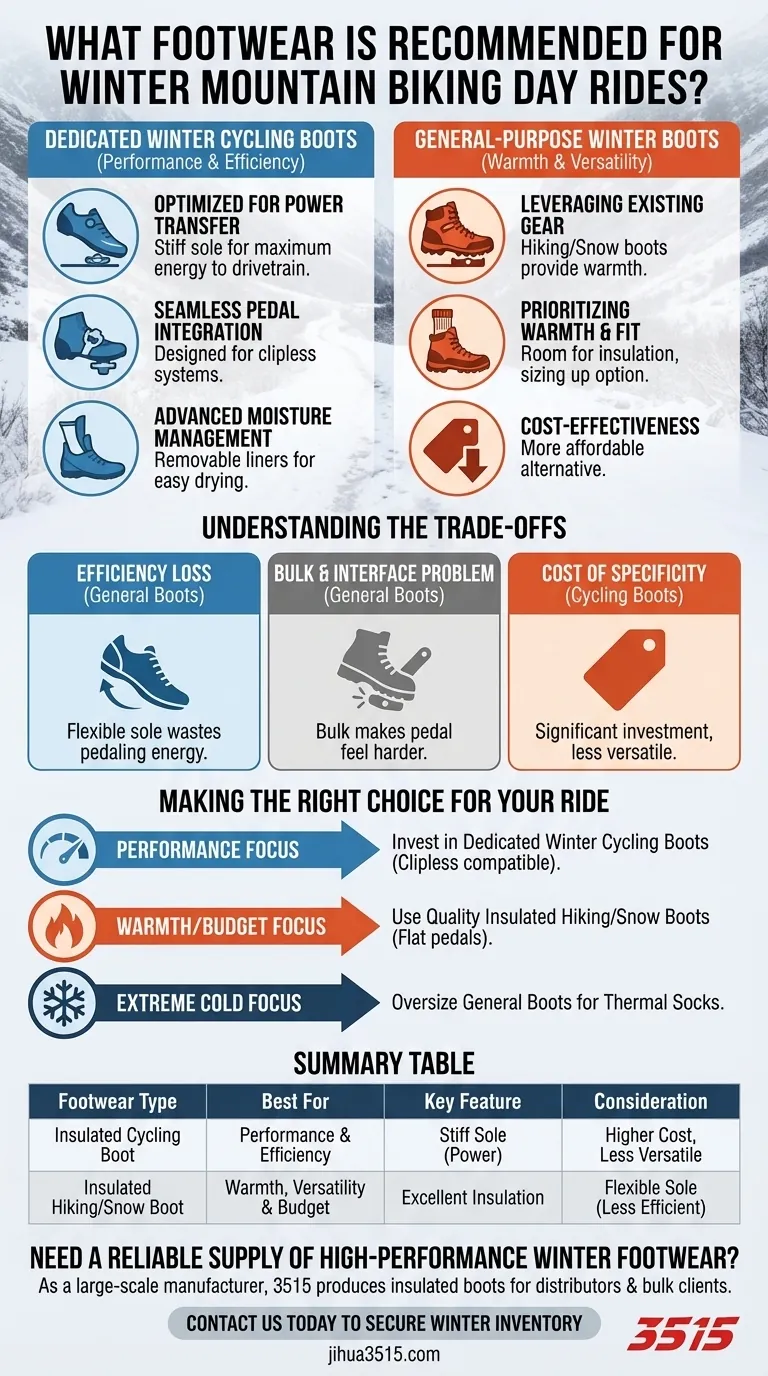
Visual Guide
Related Products
- Premium Insulated Safety Boots and Shoes for Wholesale & Bulk Orders
- Wholesale High-Traction Camo Boots - Custom Manufacturer for Brands
- Durable Waterproof Rain Boots | Custom Manufacturer for Wholesale & Brands
- Factory Direct Wholesale Rain Boots Durable Waterproof & Fully Customizable
- Durable Rubber Sole Outdoor Shoes Wholesale & Custom Manufacturing
People Also Ask
- What are the recommended insulation ratings for mild winter conditions? A Guide for Active & Stationary Workers
- How does insulation thickness correlate with temperature ranges? A Guide to Choosing the Right Warmth
- What insulation level is needed for severe cold and stationary work? 1200g or Higher is Essential
- What safety advantages do insulated boots offer beyond warmth? Dielectric Protection & Superior Grip
- How does fleece lining contribute to the warmth of insulated boots? Trapping Air for Superior Cold Protection