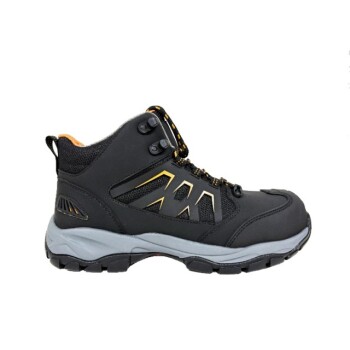
The heel cushioning system regulates walking loads by utilizing specialized elastic materials or air cushion designs to intercept and absorb vertical impact forces. Specifically, during the critical heel-strike phase, these mechanisms dissipate energy to minimize the transmission of harmful vibrations up the skeletal structure.
By dissipating energy at the point of impact, cushioning systems serve as a protective barrier, significantly reducing the vibration loads that travel from the feet to the knee joints and spine.
The Mechanism of Load Absorption
Utilizing Specialized Materials
Protective footwear relies on elastic materials or air cushion designs integrated into the heel structure. These components are engineered to compress under force, acting as a physical buffer between the wearer and the ground.
Targeting the Heel-Strike Phase
The system functions primarily during the heel-strike phase of walking. This is the specific moment in the gait cycle where vertical impact forces are at their peak and require immediate regulation.
Biomechanical Transmission and Regulation
Dissipating Vertical Impact
Instead of allowing impact forces to travel directly into the foot, the cushioning system absorbs a significant portion of this energy. This energy dissipation mechanism prevents the full shock of each step from reverberating through the body.
Reducing Vibration Loads
By dampening the initial strike, the system effectively reduces the vibration loads transmitted upward. This regulation is crucial for shielding the kinematic chain, specifically protecting the knee joints and the spine from excessive mechanical stress.
Understanding the Risks of Rigidity
The Problem with Rigid Footwear
The primary alternative to these cushioning systems is standard rigid footwear. Without active load regulation, rigid boots allow shock to pass unimpeded through the skeletal system.
Long-Term Musculoskeletal Implications
The absence of energy dissipation is not merely a comfort issue; it is a health risk. The regulation of walking loads is necessary to prevent chronic musculoskeletal injuries associated with the long-term wear of unyielding protective gear.
Making the Right Choice for Your Safety
To ensure optimal protection and biomechanical health, consider the following when evaluating footwear specifications:
- If your primary focus is joint health: Prioritize systems that explicitly reduce vibration transmission to the knee joints and spine to prevent chronic injury.
- If your primary focus is impact management: Select footwear utilizing specialized elastic materials or air cushion designs to handle the vertical forces of the heel-strike phase.
Effective load regulation transforms protective footwear from a simple shield into an ergonomic tool that preserves long-term mobility.
Summary Table:
| Feature | Mechanism | Biomechanical Benefit |
|---|---|---|
| Material Design | Elastic polymers & air cushions | Absorbs vertical impact energy |
| Phase Focus | Heel-strike interception | Mitigates peak gait cycle forces |
| Load Regulation | Energy dissipation | Reduces vibration to knees and spine |
| Ergonomic Safety | Skeletal buffering | Prevents chronic musculoskeletal injury |
Maximize Fleet Safety with 3515 Footwear Solutions
As a large-scale manufacturer serving distributors and brand owners, 3515 offers comprehensive production capabilities for all footwear types. Our flagship Safety Shoes series is engineered with advanced heel cushioning systems to regulate walking loads and preserve long-term mobility for your end-users.
Whether you need specialized work and tactical boots, training shoes, or professional Dress & Formal shoes, our extensive portfolio is built to meet your diverse bulk requirements with precision and quality.
Ready to elevate your product line with superior biomechanical protection? Contact us today to discuss your manufacturing needs and discover the 3515 advantage.
References
- Alberto Arceri, Cesare Faldini. Safety Footwear Impact on Workers’ Gait and Foot Problems: A Comparative Study. DOI: 10.3390/clinpract14040120
This article is also based on technical information from 3515 Knowledge Base .
Related Products
- Lightweight Breathable Sneakers with Wet-Traction Grip for Wholesale & Private Label
- Wholesale Breathable Athletic Sneakers - Custom Lightweight Cushioned Footwear Manufacturer
- Wholesale Customizable Safety Boots Durable & Protective Footwear Manufacturing
- Premium Safety Shoes with Rotating Buckle Safety Sneakers
- Wholesale Durable Safety Boots | Custom Steel Toe & Puncture-Resistant Manufacturing
People Also Ask
- Why are breathable sneakers necessary for tropical commuting? Stay Cool and Dry in High Humidity
- What role do lightweight training shoes play in urban traffic? Boost Agility and Reaction for Safer City Navigation
- How do lightweight shoes provide support? The Science of Efficient Cushioning & Stability
- What are the style advantages of lightweight shoes? Sleek, Versatile & Modern Comfort
- How do lightweight shoes improve breathability? Discover the Science of Cool, Dry Feet