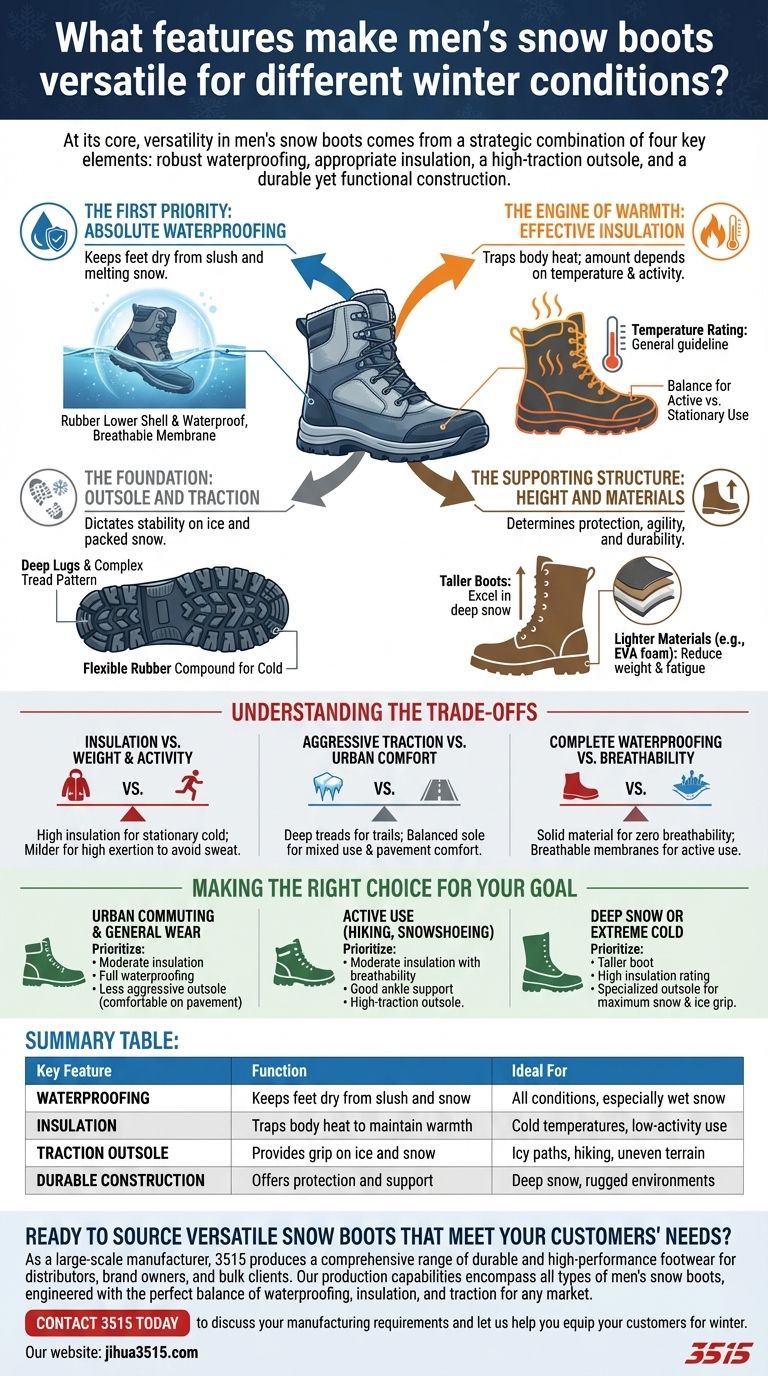
At its core, versatility in men's snow boots comes from a strategic combination of four key elements: robust waterproofing, appropriate insulation, a high-traction outsole, and a durable yet functional construction. These features work in concert to keep your feet dry, warm, and stable across a wide spectrum of winter conditions, from slushy city streets to deep, dry powder on a trail.
True versatility isn't about finding one boot that excels in every extreme condition, but rather understanding how to select a boot with the right balance of warmth, water resistance, and grip for the environments you encounter most often.
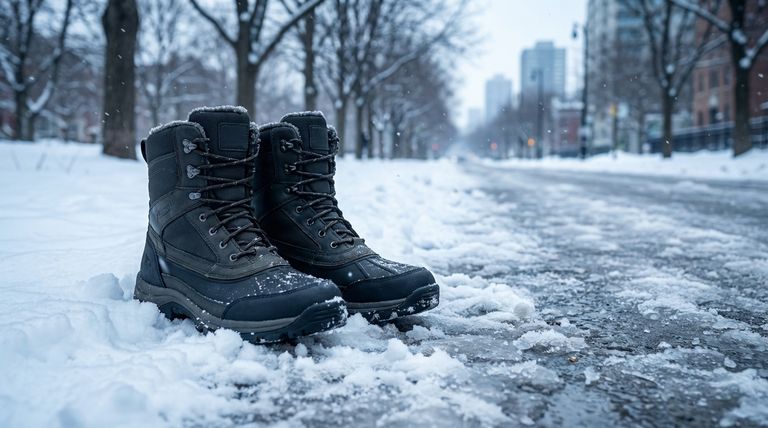
The Anatomy of a Versatile Snow Boot
To choose a boot that serves you well, you must understand the distinct role each component plays. A failure in one area can render the others ineffective; excellent insulation is useless if your feet are wet.
The First Priority: Absolute Waterproofing
Your primary defense against the cold is staying dry. Wet feet lose heat exponentially faster than dry feet, making waterproofing a non-negotiable feature.
Versatile boots achieve this with a rubber lower shell or by incorporating a waterproof, breathable membrane into the upper construction. This ensures protection from both slush and melting snow.
The Engine of Warmth: Effective Insulation
Insulation traps your body heat to keep your feet warm. The right amount depends entirely on temperature and your activity level.
Look for a temperature rating, which provides a general guideline for the boot's performance in specific cold conditions. For very cold, dry snow, higher insulation values are critical. For milder, wetter days, moderate insulation prevents overheating and sweat.
The Foundation: Outsole and Traction
A boot's outsole is your connection to the ground. Its design dictates your stability on treacherous surfaces like ice and packed snow.
A truly versatile outsole features deep lugs and a complex tread pattern made from a rubber compound that stays flexible in the cold. This design, sometimes mimicking winter tires, provides reliable grip across varied terrain.
The Supporting Structure: Height and Materials
A boot's height and overall build determine its level of protection and agility.
Taller boots excel in deep snow, preventing it from getting inside. However, they can be heavier and less flexible. Lighter materials, like EVA foam in the sole, reduce weight and fatigue without compromising warmth or water resistance.
Understanding the Trade-offs
No single boot is perfect for every possible winter scenario. Versatility always involves balancing competing characteristics.
Insulation vs. Weight and Activity
Heavily insulated boots are ideal for stationary activities in extreme cold but become cumbersome and hot during high-exertion activities like snowshoeing or hiking. This can lead to sweat, which then makes your feet cold.
Aggressive Traction vs. Urban Comfort
Deep, aggressive treads provide exceptional grip on trails but can feel clunky and wear down faster on hard, clear pavement. A boot for mixed use needs a sole that can handle both without significant compromise.
Complete Waterproofing vs. Breathability
Some materials, like solid rubber, are completely waterproof but offer zero breathability (e.g., a standard Hunter boot). This can trap moisture from sweat, making them unsuitable for active wear without proper liners and socks.
Making the Right Choice for Your Goal
Select a boot based on the conditions you will face most frequently, not just the most extreme ones.
- If your primary focus is urban commuting and general wear: Prioritize moderate insulation, full waterproofing, and a less aggressive outsole that is comfortable on pavement.
- If your primary focus is active use like hiking or snowshoeing: Choose a boot that balances moderate insulation with breathability, provides good ankle support, and has a high-traction outsole.
- If your primary focus is deep snow or extreme cold: Opt for a taller boot with a high insulation rating and a specialized outsole designed for maximum grip on snow and ice.
Ultimately, understanding these core principles empowers you to see past marketing and select a boot that genuinely meets your needs.
Summary Table:
| Key Feature | Function | Ideal For |
|---|---|---|
| Waterproofing | Keeps feet dry from slush and snow | All conditions, especially wet snow |
| Insulation | Traps body heat to maintain warmth | Cold temperatures, low-activity use |
| Traction Outsole | Provides grip on ice and snow | Icy paths, hiking, uneven terrain |
| Durable Construction | Offers protection and support | Deep snow, rugged environments |
Ready to source versatile snow boots that meet your customers' needs?
As a large-scale manufacturer, 3515 produces a comprehensive range of durable and high-performance footwear for distributors, brand owners, and bulk clients. Our production capabilities encompass all types of men's snow boots, engineered with the perfect balance of waterproofing, insulation, and traction for any market.
Contact 3515 today to discuss your manufacturing requirements and let us help you equip your customers for winter.
Visual Guide
Related Products
- Factory Direct Wholesale Rain Boots Durable Waterproof & Fully Customizable
- Wholesale Leather Ankle Boots with Lug Soles for Custom Brand Manufacturing
- Durable Waterproof Rain Boots | Custom Manufacturer for Wholesale & Brands
- Wholesale Waterproof Tactical Boots Custom Suede & High-Traction Soles
- Factory Direct Wholesale Leather Comfort Shoes with Dial Closure
People Also Ask
- What are the characteristics of rain boots? A Guide to Waterproof Footwear for Every Need
- What factors should be considered when choosing rain boots? Find the Perfect Boot for Your Needs
- What are the main differences between rain boots and snow boots? Choose the Right Boot for Your Climate
- How should one decide between PVC and rubber for rain boots? A Guide to Choosing the Right Material
- Why are rain boots more flexible and comfortable than snow boots? The Key Differences Explained