
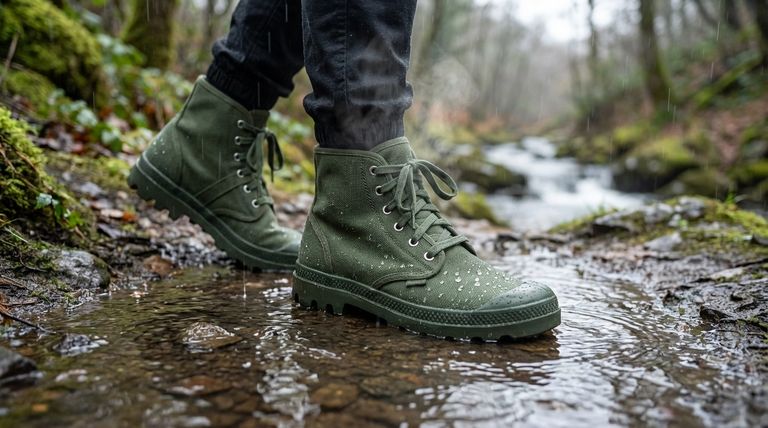
At its core, IsoDry is a proprietary waterproof and breathable membrane technology used in outdoor gear, most commonly walking boots and jackets. It is designed as a barrier that prevents liquid water, like rain or puddle splashes, from penetrating the boot while simultaneously allowing water vapor, or sweat, to escape from the inside.
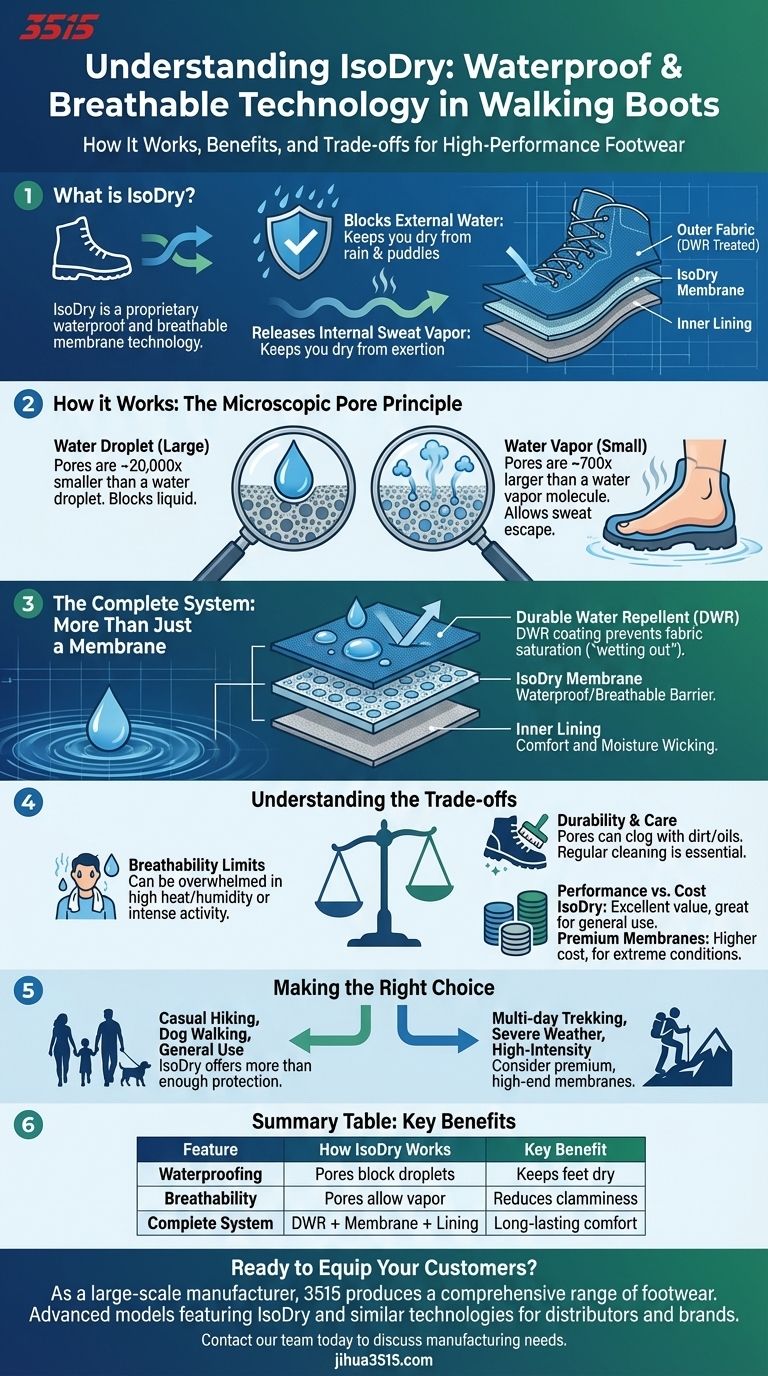
The central concept behind IsoDry is managing moisture on two fronts: it blocks external water to keep you dry from the elements, and it releases internal sweat vapor to keep you dry from your own exertion.
How This Waterproofing Technology Works
To make an informed decision, it's crucial to understand the fundamental principles that allow a fabric to be both waterproof and breathable. This isn't magic; it's a clever application of material science.
The Principle: Microscopic Pores
The IsoDry membrane is an extremely thin layer filled with billions of microscopic pores per square inch.
These pores are engineered to be approximately 20,000 times smaller than a water droplet. This size difference makes it physically impossible for rain or external moisture to pass through the membrane.
At the same time, these pores are about 700 times larger than a single molecule of water vapor. This allows the heat and perspiration generated by your feet to easily escape before it condenses into liquid sweat.
The Role of Breathability
Waterproofing alone is insufficient for active use. A plastic bag is completely waterproof, but wearing one on your foot would quickly lead to a pool of sweat.
Breathability is what prevents that clammy, uncomfortable feeling. By venting sweat vapor, the IsoDry membrane helps regulate the temperature and humidity inside your boots, which is critical for preventing blisters and keeping your feet comfortable over long distances.
The Complete System: DWR and Linings
The IsoDry membrane doesn't work in isolation. It is typically sandwiched between a durable outer fabric and a comfortable inner lining.
The outer fabric is almost always treated with a Durable Water Repellent (DWR) finish. This coating causes water to bead up and roll off the surface, preventing the fabric from becoming saturated. A saturated outer fabric, known as "wetting out," would severely impair the membrane's ability to breathe.
Understanding the Trade-offs
No technology is perfect, and understanding the limitations of waterproof membranes is key to having the right expectations for your gear.
Breathability Has Limits
While breathable, membranes like IsoDry can be overwhelmed in very warm, humid conditions or during periods of intense physical exertion.
If you are generating sweat faster than the membrane can vent it, you may still experience some dampness inside your boot. This is a limitation of all such technologies, not just IsoDry.
Durability and Care
The microscopic pores in the membrane can become clogged by dirt, body oils, and detergents. When clogged, the membrane's breathability is significantly reduced.
Regularly cleaning your boots according to the manufacturer's instructions is essential for maintaining the performance of the IsoDry feature over the long term.
Performance vs. Cost
IsoDry is an in-house technology, which means it is often found in more accessibly priced gear compared to products using premium third-party membranes like Gore-Tex.
For many users, it provides an excellent balance of performance and value. However, elite-level mountaineers or those in extreme environments might opt for premium brands known for maximum durability and breathability under the most severe conditions.
Making the Right Choice for Your Goal
Ultimately, the effectiveness of IsoDry depends entirely on your intended use.
- If your primary focus is casual hiking, dog walking, or general-purpose outdoor use: IsoDry offers more than enough protection to keep your feet dry and comfortable in typical wet conditions.
- If your primary focus is multi-day trekking in severe weather or high-intensity mountain sports: You may want to invest in boots with a higher-end membrane known for top-tier performance and durability.
Understanding how this technology functions empowers you to select the right tool for your specific adventure.
Summary Table:
| Feature | How IsoDry Works | Key Benefit |
|---|---|---|
| Waterproofing | Pores 20,000x smaller than water droplets block external moisture. | Keeps feet dry from rain and puddles. |
| Breathability | Pores 700x larger than water vapor molecules allow sweat to escape. | Reduces clamminess and helps prevent blisters. |
| Complete System | Works with a DWR-coated outer fabric and inner lining. | Ensures long-lasting performance and comfort. |
Ready to equip your customers with high-performance waterproof boots?
As a large-scale manufacturer, 3515 produces a comprehensive range of footwear for distributors, brand owners, and bulk clients. Our production capabilities encompass all types of shoes and boots, including advanced models featuring IsoDry and similar waterproof technologies.
We can help you deliver the comfort and protection your customers demand. Contact our team today to discuss your manufacturing needs and bring high-quality walking boots to your market.
Visual Guide
Related Products
- Durable Rubber Sole Outdoor Shoes Wholesale & Custom Manufacturing
- Wholesale Durable Safety Boots Manufacturer Customizable Steel Toe Work Boots
- Lightweight Breathable Training Shoes for Wholesale & Custom OEM Manufacturing
- Wholesale Durable & Breathable Training Shoes for Custom Brands
- Heavy-Duty Waterproof Nubuck Safety Boots Safety Shoes for Bulk Supply
People Also Ask
- What is the function of the sole in outdoor shoes? Find the Perfect Grip and Support
- What role do outdoor shoes and sneakers play in navigating external terrains? Engineered Stability for Every Surface
- How is AI utilized in the design of outdoor and safety footwear? Harnessing Big Data for Market-Driven Shoe Innovation
- Why is durability important when selecting outdoor shoes? A Guide to Safety & Long-Term Value
- What are the key components of outdoor shoes that affect comfort and sturdiness? A Guide to Durable, High-Performance Footwear



















