
The materials used for a walking shoe's upper are chosen to balance a critical set of competing demands: durability, breathability, weight, and weather resistance. The most common materials fall into two primary categories: natural leather (such as full-grain, nubuck, or suede) and engineered synthetic fabrics (most notably mesh). Shoe designers frequently combine these materials to create a hybrid upper that leverages the best qualities of each.
The choice of a walking shoe's upper material is a direct trade-off between the rugged durability and weather resistance of leather and the lightweight breathability of modern synthetic fabrics. Your ideal shoe is not based on a single "best" material, but on the specific environment and conditions of your walk.
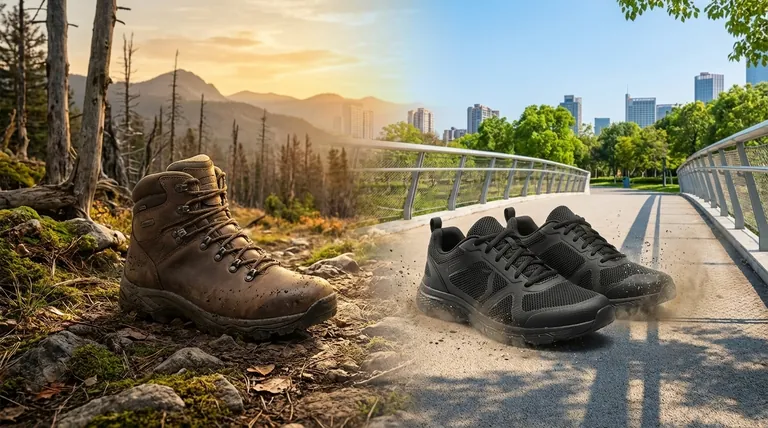
The Core Material Families
To select the right shoe, you must first understand the fundamental properties of the materials it's built from. Nearly all walking shoe uppers are constructed from leather, synthetics, or a strategic combination of the two.
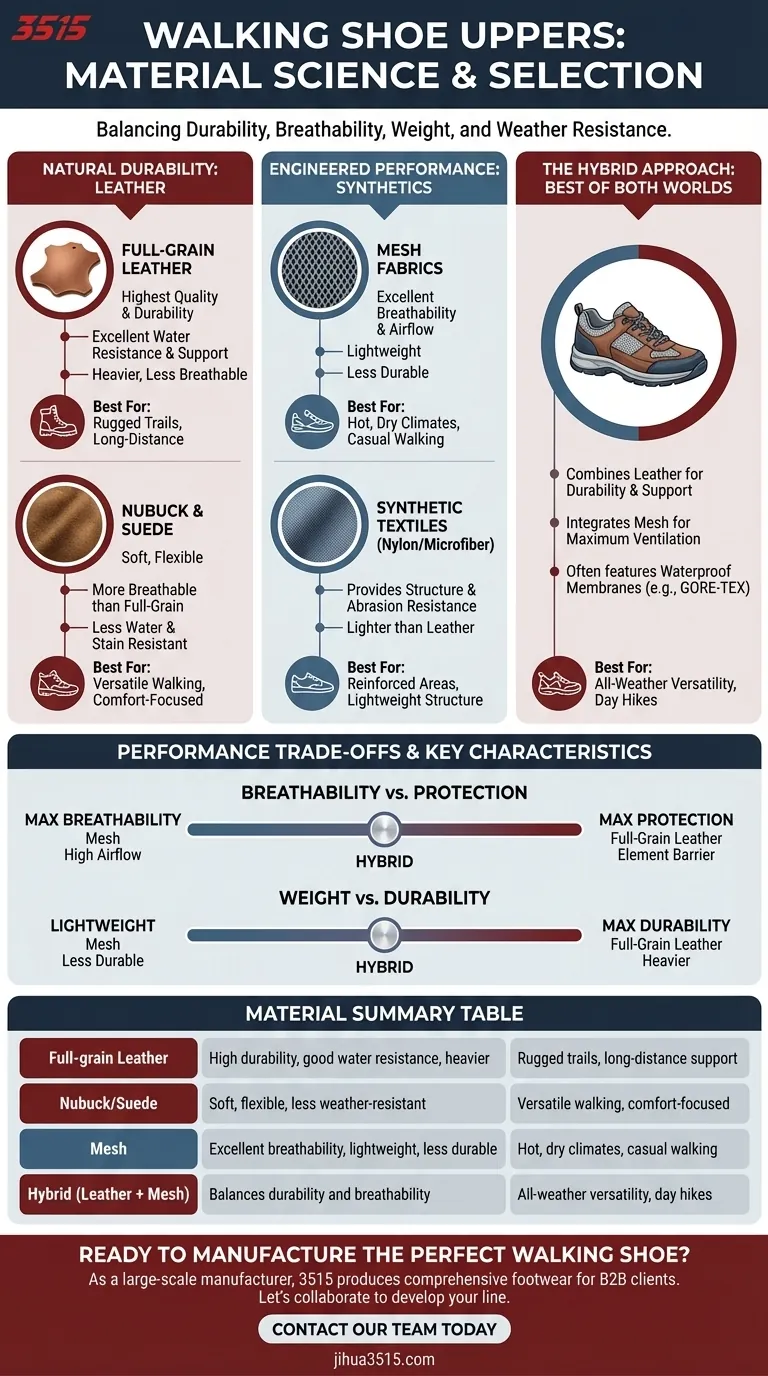
Natural Durability: The Leather Category
Leather is the traditional choice for footwear due to its exceptional durability and ability to mold to the foot over time.
Full-grain leather is the highest quality and most durable type. It offers excellent water resistance and support, making it ideal for serious walking boots that need to withstand abrasion and tough conditions.
Nubuck and suede are also types of leather, but their surfaces have been buffed to create a soft, velvety texture. This makes them more flexible and breathable than full-grain leather but also less resistant to water and stains.
Engineered Performance: The Synthetic Category
Synthetic materials are engineered to provide specific performance characteristics, often exceeding natural materials in areas like weight and breathability.
Mesh is a lightweight, net-like synthetic fabric prized for its outstanding breathability. It allows air to circulate freely, making it the top choice for walking in warm, dry climates.
Other synthetic textiles, such as nylon fabrics (like Cordura) or microfiber, are often used to provide structure and abrasion resistance in areas where mesh would be too fragile, without the weight of leather.
The Hybrid Approach: Best of Both Worlds
Many of the best walking shoes use a hybrid construction. They might feature a leather frame for durability and support around the heel and laces, with large mesh panels on the sides and top for maximum ventilation.
Key Performance Characteristics Explained
The material of the upper directly dictates how the shoe will perform in the real world. Understanding these characteristics is key to avoiding discomfort.
Breathability and Heat Management
A shoe's ability to let moisture vapor (sweat) escape is critical for comfort. Mesh is the undisputed leader in breathability, while dense, full-grain leather is the least breathable, though it still allows for some moisture transfer.
Durability and Longevity
Full-grain leather offers the highest level of durability and can last for many years with proper care. Synthetics are durable but can be more susceptible to tearing or abrasion, especially lightweight mesh.
Weather Resistance and Waterproofing
Leather provides a good natural barrier to water. For true waterproofing, however, many shoes from both categories incorporate a specialized waterproof membrane (like GORE-TEX) as a separate layer beneath the outer material.
It is crucial to understand that this membrane provides the waterproofing, not necessarily the outer leather or synthetic fabric itself.
Understanding the Trade-offs
There is no single material that excels in every category. Every choice is a compromise, and recognizing this is the key to selecting the right shoe for your needs.
The Weight vs. Durability Dilemma
The most durable materials, like full-grain leather, are also the heaviest. The lightest shoes are typically made of mesh, but they may not stand up to rugged terrain or last as long as a heavier leather alternative.
The Breathability vs. Protection Compromise
An upper with large mesh panels that offers fantastic ventilation will also let in fine dust, sand, and water more easily. A less breathable leather shoe provides a much better barrier against the elements.
The Cost and Maintenance Factor
High-quality leather shoes are an investment that requires regular cleaning and conditioning to maintain their performance. Synthetic shoes generally require less maintenance but may need to be replaced sooner.
Making the Right Choice for Your Walk
Your choice should be guided by your primary walking environment and goals.
- If your primary focus is casual walking in hot, dry weather: Prioritize an upper with large, open mesh panels for maximum airflow and minimal weight.
- If your primary focus is durability and support for long distances on varied trails: Choose a shoe made from full-grain or nubuck leather for its proven longevity and protective qualities.
- If your primary focus is all-weather versatility for day hikes: Look for a hybrid shoe with a waterproof membrane, combining a durable frame with breathable panels.
By understanding the purpose behind each material, you can select a shoe that works with you, not against you.
Summary Table:
| Material | Key Characteristics | Best For |
|---|---|---|
| Full-grain Leather | High durability, good water resistance, heavier | Rugged trails, long-distance support |
| Nubuck/Suede | Soft, flexible, less weather-resistant | Versatile walking, comfort-focused |
| Mesh | Excellent breathability, lightweight, less durable | Hot, dry climates, casual walking |
| Hybrid (Leather + Mesh) | Balances durability and breathability | All-weather versatility, day hikes |
Ready to manufacture the perfect walking shoe for your market?
As a large-scale manufacturer, 3515 produces a comprehensive range of footwear for distributors, brand owners, and bulk clients. Our production capabilities encompass all types of shoes and boots, allowing us to create uppers with the exact material balance your customers need—from durable leather to breathable mesh and high-performance hybrids.
Let's collaborate to develop a line that stands out. Contact our team today to discuss your production requirements.
Visual Guide
Related Products
- Durable Rubber Sole Outdoor Shoes Wholesale & Custom Manufacturing
- Wholesale Durable Camouflage Canvas Shoes with High-Traction Cleated Rubber Sole
- Advanced KPU Athletic Safety Shoe with Steel Toe Cap Anti-Slip Rotary Lacing System
- Premium Suede Sport Safety Shoes for Wholesale & Bulk Orders
- Wholesale Comfortable Business Casual Shoes Custom Manufacturing
People Also Ask
- What is the function of the sole in outdoor shoes? Find the Perfect Grip and Support
- What role do outdoor shoes and sneakers play in navigating external terrains? Engineered Stability for Every Surface
- How is AI utilized in the design of outdoor and safety footwear? Harnessing Big Data for Market-Driven Shoe Innovation
- Why is durability important when selecting outdoor shoes? A Guide to Safety & Long-Term Value
- What are the key components of outdoor shoes that affect comfort and sturdiness? A Guide to Durable, High-Performance Footwear



















