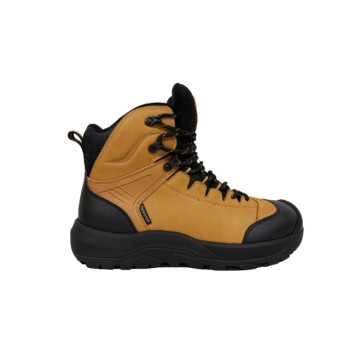
At their core, functional snow boots are built around three non-negotiable principles. These are comprehensive waterproofing to keep your feet dry, robust insulation to keep them warm, and an aggressive outsole designed for superior traction on snow and ice. Features like tall shafts and adjustable collars further enhance this protection by sealing out the elements.
The difference between a "fashion boot" and a true snow boot lies in its purpose. A functional snow boot is an engineered piece of equipment designed to protect you from specific environmental hazards—cold, moisture, and slippery surfaces.
The Anatomy of a Functional Snow Boot
To understand what makes a boot effective, you need to look at its individual components and the job each one performs. A true snow boot is a system where each part works together to keep you safe and comfortable.
The Foundation: Outsole and Traction
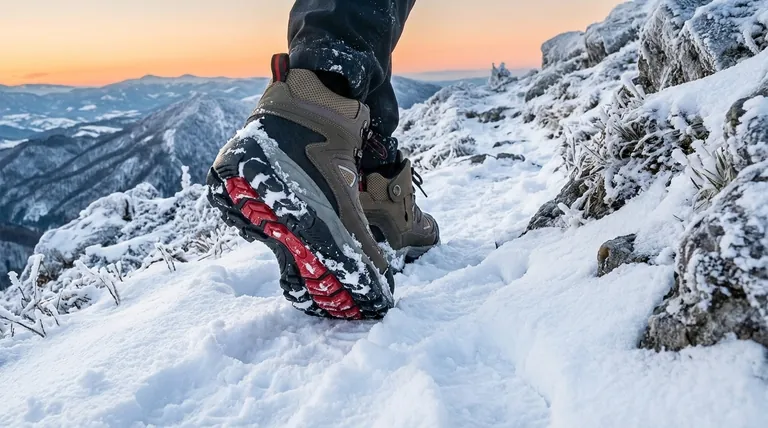
The part of the boot that meets the ground is your first line of defense against slips and falls.
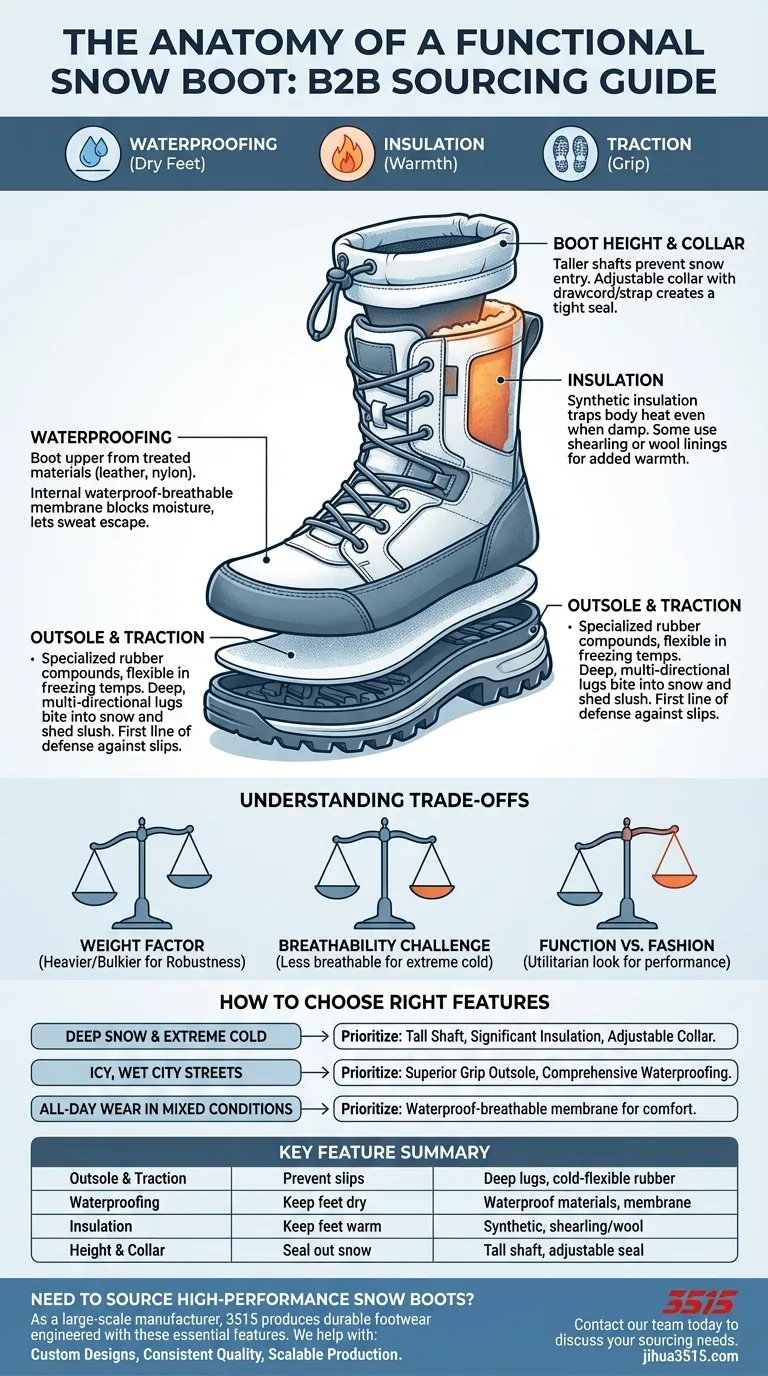
Functional outsoles are made from specialized rubber compounds that remain flexible in freezing temperatures, allowing them to grip icy surfaces more effectively. They feature deep, multi-directional lugs (treads) designed to bite into snow and shed slush.
The Core Defense: Waterproofing
Keeping moisture out is paramount, as wet feet lose heat exponentially faster than dry feet.
The boot's upper is constructed from waterproof materials like treated leather, rubber, or durable nylon textiles. Critically, many high-performance boots also include an internal waterproof-breathable membrane that blocks external moisture while allowing sweat vapor to escape.
The Warmth Engine: Insulation
Insulation traps your body heat, creating a warm-air barrier that protects your feet from the cold.
This is typically achieved with synthetic insulation, which retains its warming properties even when damp. Some boots may also use natural materials like shearling or wool linings for added warmth and comfort.
The Barrier: Boot Height and Collar
The height of a boot determines its ability to handle deep snow.
Taller shafts prevent snow from spilling over the top during activity or when walking through drifts. An adjustable collar, often using a drawcord or strap, allows you to create a tight seal around your leg, completely locking out snow and cold air.
Understanding the Trade-offs
Choosing a highly functional snow boot involves accepting certain compromises. Recognizing these trade-offs is key to selecting the right boot for your specific use case.
The Weight Factor
Robustness comes at a price. The thick soles, dense insulation, and protective materials that make snow boots effective also make them heavier and bulkier than standard winter boots. This is a direct trade-off for maximum protection.
The Breathability Challenge
A fully waterproof boot can struggle with breathability. While high-end membranes help, a boot designed for extreme cold will inherently be less breathable than footwear for milder conditions. This can lead to sweaty feet during high-exertion activities.
The Function vs. Fashion Compromise
The most technically capable snow boots prioritize performance over aesthetics. Their design is dictated by the need for traction, warmth, and durability, which often results in a more utilitarian look compared to style-focused winter boots.
How to Choose the Right Features for Your Needs
Focus on the conditions you will face most often to determine which features matter most.
- If your primary focus is deep snow and extreme cold: Prioritize a tall boot shaft, significant insulation, and an adjustable collar to seal out the elements completely.
- If your primary focus is icy, wet city streets: Prioritize an outsole with superior grip and comprehensive waterproofing over maximum insulation or height.
- If your primary focus is all-day wear in mixed conditions: Look for a boot with a waterproof-breathable membrane to balance protection with comfort by managing internal moisture.
By understanding the purpose behind each feature, you can confidently select a snow boot that delivers the exact protection you need.
Summary Table:
| Key Feature | Primary Function | Key Characteristics |
|---|---|---|
| Outsole & Traction | Prevent slips and falls | Deep, multi-directional lugs; cold-flexible rubber |
| Waterproofing | Keep feet dry | Waterproof materials; internal breathable membrane |
| Insulation | Keep feet warm | Synthetic insulation; shearling/wool linings |
| Height & Collar | Seal out deep snow and cold | Tall shaft; adjustable drawcord or strap |
Need to Source High-Performance Snow Boots?
As a large-scale manufacturer, 3515 produces a comprehensive range of functional footwear for distributors, brand owners, and bulk clients. Our production capabilities encompass all types of durable snow boots, engineered with the essential features outlined above to ensure safety and comfort in harsh conditions.
We can help you:
- Develop custom designs tailored to your target market's specific needs.
- Ensure consistent quality with robust manufacturing processes.
- Scale production efficiently to meet your volume requirements.
Contact our team today to discuss your snow boot sourcing needs and get a quote.
Visual Guide
Related Products
- Premium Insulated Safety Boots and Shoes for Wholesale & Bulk Orders
- Factory Direct Wholesale Rain Boots Durable Waterproof & Fully Customizable
- Wholesale Customizable Safety Boots Durable & Protective Footwear Manufacturing
- Durable High-Ankle Tactical Boots Wholesale Manufacturer for Custom & Bulk Orders
- Wholesale Waterproof Tactical Boots Custom Suede & High-Traction Soles
People Also Ask
- What are the recommended insulation ratings for mild winter conditions? A Guide for Active & Stationary Workers
- How does insulation thickness correlate with temperature ranges? A Guide to Choosing the Right Warmth
- What insulation level is needed for severe cold and stationary work? 1200g or Higher is Essential
- What safety advantages do insulated boots offer beyond warmth? Dielectric Protection & Superior Grip
- How does fleece lining contribute to the warmth of insulated boots? Trapping Air for Superior Cold Protection