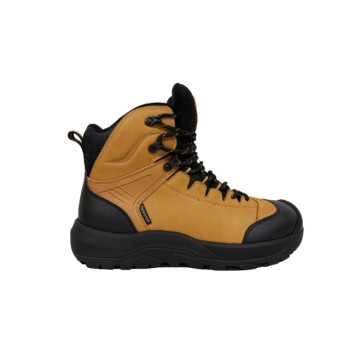
To choose the right snow boot, you must first define its primary purpose. The market offers a wide range of options, from all-purpose models for general winter conditions to highly specialized boots for extreme weather, hiking, or fashion. The key is to match the boot's features—such as insulation, waterproofing, and shaft height—to your specific environment and activity level.
The most common mistake is buying a boot that is over- or under-engineered for your actual needs. Understanding the core categories will help you invest in the right level of protection without sacrificing comfort or budget.
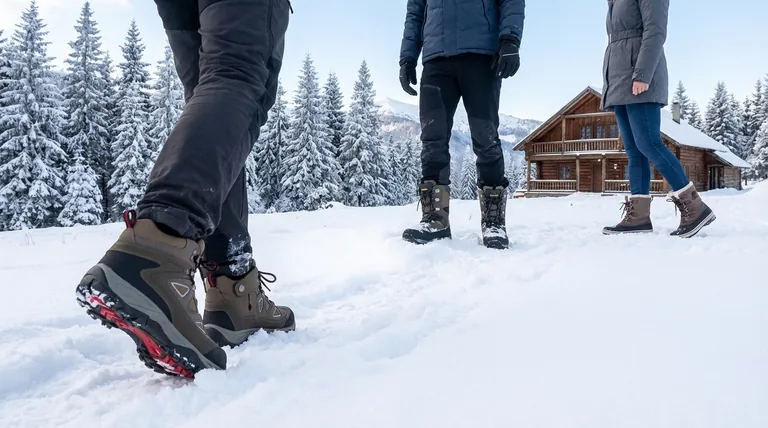
Breaking Down the Core Categories
The best snow boot is not a single product, but a category of tool designed for a specific job. Analyzing your most common winter scenarios is the first step toward making an intelligent choice.
For General Use and Versatility
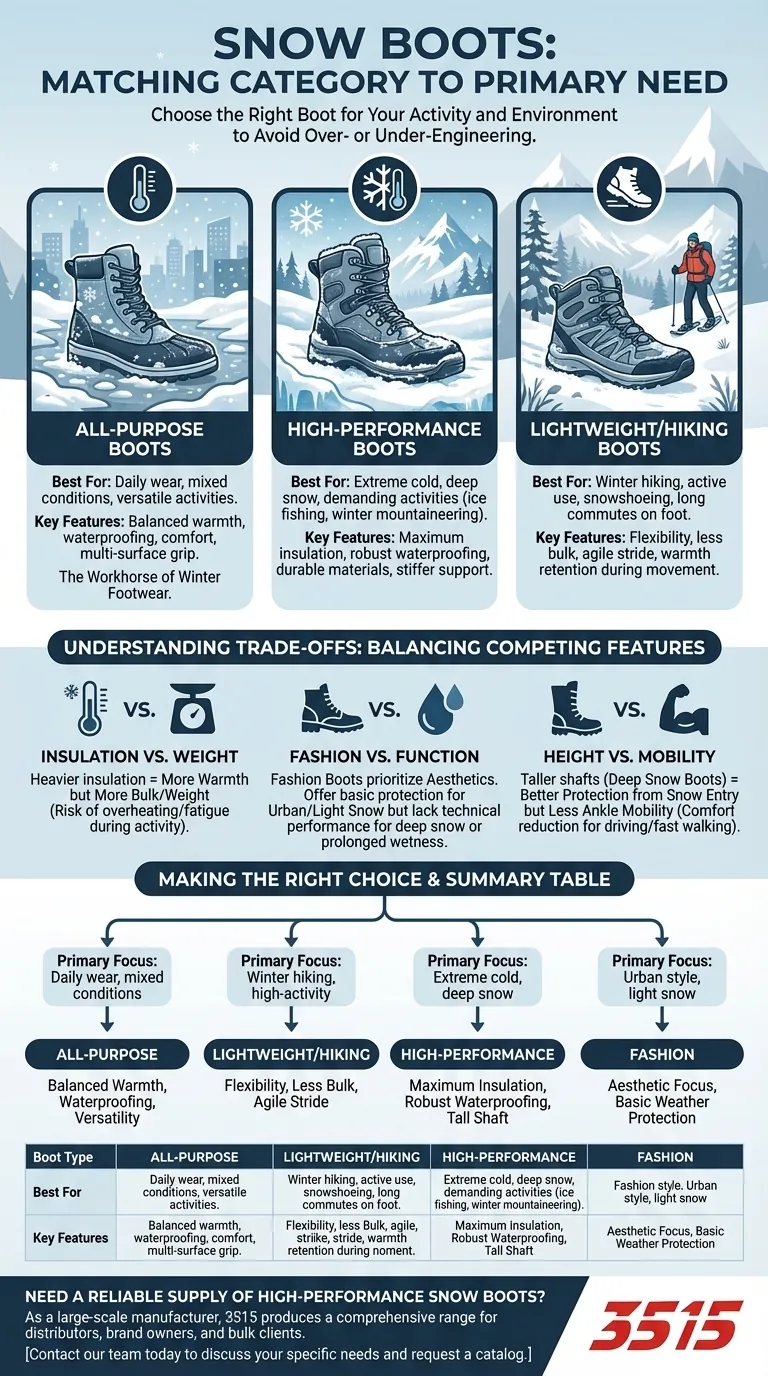
All-Purpose Boots are the workhorses of the winter footwear world. They are designed to handle a mix of conditions, from slushy city streets to moderately snowy trails.
These boots balance warmth, waterproofing, and comfort for varied, non-specialized activities. They are the go-to choice if you need one pair of boots to get you through the entire season.
For Demanding Conditions
High-Performance Boots are engineered for extreme cold, deep snow, and demanding outdoor activities like winter mountaineering or ice fishing. They prioritize maximum insulation and robust waterproofing above all else.
Expect features like thick insulation ratings, durable materials, and a stiffer construction for enhanced support and protection in harsh environments.
For Mobility and Activity
Lightweight/Hiking Boots are built for those who stay active in the winter. They are ideal for winter hiking, snowshoeing, or even long commutes on foot.
These boots borrow design elements from traditional hiking boots, offering better flexibility and less bulk than classic snow boots. They focus on maintaining warmth while allowing for a more natural and agile stride.
Understanding the Trade-offs
Choosing a snow boot always involves balancing competing features. A highly insulated boot may be too warm and bulky for active use, while a stylish boot might not offer the waterproofing needed for deep snow.
Insulation vs. Weight
Heavier insulation provides more warmth but adds significant bulk and weight. This is ideal for stationary activities in extreme cold but can cause overheating and fatigue during active pursuits like hiking.
Fashion vs. Function
Fashion Boots are designed with aesthetics as a primary concern. While many offer basic warmth and water resistance, they rarely match the technical performance of dedicated high-performance or all-purpose boots.
They are perfect for urban settings and light snow but can be a poor choice for trudging through deep drifts or facing prolonged exposure to wet conditions.
Height vs. Mobility
Deep Snow Boots feature high shafts that extend to the mid-calf or even the knee. This design is excellent for preventing snow from entering the boot.
However, this added height can restrict ankle mobility, making them less comfortable for driving or fast-paced walking. A lower-cut boot offers more freedom of movement but less protection in deep powder.
Making the Right Choice for Your Goal
Your primary activity dictates the ideal boot. Use your main winter scenario as the filter to select the right category.
- If your primary focus is daily wear in mixed winter conditions: An all-purpose boot offers the best balance of warmth, waterproofing, and versatility.
- If your primary focus is winter hiking or high-activity use: A lightweight or winter hiking boot provides necessary warmth without the bulk that leads to fatigue.
- If your primary focus is facing extreme cold or deep snow: A high-performance boot with a tall shaft and maximum insulation is the only suitable choice.
- If your primary focus is style in an urban environment: A fashionable winter boot will meet your aesthetic needs while providing adequate protection for city conditions.
Matching the boot's design to your intended use ensures you get the performance you need without paying for features you won't use.
Summary Table:
| Boot Type | Best For | Key Features |
|---|---|---|
| All-Purpose | Daily wear, mixed conditions | Balanced warmth, waterproofing, versatility |
| High-Performance | Extreme cold, deep snow | Maximum insulation, robust waterproofing |
| Lightweight/Hiking | Winter hiking, active use | Flexibility, less bulk, agile stride |
| Fashion | Urban style, light snow | Aesthetic focus, basic weather protection |
Need a reliable supply of high-performance snow boots?
As a large-scale manufacturer, 3515 produces a comprehensive range of footwear for distributors, brand owners, and bulk clients. Our production capabilities encompass all types of snow boots—from versatile all-purpose models to technical high-performance and lightweight hiking boots—ensuring your customers get the perfect combination of function, durability, and value.
Contact our team today to discuss your specific needs and request a catalog.
Visual Guide
Related Products
- Premium Insulated Safety Boots and Shoes for Wholesale & Bulk Orders
- Durable Waterproof Rain Boots | Custom Manufacturer for Wholesale & Brands
- Factory Direct Wholesale Rain Boots Durable Waterproof & Fully Customizable
- Wholesale Waterproof Tactical Boots Custom Suede & High-Traction Soles
- Wholesale Lightweight Tactical Boots Custom Manufacturer for Desert & Combat Use
People Also Ask
- What are the recommended insulation ratings for mild winter conditions? A Guide for Active & Stationary Workers
- How does insulation thickness correlate with temperature ranges? A Guide to Choosing the Right Warmth
- What insulation level is needed for severe cold and stationary work? 1200g or Higher is Essential
- What safety advantages do insulated boots offer beyond warmth? Dielectric Protection & Superior Grip
- How does fleece lining contribute to the warmth of insulated boots? Trapping Air for Superior Cold Protection