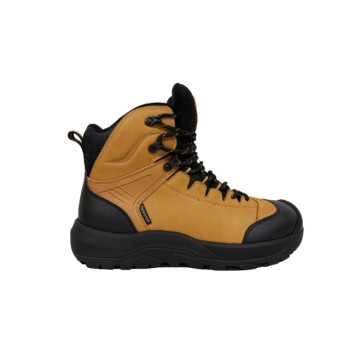
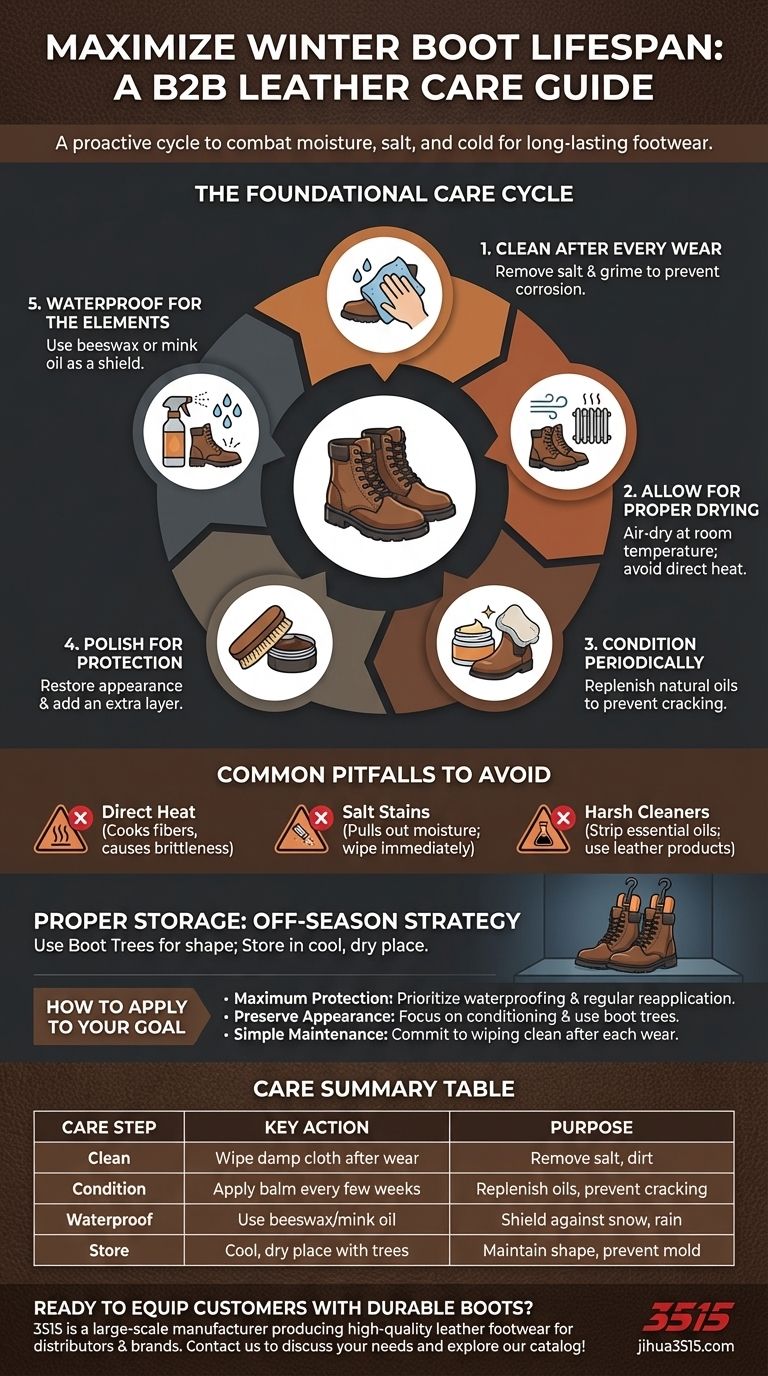
To extend the lifespan of your leather winter boots, you must implement a consistent care routine focused on four key areas: cleaning after each wear, conditioning the leather periodically, applying robust waterproofing, and storing them properly. This proactive cycle is essential for combating the damaging effects of moisture, salt, and extreme cold.
The core challenge for winter boots is the constant battle against moisture and salt, which strip leather of its natural oils, leading to cracking and deterioration. The solution is not a single product, but a systematic process of cleaning, replenishing, and protecting the material.
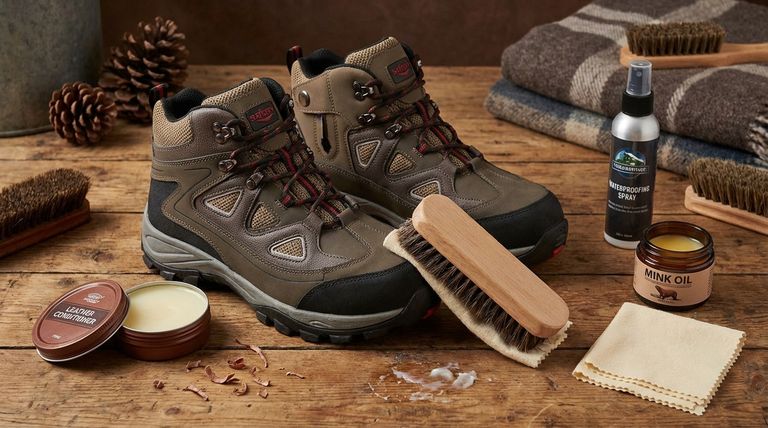
The Foundational Care Cycle: A Step-by-Step Guide
Think of leather care not as a one-time fix, but as a continuous cycle that preserves the material's integrity throughout the harsh winter months.
Step 1: Clean After Every Wear
This is the most critical habit you can develop. Road salt and grime are highly corrosive to leather.
A quick wipe-down with a damp cloth is sufficient to remove fresh salt and dirt. For dried-on mud, a soft brush can be used to gently dislodge debris before wiping.
Step 2: Allow for Proper Drying
Never store wet boots. Trapped moisture can lead to mold and break down the leather from the inside.
Crucially, dry your boots away from direct heat sources like radiators or fireplaces. Intense heat will dry out the leather too quickly, causing it to become brittle and crack.
Step 3: Condition Periodically
Conditioning is the process of replenishing the natural oils that keep leather supple and strong.
Apply a good leather conditioner or balm every few weeks, or whenever the leather starts to look dry. This simple step is the best defense against cracking.
Step 4: Polish for Protection
Shoe polish does more than just restore appearance; it adds another thin layer of protection and nourishment.
Use a neutral or color-matched polish to cover scuffs and add a slight barrier against the elements. A brush helps distribute the polish evenly.
Step 5: Waterproof for the Elements
A dedicated waterproofer is your primary shield against snow, slush, and rain.
Treat your boots with a quality waterproofing product like a beeswax-based spray or mink oil at the beginning of the season and reapply as needed. This prevents water from penetrating and saturating the leather.
Common Pitfalls to Avoid
Proper technique is as important as the products you use. Avoiding these common mistakes will prevent unintentional damage.
The Danger of Direct Heat
As mentioned, this is the fastest way to ruin leather boots. The intense heat literally cooks the fibers, making them permanently brittle. Always let boots air-dry at room temperature.
Forgetting Salt Stains
Salt doesn't just stain; it actively pulls moisture out of the leather. Wiping salt lines off with a damp cloth as soon as you get inside is an essential damage-control measure.
Using Harsh Cleaners
Never use household cleaners, soaps, or detergents on your leather boots. Stick to products specifically formulated for leather, as they are designed to clean without stripping essential oils.
Proper Storage: The Off-Season Strategy
How you store your boots during the spring and summer is just as important as how you care for them in the winter.
The Role of Boot Trees
Boot trees are non-negotiable for long-term storage. They help the boots maintain their proper shape, prevent deep creases from forming, and can help absorb any lingering moisture.
Finding the Right Environment
Store your clean, conditioned boots in a cool, dry place away from direct sunlight. An exposed closet or storage in a temperature-controlled room is ideal. Avoid damp basements or hot attics, as humidity and temperature swings can damage the leather.
How to Apply This to Your Goal
Your specific maintenance routine can be tailored to your primary objective for your boots.
- If your primary focus is maximum protection in harsh weather: Prioritize a high-quality waterproofing spray or mink oil and reapply it regularly.
- If your primary focus is preserving the original appearance: Make conditioning your top priority and use boot trees religiously to prevent creasing.
- If your primary focus is simple, consistent maintenance: Commit to the single most effective habit: wiping your boots down with a damp cloth after every single wear.
Consistent care transforms your boots from a seasonal purchase into a long-term investment.
Summary Table:
| Care Step | Key Action | Purpose |
|---|---|---|
| Clean | Wipe with a damp cloth after each wear | Remove salt and dirt to prevent corrosion |
| Condition | Apply leather balm every few weeks | Replenish natural oils to prevent cracking |
| Waterproof | Use beeswax spray or mink oil | Shield against snow, slush, and rain |
| Store | Keep in a cool, dry place with boot trees | Maintain shape and prevent moisture damage |
Ready to equip your customers with durable, long-lasting winter boots? As a large-scale manufacturer, 3515 produces a comprehensive range of high-quality footwear for distributors, brand owners, and bulk clients. Our production capabilities encompass all types of durable leather boots designed to withstand harsh conditions. Let us help you source reliable winter footwear that meets your exact specifications. Contact us today to discuss your needs and explore our catalog!
Visual Guide
Related Products
- Durable Goodyear Welt Leather Work Boots for Wholesale & Private Label
- Durable Leather Work Boots for Wholesale & Custom Manufacturing
- Premium Grain Leather Safety Boots for Bulk Supply
- Durable Leather Work Boots Wholesale Manufacturer & Custom Factory
- Wholesale Classic Leather Lace-Up Ankle Boots for Brand Manufacturing
People Also Ask
- What is the difference between full-grain and top-grain leather? Premium Material Guide for Boot Manufacturers
- What are the advantages of leather as an upper material for work boots? Unmatched Durability & Custom Comfort
- Why is it important to waterproof leather work boots? Protect Your Investment and Performance
- How should new leather work boots be broken in? A Guide to Comfort and Durability
- What are the advantages of leather uppers in work boots? Unmatched Durability & Protection