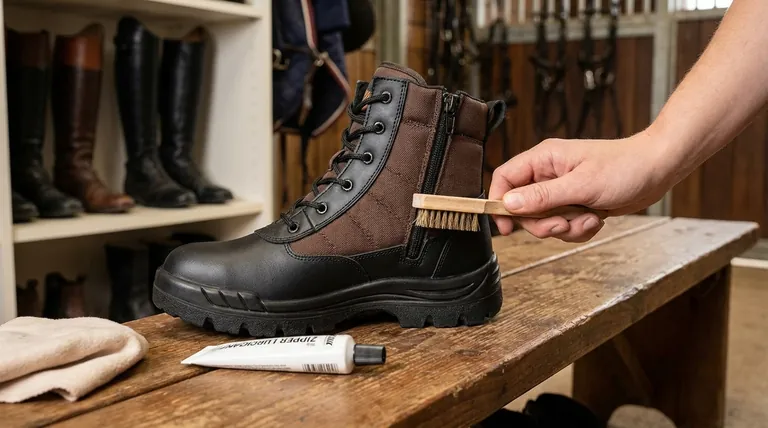
To maintain zippers on tall boots, you must keep them meticulously clean and properly lubricated. Use a soft brush to remove any grit from the zipper teeth and then apply a dedicated zipper lubricant, like Zipperease. Critically, you must avoid getting any wax polish or leather conditioner on the zipper, as these products will gum up the mechanism and cause stiffness or failure.
The health of your boot's zipper is a direct reflection of the overall care the boot receives. While direct cleaning and lubrication are vital, the most common failures stem from indirect stress caused by improper storage, leather degradation, and contamination from cleaning products.
The Foundation: Direct Zipper Maintenance
A zipper is a mechanical component with fine tolerances. Its enemy is friction, which is created by dirt and a lack of lubrication. A simple, consistent routine is the most effective defense.
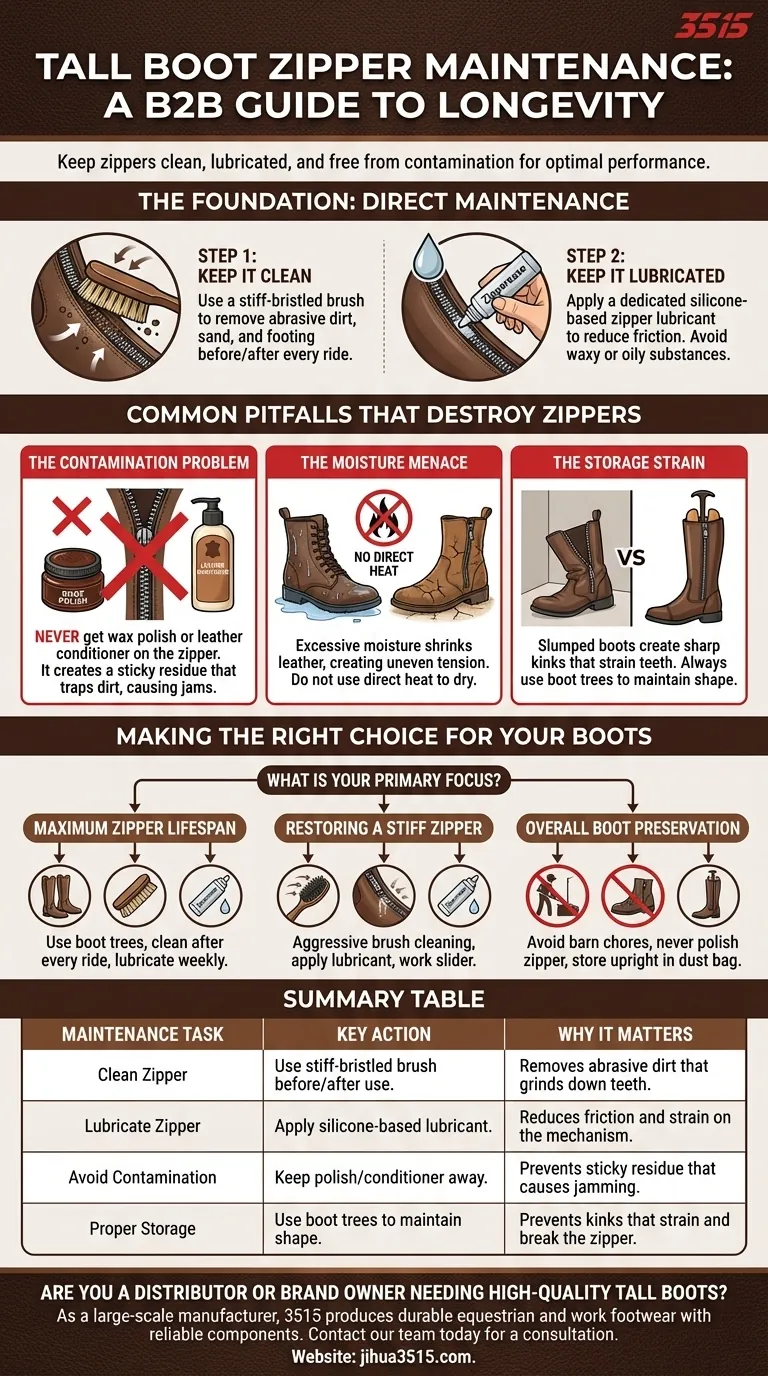
Step 1: Keep It Clean
Dirt, sand, and arena footing are highly abrasive. When these particles get into the zipper's teeth, they act like sandpaper, grinding down the mechanism with every use.
Use a stiff-bristled brush, like a toothbrush or a specialized tack brush, to thoroughly clean the zipper teeth before and after each ride. Ensure you get into the crevices to dislodge any packed-in debris.
Step 2: Keep It Lubricated
A clean but dry zipper will still experience significant friction and wear. Proper lubrication ensures the slider moves effortlessly, reducing strain on the teeth and the surrounding stitching.
Apply a silicone-based zipper lubricant specifically designed for this purpose. These products glide on easily and do not attract the same amount of dirt that a waxy or oily substance would.
Common Pitfalls That Destroy Zippers
Most catastrophic zipper failures are not sudden events. They are the result of cumulative stress and contamination from well-intentioned but incorrect care habits.
The Contamination Problem
Getting boot polish or leather conditioner on the zipper is one of the most common mistakes. These products are designed to be waxy or oily to treat leather.
When applied to a zipper, they create a sticky residue that attracts and traps dirt. This mixture forms a grinding paste that accelerates wear and causes the zipper to jam, putting immense pressure on the slider and pull tab.
The Moisture Menace
Leather is a porous material. Exposing your boots to excessive moisture from washing horses, walking through wet grass, or mucking stalls is detrimental.
When leather becomes saturated and then dries, it can shrink, stiffen, and lose its shape. This distortion places uneven tension along the zipper line, creating tight spots and stress points that will eventually lead to a tear or a popped zipper. Never use direct heat to dry wet boots, as this will crack the leather.
The Storage Strain
Leaving boots to slump in a corner is a guarantee for future zipper problems. When a boot shaft collapses, it creates a sharp kink in the zipper line.
Forcing a zipper around this kink day after day puts enormous strain on the teeth and the fabric tape they are stitched to. This is a leading cause of zippers pulling away from the leather or teeth breaking off completely.
Making the Right Choice for Your Boots
Protecting your investment is about creating a system of small, consistent habits that reduce stress on the boot's most vulnerable component.
- If your primary focus is maximum zipper lifespan: Use boot trees immediately after every ride, clean the zipper with a brush before storage, and apply a dedicated lubricant weekly.
- If your primary focus is restoring a stiff or sticky zipper: First, perform an aggressive cleaning with a stiff brush to remove all built-up residue, then apply a zipper lubricant and work it back and forth several times.
- If your primary focus is overall boot preservation: Never wear your tall boots for barn chores, avoid polishing the zipper area, and store them upright with boot trees in a breathable dust bag.
Ultimately, treating the zipper as an integral part of the boot's structure—not just an accessory—is the key to its longevity.
Summary Table:
| Maintenance Task | Key Action | Why It Matters |
|---|---|---|
| Clean Zipper | Use a stiff-bristled brush before/after use. | Removes abrasive dirt that grinds down teeth. |
| Lubricate Zipper | Apply a silicone-based lubricant (e.g., Zipperease). | Reduces friction and strain on the mechanism. |
| Avoid Contamination | Keep polish/conditioner away from the zipper. | Prevents sticky residue that causes jamming. |
| Proper Storage | Use boot trees to maintain shape. | Prevents kinks that strain and break the zipper. |
Are you a distributor, brand owner, or bulk client in need of high-quality tall boots with reliable zippers? As a large-scale manufacturer, 3515 produces a comprehensive range of equestrian and work footwear. Our production capabilities ensure durable construction with components built to last, from the leather to the zippers. Let's discuss how we can meet your specific needs for quality and volume. Contact our team today for a consultation.
Visual Guide
Related Products
- Durable High-Ankle Tactical Boots Wholesale Manufacturer for Custom & Bulk Orders
- Durable Leather High-Ankle Tactical Boots for Wholesale & Custom Manufacturing
- Durable High-Ankle Tactical Boots for Wholesale & Custom Manufacturing
- High-Traction Suede Tactical Boots Wholesale & Custom Manufacturing
- Wholesale High-Traction Camo Boots - Custom Manufacturer for Brands
People Also Ask
- What specialized protections do tactical boots offer? Maximize Endurance with High-Performance Footwear
- How do tactical boots protect against injuries? Discover the Integrated Safety System
- What are the ideal use cases for tactical boots? Empower Your Performance in Demanding Scenarios
- Can tactical boots be stylish for everyday wear? Yes, with the right styling and features.
- What are the primary benefits of wearing tactical boots for everyday use? Get All-Day Comfort & Durability