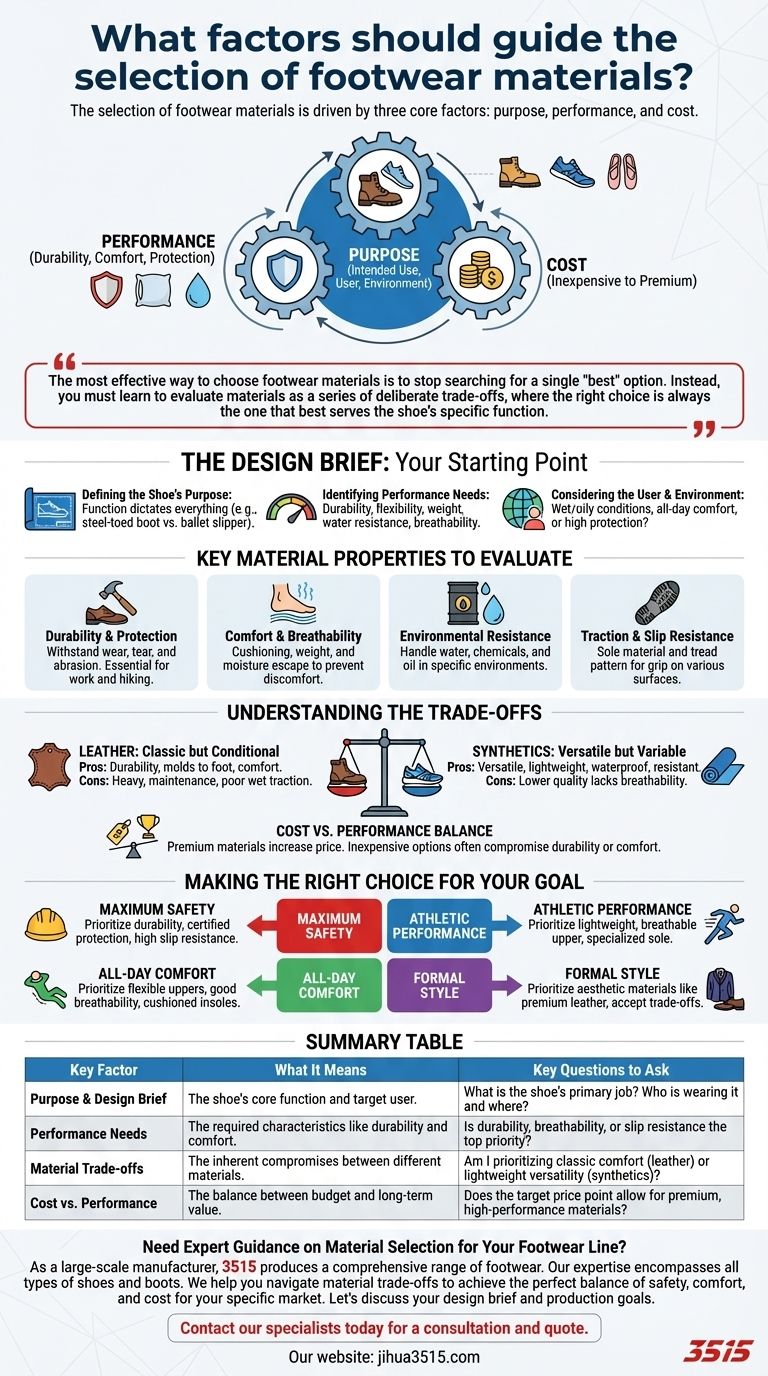
The selection of footwear materials is driven by three core factors: the shoe's intended purpose, the required performance characteristics like durability and comfort, and the target cost, from inexpensive to premium. These elements, often outlined in a design brief, form the foundation for every material choice.
The most effective way to choose footwear materials is to stop searching for a single "best" option. Instead, you must learn to evaluate materials as a series of deliberate trade-offs, where the right choice is always the one that best serves the shoe's specific function.
The Design Brief: Your Starting Point
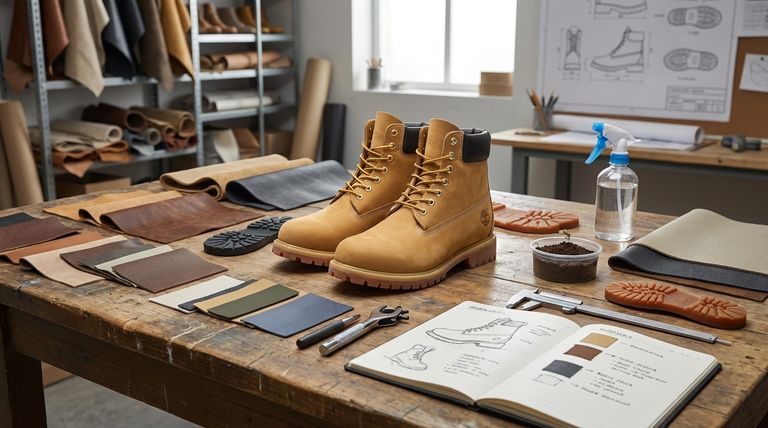
Before any material is chosen, a shoe's fundamental purpose must be clearly defined. This "design brief" acts as a roadmap, ensuring that every component serves the end goal, whether it's protecting a worker or supporting an athlete.
Defining the Shoe's Purpose
The function of the footwear dictates everything. A steel-toed work boot designed for a hazardous construction site has fundamentally different material needs than a lightweight ballet slipper intended for indoor performance.
Identifying Performance Needs
Once the purpose is clear, you can identify the specific performance metrics that matter most. These include durability, flexibility, weight, water resistance, and breathability.
Considering the User and Environment
The final part of the brief considers the context. Will the shoe be used in wet, oily, or abrasive environments? Is the primary user focused on all-day comfort, short-term high performance, or maximum protection?
Key Material Properties to Evaluate
With a clear purpose in mind, you can assess materials based on a consistent set of criteria. The importance of each property will vary dramatically depending on the shoe's intended use.
Durability and Protection
This refers to a material's ability to withstand wear, tear, and abrasion. For work boots or hiking shoes, high durability in the upper, sole, and toe is non-negotiable to ensure safety and longevity.
Comfort and Breathability
Comfort is a complex factor influenced by cushioning, weight, and flexibility. Breathability is critical, as it allows moisture and heat to escape, preventing discomfort and blisters during prolonged wear.
Environmental Resistance
Materials must be selected to handle the specific environment. This includes resistance to water, chemicals, and oil, which is essential for many types of safety and work footwear.
Traction and Slip Resistance
The material and tread pattern of the sole are the primary determinants of grip. A leather sole suitable for a dress shoe would be dangerously slippery in an industrial setting that demands high slip resistance.
Understanding the Trade-offs
No single material excels in all areas. Making an informed choice requires understanding the inherent compromises between different options.
Leather: Classic but Conditional
Full-grain leather is renowned for its durability and ability to mold to the foot, offering excellent comfort over time. However, it can be heavy, requires maintenance, and traditional leather soles offer poor traction on wet surfaces.
Synthetics: Versatile but Variable
Synthetic materials like nylon, polyester, and various polymers offer incredible versatility. They can be engineered to be lightweight, waterproof, and highly resistant to abrasion. The primary trade-off is that lower-quality synthetics often lack the breathability of natural materials.
The Cost vs. Performance Balance
Material choice is directly linked to cost. Premium, high-performance materials will increase the price of the final product. Inexpensive footwear often achieves its low cost by using materials that compromise on long-term durability, comfort, or protective features.
Making the Right Choice for Your Goal
Your final decision should always circle back to the original purpose of the footwear. Use the primary goal to prioritize which material properties matter most.
- If your primary focus is maximum safety: Prioritize materials with proven durability, certified toe protection, and high slip resistance for the sole.
- If your primary focus is athletic performance: Prioritize lightweight, breathable materials for the upper and specialized cushioning or traction compounds for the sole.
- If your primary focus is all-day comfort: Prioritize flexible uppers, good breathability, and cushioned insoles that support the foot.
- If your primary focus is formal style: Prioritize aesthetic materials like premium leathers, accepting the trade-offs in weather resistance and traction.
Ultimately, the right material is simply the one that is best equipped for the job it needs to do.
Summary Table:
| Key Factor | What It Means | Key Questions to Ask |
|---|---|---|
| Purpose & Design Brief | The shoe's core function and target user. | What is the shoe's primary job? Who is wearing it and where? |
| Performance Needs | The required characteristics like durability and comfort. | Is durability, breathability, or slip resistance the top priority? |
| Material Trade-offs | The inherent compromises between different materials. | Am I prioritizing classic comfort (leather) or lightweight versatility (synthetics)? |
| Cost vs. Performance | The balance between budget and long-term value. | Does the target price point allow for premium, high-performance materials? |
Need Expert Guidance on Material Selection for Your Footwear Line?
As a large-scale manufacturer, 3515 produces a comprehensive range of footwear for distributors, brand owners, and bulk clients. Our expertise encompasses all types of shoes and boots, from high-safety workwear to athletic and casual styles.
We help you navigate material trade-offs to achieve the perfect balance of safety, comfort, and cost for your specific market. Let's discuss your design brief and production goals.
Contact our specialists today for a consultation and quote.
Visual Guide
Related Products
- Durable Leather Work Boots for Wholesale & Custom Manufacturing
- Durable Leather High-Ankle Tactical Boots for Wholesale & Custom Manufacturing
- Durable Leather Tactical Boots Wholesale & Custom Manufacturing for Brands
- Custom Manufactured Air Cushion Leather Business Shoes for Wholesale
- Durable Goodyear Welt Leather Work Boots for Wholesale & Private Label
People Also Ask
- What is the difference between full-grain and top-grain leather? Premium Material Guide for Boot Manufacturers
- What are the common workplace hazards that can be mitigated with the right work boots? Protect Your Workforce
- What are the common foot issues workers face due to uncomfortable work boots? Prevent Pain & Deformities
- What are the advantages of leather versus synthetic work boots? A Guide to Choosing the Right Material
- What are the key components of modern work boots? Engineered for Ultimate Durability and Comfort