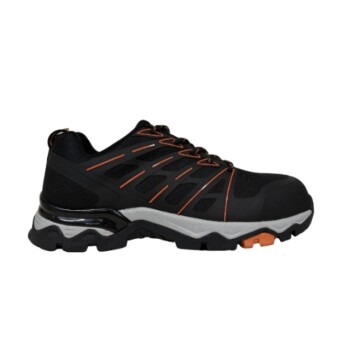
The Figure-of-8 obstacle walk test is necessary because standard linear testing does not capture the reality of industrial environments, where workers frequently navigate complex, non-linear paths. This evaluation method is critical for measuring lateral support, foot containment, and outsole grip specifically during the turns and curved trajectories that occur when navigating around obstacles.
Standard straight-line walking tests often fail to predict footwear performance during complex maneuvers. The Figure-of-8 test bridges this gap by ensuring safety shoes provide reliable stability and traction during the dynamic, non-linear movements typical of active job sites.
Simulating Real-World Industrial Environments
Replicating Non-Linear Paths
Industrial worksites are rarely empty corridors; they are dynamic environments filled with machinery, debris, and varying workflows.
Workers constantly adjust their path to avoid obstacles, requiring frequent changes in direction.
The Figure-of-8 test mimics these complex movement patterns to ensure the footwear performs under realistic conditions, rather than just in idealized, straight-line scenarios.
Evaluating Dynamic Stability
Safety entails more than just protecting the toes from impact; it requires stability during motion.
When a worker navigates a curved path, the forces applied to the shoe change drastically compared to walking straight.
This test validates that the shoe remains stable and reliable even when subjected to the shifting centers of gravity associated with dodging obstacles.
Critical Performance Metrics Analyzed
Lateral Support and Foot Containment
During a turn, the foot naturally wants to slide off the footbed or press hard against the upper material.
The Figure-of-8 test specifically evaluates foot containment—the shoe's ability to hold the foot securely in place during these lateral movements.
Proper lateral support prevents internal sliding, which is a key factor in preventing ankle injuries and maintaining balance.
Grip on Curved Trajectories
Traction is not uniform; a shoe that grips well in a straight line may slip during a turn due to different contact angles.
This test measures the grip stability of the outsoles specifically on curved trajectories.
It ensures that the tread pattern and rubber compound provide sufficient friction to prevent skidding when the wearer is pivoting or turning.
Understanding the Scope and Trade-offs
Specificity vs. Universality
It is important to recognize that the Figure-of-8 test is a specialized evaluation for agility and maneuverability.
It focuses intensely on dynamic interaction and turning forces.
However, it does not replace standard linear slip resistance tests or static impact tests; rather, it complements them to create a holistic safety profile.
The Focus on Active Movement
This test is most relevant for roles requiring high mobility.
For stationary jobs, the data derived from a Figure-of-8 test may be less critical than static comfort or thermal insulation.
You must weigh the importance of this test based on the actual activity levels of the workforce in question.
Making the Right Choice for Your Safety Goals
To select the most appropriate footwear based on this testing method, consider the specific nature of your work environment:
- If your primary focus is dynamic warehousing or logistics: Prioritize shoes that excel in the Figure-of-8 test, as high scores in lateral support and foot containment will reduce injury risks during frequent turning.
- If your primary focus is stationary or linear assembly line work: While valuable, this test is secondary to standard linear slip resistance and anti-fatigue properties.
Ultimately, the Figure-of-8 test ensures that safety footwear protects the worker not just when standing still, but during the complex, agile movements required to get the job done.
Summary Table:
| Metric Evaluated | Industrial Significance | Key Performance Benefit |
|---|---|---|
| Lateral Support | Prevents ankle rolling during turns | Enhanced stability on uneven paths |
| Foot Containment | Keeps foot secured in the footbed | Reduced internal sliding and blisters |
| Outsole Grip | Traction on curved trajectories | Prevention of skidding during pivots |
| Path Simulation | Replicates non-linear movements | Validates real-world agility & safety |
Partner with 3515 for High-Performance Safety Footwear
As a large-scale manufacturer serving global distributors and brand owners, 3515 leverages advanced performance testing like the Figure-of-8 walk to ensure every pair meets the highest standards of stability and agility. Our flagship Safety Shoes series is engineered for the dynamic movements of modern job sites, providing superior lateral support and traction.
Beyond safety, our comprehensive production capabilities include tactical boots, outdoor shoes, training sneakers, and formal dress shoes to meet your diverse bulk requirements.
Ready to elevate your product line with industry-leading footwear? Contact us today to discuss your specifications and receive a customized quote!
References
- S.-P. Cho, Won-Seob Shin. Effect of Shoelace Tightness in Safety Shoes on Static and Dynamic Balance and Gait Ability in Industrial Workers. DOI: 10.14474/ptrs.2024.13.4.416
This article is also based on technical information from 3515 Knowledge Base .
Related Products
- Premium Suede Sport Safety Shoes for Wholesale & Bulk Orders
- Premium Lightweight Safety Shoes for Wholesale & Bulk Orders
- Wholesale Anti-Smash & Puncture-Proof Safety Shoes Custom Manufacturing for Brands
- Premium KPU Injection Athletic Style Safety Shoes
- Premium Safety Shoes with Rotating Buckle Safety Sneakers
People Also Ask
- What are the primary functions of professional safety shoes? Maximize Safety in Water Supply Confined Spaces
- What industries have specific OSHA footwear requirements? Ensure Compliance & Protect Your Workforce
- What role do specialized safety shoes play in preventing falls? Engineering Stability in Industrial Environments
- How do complex outsole tread designs in safety shoes work with coated floors? Master Slip Resistance Engineering
- What happens during the cutting stage of safety shoes manufacturing? Precision, Process & Quality