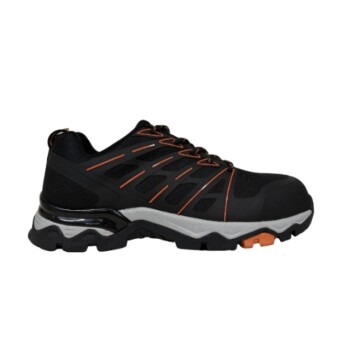
Professional safety shoes serve as a critical biological and environmental barrier. In environments containing non-degradable heavy metals like lead, mercury, and cadmium, these shoes prevent toxic particles from entering the bloodstream through minor foot wounds. Crucially, they also act as a containment measure, preventing the inadvertent transport of hazardous dust from the industrial site to residential living spaces.
While physical protection is important, the primary function of safety footwear in toxic environments is to sever the pathway of heavy metal transfer—both into the worker's body and out into the community.
The Mechanics of Toxicity Prevention
Blocking Direct Biological Entry
The immediate danger in heavy metal environments often comes from absorption through compromised skin. Professional safety shoes utilize sealed upper designs to create an impermeable shield.
This design prevents heavy metal particles from reaching the skin. It specifically stops toxins from entering the body through minor, often unnoticed, foot wounds or abrasions.
Durable Resistance to Contaminants
Heavy metal environments are harsh. The footwear is equipped with wear-resistant outsoles designed to withstand contact with abrasive surfaces without degrading.
By maintaining their physical integrity, these soles ensure the barrier between the toxic environment and the worker's foot remains unbroken.
Stopping Environmental Transfer
The "Take-Home" Toxin Problem
One of the most insidious risks of heavy metal exposure is the migration of pollutants. Without proper footwear, workers can inadvertently pick up dust containing heavy metal residues on their shoes.
Severing the Pathway
Professional safety shoes are part of a protocol to cut off the transfer of pollutants. By isolating workplace footwear from street footwear, workers prevent transporting toxic dust into their vehicles and residential areas.
This protects the worker’s family and community from secondary exposure to non-degradable metals.
The Role of Physical Integrity in Chemical Safety
Preventing Barrier Breach
While toxicity is the main concern, physical damage to the shoe compromises its chemical protection. Reinforced toe caps and anti-slip outsoles protect the shoe itself from damage.
Shielding Against Sharp Debris
In metal manufacturing, sharp debris can puncture standard footwear. Professional safety shoes shield against these punctures, ensuring the sealed upper remains intact to perform its toxicity management role.
Understanding the Limitations
Shoes Are Not a Standalone Solution
It is a common pitfall to rely solely on footwear. Safety shoes only protect the feet and prevent ground-level tracking; they do not protect against inhalation or upper-body contact with heavy metals.
The Maintenance Trap
A safety shoe with a cracked sole or worn upper loses its sealing capability. Using shoes past their wear life creates a false sense of security while allowing microscopic particles to penetrate.
The Decontamination Requirement
The protection against environmental transfer fails if the shoes are worn outside the designated zone. If a worker wears these shoes home, the "sealed" design effectively becomes a delivery system for toxins into the living space.
Making the Right Choice for Your Goal
To effectively manage toxicity risks, apply the following principles based on your specific focus:
- If your primary focus is personal health: Prioritize shoes with fully sealed upper designs to prevent absorption through cuts or abrasions.
- If your primary focus is environmental hygiene: Implement strict protocols to ensure safety shoes never leave the containment zone to prevent tracking residue home.
- If your primary focus is durability: Select footwear with reinforced outsoles and toe caps to ensure the chemical barrier is not breached by physical debris.
True toxicity management requires viewing safety shoes not just as protective gear, but as a containment tool for hazardous materials.
Summary Table:
| Feature | Protection Mechanism | Benefit to Worker |
|---|---|---|
| Sealed Upper Design | Biological Barrier | Prevents toxin entry through skin abrasions |
| Wear-Resistant Outsoles | Physical Integrity | Maintains a constant barrier in harsh conditions |
| Containment Protocol | Environmental Shield | Stops hazardous dust from reaching home/community |
| Reinforced Toe/Sole | Damage Prevention | Ensures the chemical seal is not breached by debris |
Secure Your Workforce with 3515 High-Performance Safety Footwear
As a premier large-scale manufacturer serving distributors and brand owners globally, 3515 provides the industrial-grade protection required for toxic and heavy-metal environments. Our flagship Safety Shoes series is engineered with advanced sealed designs and superior durability to act as a critical biological barrier.
By partnering with us, you gain access to:
- Comprehensive Production Capabilities: From tactical and work boots to specialized safety footwear.
- Proven Reliability: Bulk manufacturing that meets stringent safety standards for distributors.
- Diverse Portfolio: Including outdoor, training, and formal footwear to meet all organizational requirements.
Protect your team and prevent environmental contamination today. Contact our expert team to discuss your bulk requirements!
References
- Suresh R. Naik, Amisha Mahesh Bhopatrao. Chemical health hazards and toxicity of environmental pollutants on humans, animals and others: An overview. DOI: 10.59400/jts.v2i1.1135
This article is also based on technical information from 3515 Knowledge Base .
Related Products
- Premium Suede Sport Safety Shoes for Wholesale & Bulk Orders
- Premium Lightweight Safety Shoes for Wholesale & Bulk Orders
- Wholesale Anti-Smash & Puncture-Proof Safety Shoes Custom Manufacturing for Brands
- Premium KPU Injection Athletic Style Safety Shoes
- Premium Safety Shoes with Rotating Buckle Safety Sneakers
People Also Ask
- What are the primary functions of professional safety shoes? Maximize Safety in Water Supply Confined Spaces
- What industries have specific OSHA footwear requirements? Ensure Compliance & Protect Your Workforce
- What role do specialized safety shoes play in preventing falls? Engineering Stability in Industrial Environments
- What are the main components of safety shoes? A Guide to Protective Footwear Design
- How do the 3R principles influence green footwear design? Master Sustainable Safety Shoe Manufacturing