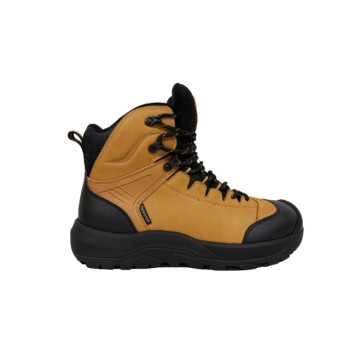
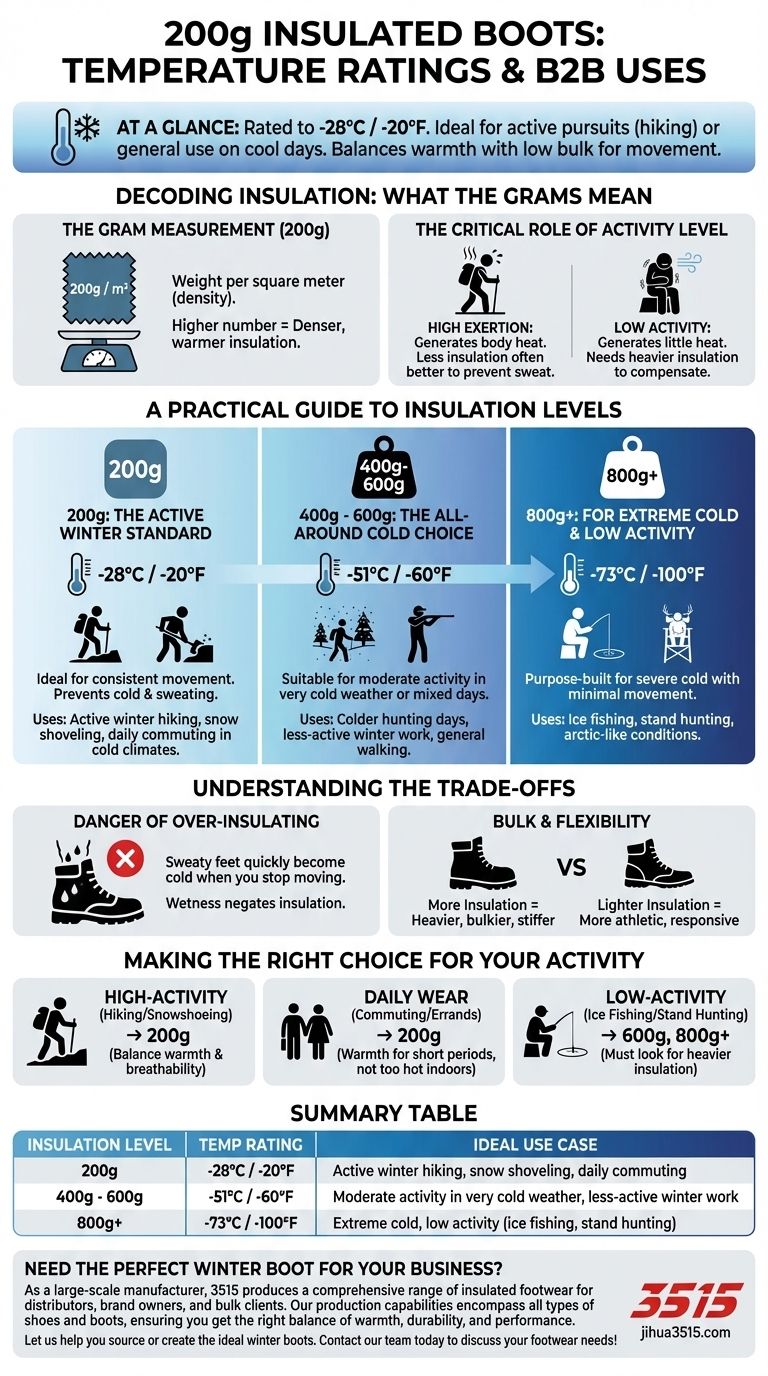
At a glance, 200g insulated boots are typically rated for temperatures down to -28°C / -20°F. Their ideal use is for active pursuits like hiking in cold weather or for general use on cool days with little activity. They represent a versatile balance of warmth and low bulk for people on the move.
The most common mistake in choosing insulated boots is focusing only on the temperature rating. The right choice is a balance between the outside temperature and the heat your body generates from activity.
Decoding Insulation: What the Grams Mean
To make an informed decision, you must first understand what the "gram" rating actually signifies and how it interacts with your body.
The Gram Measurement
The number, such as 200g, refers to the weight of the insulation material in a one-square-meter piece. It is a measure of insulation density, not the total weight of insulation in the entire boot.
A higher gram number means denser, and therefore warmer, insulation.
The Critical Role of Activity Level
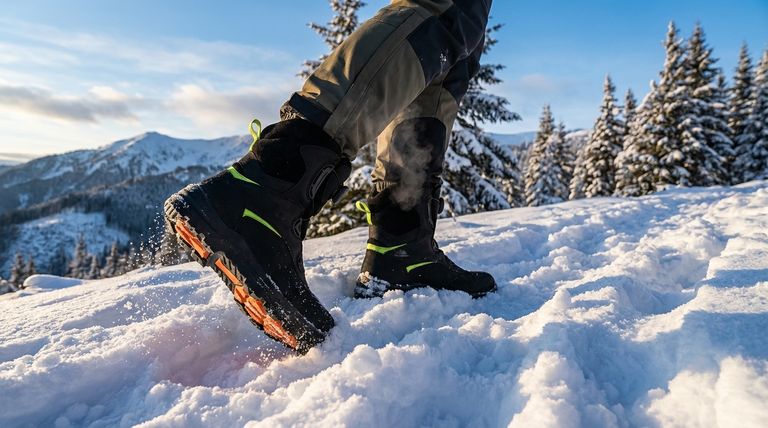
This is the factor most people overlook. High-exertion activities like hiking, snowshoeing, or manual labor generate a tremendous amount of body heat.
In these scenarios, less insulation is often better. Conversely, if you are sitting still for hours, your body generates very little heat, and you need much heavier insulation to compensate.
A Practical Guide to Insulation Levels
While temperature ratings are a useful starting point, pairing them with activity level gives you a far more accurate picture of what you truly need.
200g: The Active Winter Standard
This is the baseline for true winter boots. It's ideal for situations where you are consistently moving, preventing your feet from getting cold while also stopping them from sweating excessively.
Think of 200g for active winter hiking, shoveling snow, or as a daily commuter boot in cold but not extreme climates.
400g - 600g: The All-Around Cold Choice
This range is a step up for colder conditions or days with mixed activity. It's suitable for moderate activity in very cold weather or low activity (like walking) in standard winter conditions.
A 600g boot might be rated for temperatures around -51°C / -60°F, making it a solid choice for colder hunting days or less-active winter work.
800g and Up: For Extreme Cold and Low Activity
This level of insulation is purpose-built for severe cold with minimal movement. This is the domain of ice fishing, deer stand hunting, or working in arctic-like conditions.
Boots with 800g to 1,000g of insulation can carry ratings from -62°C / -80°F down to -73°C / -100°F.
Understanding the Trade-offs
Choosing a boot with the wrong insulation level has consequences beyond simple discomfort.
The Danger of Over-Insulating
Wearing boots that are too warm for your activity level is a serious mistake. Your feet will sweat, and that moisture will quickly make your feet dangerously cold the moment you stop moving.
Wet socks and boots completely negate the benefits of the insulation. This is why a hiker in a 1000g boot is often colder than one in a 200g boot.
Bulk and Flexibility
More insulation means a heavier, bulkier, and stiffer boot. While this is acceptable for sitting in a blind, it's cumbersome and inefficient for walking long distances or navigating uneven terrain.
Lighter insulation allows for more athletic and responsive footwear.
The Limit of Temperature Ratings
Remember that a manufacturer's temperature rating is only a guideline. Your personal circulation, the quality of your socks, wind chill, and dampness will all significantly impact your real-world comfort.
Making the Right Choice for Your Activity
Forget the marketing and focus on your specific use case. The goal is to match the boot's insulation to the heat your body will be producing.
- If your primary focus is high-activity winter sports (hiking, snowshoeing): A 200g boot is likely your best choice to balance warmth with breathability and prevent sweat.
- If your primary focus is daily winter wear (commuting, general errands): A 200g boot offers excellent warmth for short periods outside without being too hot indoors.
- If your primary focus is low-activity in very cold weather (ice fishing, stand hunting): You must look at boots with 600g, 800g, or even more insulation to stay warm.
Ultimately, selecting the right boot means choosing the right tool for the job.
Summary Table:
| Insulation Level | Temperature Rating | Ideal Use Case |
|---|---|---|
| 200g | Down to -28°C / -20°F | Active winter hiking, snow shoveling, daily commuting |
| 400g - 600g | Down to -51°C / -60°F | Moderate activity in very cold weather, less-active winter work |
| 800g+ | Down to -73°C / -100°F | Extreme cold, low activity (ice fishing, stand hunting) |
Need the Perfect Winter Boot for Your Business?
As a large-scale manufacturer, 3515 produces a comprehensive range of insulated footwear for distributors, brand owners, and bulk clients. Our production capabilities encompass all types of shoes and boots, ensuring you get the right balance of warmth, durability, and performance for your target market.
Let us help you source or create the ideal winter boots. Whether you need 200g boots for active customers or heavier insulation for extreme conditions, we have the expertise and capacity to deliver.
Contact our team today to discuss your footwear needs!
Visual Guide
Related Products
- Premium Insulated Safety Boots and Shoes for Wholesale & Bulk Orders
- High Performance Fire-Retardant Waterproof Safety Boots
- Premium Wholesale Waterproof Safety Boots High Performance Protection for Industrial Markets
- Premium Grain Leather Safety Boots for Bulk Supply
- Premium Waterproof High-Cut Industrial Safety Boots for Wholesale and Bulk Orders
People Also Ask
- What are the recommended insulation ratings for mild winter conditions? A Guide for Active & Stationary Workers
- How does insulation thickness correlate with temperature ranges? A Guide to Choosing the Right Warmth
- What insulation level is needed for severe cold and stationary work? 1200g or Higher is Essential
- What safety advantages do insulated boots offer beyond warmth? Dielectric Protection & Superior Grip
- How does fleece lining contribute to the warmth of insulated boots? Trapping Air for Superior Cold Protection