To effectively remove sweat odor from work boots, you must first clean the removable components and then thoroughly dry the entire boot. The most critical steps are to remove and wash the insoles with a mild detergent and to allow both the insoles and the boots to air dry completely, as trapped moisture is the primary cause of odor-causing bacteria.
The core issue isn't just the sweat itself, but the bacteria that thrive in the dark, damp environment it creates. A successful strategy, therefore, involves two distinct actions: neutralizing the existing odor and eliminating the moisture that fuels its return.
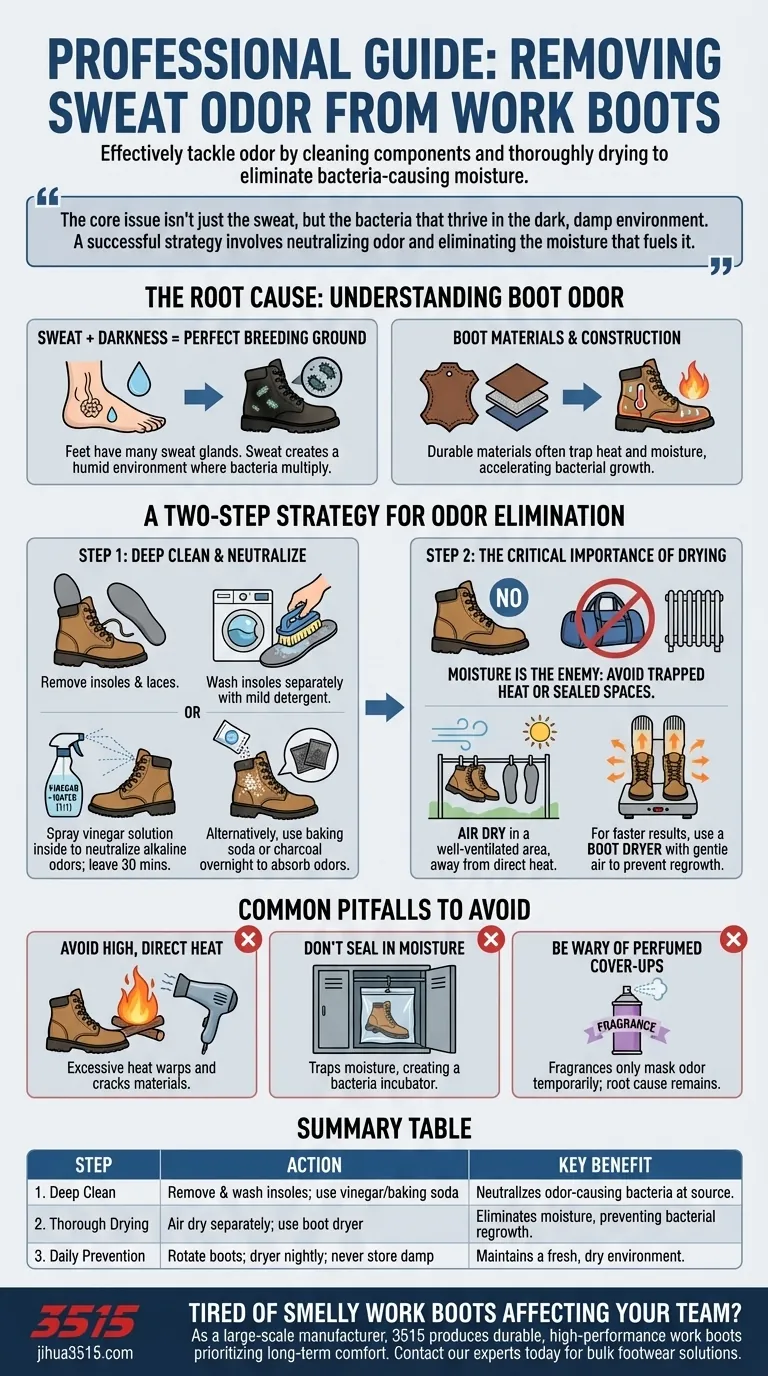
The Root Cause: Understanding Boot Odor
To permanently solve the problem, it's essential to understand its origin. The smell isn't a stain to be removed; it's the byproduct of a living ecosystem inside your boots.
Sweat + Darkness = A Perfect Breeding Ground
Your feet have a high concentration of sweat glands. While sweat is nearly odorless, it creates the ideal humid environment for bacteria to multiply.
These bacteria feed on dead skin cells and oils, producing organic acids as waste. It is these acidic byproducts that create the distinct, unpleasant odor.
The Role of Boot Materials
Most work boots are built for durability and protection, often using leather and synthetic materials that are not highly breathable.
This construction traps heat and moisture, accelerating bacterial growth and making work boots particularly susceptible to persistent odor.
A Two-Step Strategy for Odor Elimination
Tackling severe odor requires a direct approach. You must first attack the source of the smell and then remove the conditions that allow it to return.
Step 1: Deep Clean and Neutralize
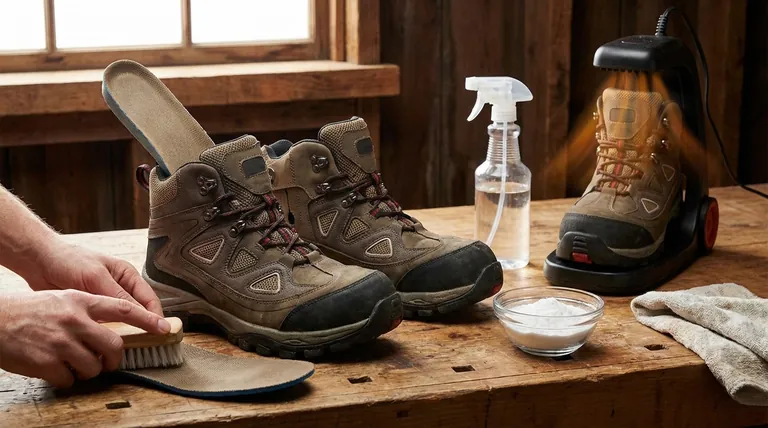
First, remove the insoles and laces from your boots. This allows you to clean each component thoroughly.
Wash the insoles separately using a mild detergent or a low-pH shampoo. An old toothbrush can be used to gently scrub away grime.
For the boot's interior, a simple solution of equal parts white vinegar and water can be sprayed inside. Vinegar is a natural disinfectant that neutralizes alkaline odors. Let this sit for 30 minutes before proceeding to the drying step.
Alternatively, generously sprinkle baking soda or place activated charcoal sachets inside the boots and leave them overnight. Both are excellent at absorbing and neutralizing odors.
Step 2: The Critical Importance of Drying
Moisture is the enemy. Never leave your boots to dry in a closed space or with the insoles still inside.
Always air dry your boots and insoles in a well-ventilated area, away from direct sunlight or intense heat, which can damage leather and adhesives.
For faster and more thorough results, consider a boot dryer. These devices use gentle, low-temperature air to dry boots from the inside out, effectively preventing the damp conditions where bacteria and fungi thrive.
Common Pitfalls to Avoid
Incorrect methods can make the problem worse or damage your expensive work boots. Being aware of what not to do is as important as knowing what to do.
Avoid High, Direct Heat
Never place your work boots near a radiator, open fire, or use a hairdryer on a high setting. Excessive heat can crack leather, melt glues, and permanently warp the boot's shape.
Don't Seal in Moisture
Putting damp boots in a gym bag, locker, or sealed plastic container is a recipe for disaster. This traps every bit of moisture, creating a super-incubator for odor-causing bacteria.
Be Wary of Perfumed Cover-Ups
Fragranced sprays and powders often just mask the odor temporarily without addressing the root bacterial cause. The smell will return as soon as the fragrance wears off, and sometimes the two scents combine to create an even worse odor.
How to Apply This to Your Routine
The best approach depends on your usage patterns and the severity of the existing odor.
- If your primary focus is daily maintenance: Rotate between two pairs of boots and use a boot dryer every single night to ensure they are completely dry for the next day.
- If your primary focus is eliminating a severe, built-up odor: Start with a deep clean using the vinegar-water solution and baking soda method, then implement a strict daily drying routine.
- If your primary focus is prevention with new boots: Never wear them two days in a row and always remove the insoles to air out after each wear.
By shifting from reactive cleaning to proactive moisture management, you gain complete control over boot odor.
Summary Table:
| Step | Action | Key Benefit |
|---|---|---|
| 1. Deep Clean | Remove & wash insoles; use vinegar spray or baking soda inside boots. | Neutralizes odor-causing bacteria at the source. |
| 2. Thorough Drying | Air dry boots and insoles separately; use a boot dryer for best results. | Eliminates moisture, preventing bacterial regrowth. |
| 3. Daily Prevention | Rotate boots; use a boot dryer nightly; never store damp. | Maintains a fresh, dry, and odor-free environment. |
Tired of smelly work boots affecting your team's comfort and productivity?
As a large-scale manufacturer, 3515 produces a comprehensive range of durable, high-performance work boots for distributors, brand owners, and bulk clients. Our footwear is designed with materials and construction that prioritize long-term wearer comfort.
Let us help you provide your customers or workforce with reliable footwear solutions. Contact our experts today to discuss your bulk footwear needs and discover how we can support your business.
Visual Guide
Related Products
- Durable Leather Work Boots for Wholesale & Custom Manufacturing
- Durable Leather Work Boots for Wholesale & Custom OEM Manufacturing
- Durable Leather Work Boots Wholesale Manufacturer & Custom Factory
- Durable Leather Moc Toe Work Boots for Wholesale & Custom Manufacturing
- Wholesale Leather Work Boots with Customizable Wedge Sole for Brands
People Also Ask
- What is the difference between full-grain and top-grain leather? Premium Material Guide for Boot Manufacturers
- What are the common workplace hazards that can be mitigated with the right work boots? Protect Your Workforce
- What are the common foot issues workers face due to uncomfortable work boots? Prevent Pain & Deformities
- What are the advantages of leather versus synthetic work boots? A Guide to Choosing the Right Material
- What are the key components of modern work boots? Engineered for Ultimate Durability and Comfort