
In many professional settings, yes, cowboy boots are absolutely acceptable for work. The key is understanding that their appropriateness is dictated entirely by your workplace environment, the specific design of the boot, and the functional demands of your job.
While once confined to ranches and rodeos, the modern cowboy boot can be a stylish and highly functional piece of workwear, provided you align its inherent ruggedness with your office's dress code and safety requirements.
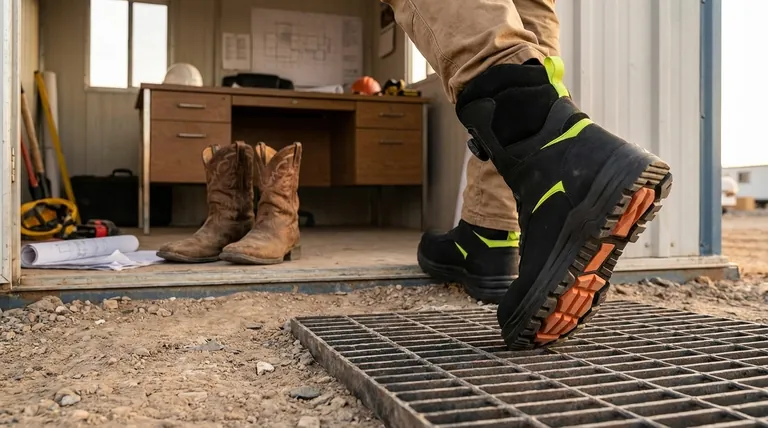
The Two Key Factors: Environment and Function
The decision to wear cowboy boots to work hinges on two primary considerations: the culture of your workplace and the actual purpose of the footwear.
Reading Your Workplace Culture
The most important factor is your office environment. In more creative or casual industries, such as technology or the arts, cowboy boots can add personality and are often seen as a stylish, acceptable choice.
However, in traditional corporate or highly formal settings, they may be perceived as too casual and could clash with an established professional dress code. Observe what senior colleagues and management wear to gauge the environment accurately.
The Boot's Intended Purpose
At their core, cowboy boots are work boots. They were engineered to be durable, protective, and stable in demanding environments like farms and ranches. This heritage gives them a functional credibility that many other fashion shoes lack.
This also means they are not a one-size-fits-all solution. Their design excels in certain conditions but is not a substitute for specialized safety footwear required in others.
The Functional Benefits of a Well-Made Cowboy Boot
Beyond style, a quality cowboy boot offers practical advantages that make it suitable for long days on your feet.
Built for Support and Stability
The high shaft is not just for show; it provides significant ankle support, which can reduce the risk of twists or sprains. The sturdy, angled heel is designed to provide stability and help maintain proper posture throughout the day.
Durability and Protection
Constructed from thick, durable leather, cowboy boots are designed to withstand wear and tear. The high shaft also serves as a protective barrier against debris, spills, or minor impacts in a workshop or light industrial setting.
Superior Traction
The outsoles of most cowboy boots are made from hard-wearing materials that provide reliable, anti-slip traction. This makes them a safe choice for navigating various surfaces, from polished office floors to more rugged outdoor terrain.
Understanding the Trade-offs and Limitations
While functional, cowboy boots are not the right tool for every job. Being aware of their limitations is crucial for making a smart and safe choice.
Not a Substitute for Certified Safety Footwear
This is the most critical distinction. A standard cowboy boot does not meet the safety requirements for many industrial jobs. Work sites requiring protection from heavy impacts, punctures, or electrical hazards demand footwear with specific certifications, such as steel-toe, puncture-resistant, or Electrical Hazard (EH) ratings. Always verify your workplace's specific safety standards.
Potential for Misinterpretation
In a formal business environment, even the highest-quality boot can be misinterpreted as unprofessional or overly casual. The style can send a signal that clashes with a conservative corporate culture, regardless of your intent.
Choosing the Right Style
Not all cowboy boots are created equal. A boot designed for ranch work with scuffs and a bold design is very different from a sleek, polished boot made from premium leather. Just as you wouldn't wear running sneakers to the office, you must choose a boot with a refined design suitable for a professional setting.
Making the Right Choice for Your Role
Ultimately, your decision should be based on your specific professional context.
- If your primary focus is a corporate or formal office: Proceed with caution. Opt for a sleek, minimalist boot in a dark, polished leather, and pair it with sharp trousers, or stick to traditional dress shoes.
- If your primary focus is a business casual or creative environment: This is the ideal setting. A well-maintained pair of quality boots can be a perfect complement to smart-casual attire.
- If your primary focus is an industrial, construction, or farm job: Prioritize safety above all else. Ensure your boots are explicitly rated to meet the specific safety hazards of your worksite.
Choosing the right footwear is about making a thoughtful decision that balances personal style with professional respect and workplace safety.
Summary Table:
| Workplace Environment | Cowboy Boot Appropriateness | Key Considerations |
|---|---|---|
| Corporate/Formal Office | Use with Caution | Opt for sleek, dark, polished leather; observe senior management's attire. |
| Business Casual/Creative | Ideal Setting | A well-maintained boot can be a stylish complement to smart-casual wear. |
| Industrial/Construction | Prioritize Safety | Standard boots are not a substitute for certified safety footwear (e.g., steel-toe). |
| Farm/Ranch | Excellent Choice | Built for durability, ankle support, and traction in demanding environments. |
Need durable, professional footwear for your team or brand?
As a large-scale manufacturer, 3515 produces a comprehensive range of high-quality footwear for distributors, brand owners, and bulk clients. Whether you need stylish boots for a business casual environment or rugged, safety-certified options for industrial work, our production capabilities encompass all types of shoes and boots.
We can help you provide the right footwear that combines style, safety, and durability. Contact us today to discuss your manufacturing needs and get a quote!
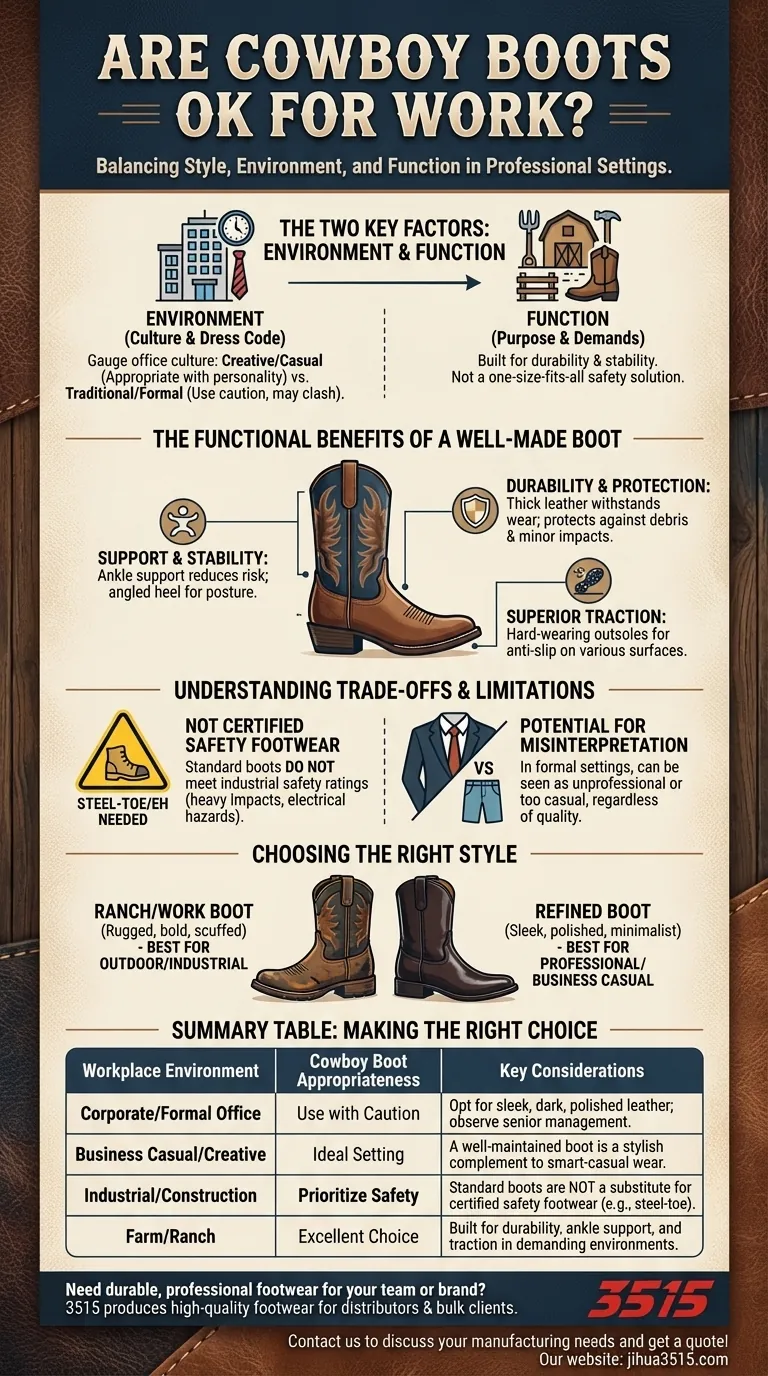
Visual Guide
Related Products
- High-Traction Suede Tactical Boots Wholesale & Custom Manufacturing
- Wholesale High-Traction Camo Boots - Custom Manufacturer for Brands
- Wholesale Lightweight Tactical Boots Custom Manufacturer for Desert & Combat Use
- Durable Leather Tactical Boots Wholesale & Custom Manufacturing for Brands
- Wholesale Durable Mid-Cut Tactical Boots for Custom & Private Label Brands
People Also Ask
- Why is sequential analysis utilized to evaluate tactical boots? Master Dynamic Boot Development and Ergonomic Performance
- How does the material of tactical boots affect their performance? Choose the Right Material for Your Mission
- How do tactical boots differ from regular boots? Performance, Durability & Design Explained
- How do military uniforms and tactical boots impact the prediction of thermal risk? Essential Safety Insights
- What are the benefits of integrating FES and sEMG into tactical boots? Safety, Reliability & Field-Ready Performance


















