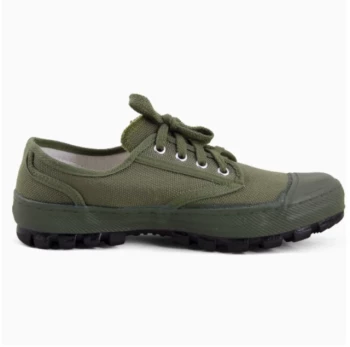
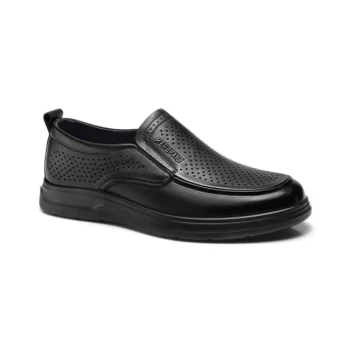
Professional non-slip footwear prevents falls through a synergistic combination of specialized material science and precision engineering. By utilizing rubber compounds formulated for a high coefficient of friction alongside scientifically designed tread patterns, these soles maximize grip and actively displace surface fluids to maintain contact with the ground.
The core mechanism of non-slip safety footwear is the interaction between high-friction materials and geometric treads that penetrate surface contaminants, effectively breaking water films to secure stability in hazardous environments.
The Engineering Behind Traction
High-Friction Material Formulations
The foundation of a non-slip sole is the material itself. Manufacturers utilize specialized rubber compounds explicitly engineered to possess a high coefficient of friction.
Unlike standard shoe materials, these compounds are designed to create a "stickier" interaction with the ground surface. This increases the physical resistance against sliding, providing the walker with immediate stability upon contact.
Geometric Tread Design
Material alone is insufficient; the physical shape of the sole plays a critical role. Professional footwear features scientifically engineered geometric tread patterns.
These patterns are not random; they are arranged to maximize the surface area that remains in contact with the floor. The geometry is specifically designed to interlock with the micro-textures of the walking surface.
Breaking the Fluid Film
In industrial or outdoor environments, the primary hazard is often a layer of liquid between the shoe and the floor. Advanced tread designs function similarly to automobile tires, working to break through surface water films.
By channeling liquid away from the pressure points of the foot, the tread ensures the rubber compound connects directly with the solid ground rather than floating on a layer of precipitation or spillages.
Understanding the Trade-offs
Specificity of Environment
It is crucial to understand that "non-slip" is not a universal constant. A tread pattern designed to break through water films may function differently on dry, loose gravel or oily surfaces.
Material Softness vs. Durability
To achieve a high coefficient of friction, rubber compounds must be somewhat softer to "grip" the floor. This can sometimes lead to faster wear rates compared to harder, less safe industrial plastics.
Regular inspection of the tread depth is essential. Once the engineered geometry wears down, the mechanical ability to channel fluids is lost, regardless of the material quality.
Making the Right Choice for Your Goal
When selecting professional footwear, you must match the engineering features to your specific environmental hazards.
- If your primary focus is liquid-heavy environments: Prioritize footwear with deep, channeled tread patterns designed to actively break surface water films and prevent hydroplaning.
- If your primary focus is dry but smooth surfaces: Look for flat, maximum-contact outsoles utilizing soft rubber compounds with the highest possible coefficient of friction.
Technical safety is not just about wearing a boot; it is about ensuring the engineering of the sole matches the physics of the floor.
Summary Table:
| Feature | Technical Mechanism | Primary Benefit |
|---|---|---|
| Material Compound | High coefficient of friction rubber | Increases 'stickiness' and physical resistance to sliding |
| Tread Geometry | Engineered geometric patterns | Maximizes surface contact area and interlocking grip |
| Fluid Channeling | Hydrodynamic displacement | Breaks water films to prevent hydroplaning on spills |
| Surface Adaptability | Specificity-based design | Optimizes stability for either wet, oily, or dry smooth floors |
Partner with 3515 for High-Performance Safety Footwear
As a large-scale manufacturer serving distributors and brand owners, 3515 offers comprehensive production capabilities for all footwear types, anchored by our flagship Safety Shoes series. Our advanced non-slip engineering ensures your workforce stays protected even in the most hazardous environments.
Our extensive portfolio covers:
- Work and Tactical Boots for extreme durability.
- Outdoor and Training Shoes for versatile performance.
- Sneakers and Dress & Formal Shoes for professional bulk requirements.
Take advantage of our industrial-scale manufacturing and rigorous quality standards to elevate your brand. Contact us today to discuss your bulk requirements!
References
- Susana Dias, Laura Viegas. RISK FACTORS FOR FALLS IN THE ELDERLY IN A DAY CARE CENTER. DOI: 10.22533/at.ed.1592622213109
This article is also based on technical information from 3515 Knowledge Base .
Related Products
- Durable High-Traction Canvas Sneakers Wholesale & Custom Manufacturing
- Durable Leather Moc Toe Work Boots for Wholesale & Custom Manufacturing
- Durable Rubber Sole Outdoor Shoes Wholesale & Custom Manufacturing
- Advanced KPU Athletic Safety Shoe with Steel Toe Cap Anti-Slip Rotary Lacing System
- Premium Suede Sport Safety Shoes for Wholesale & Bulk Orders
People Also Ask
- What are some examples of vulcanized shoes? Discover the Flexibility and Board Feel of Classic Sneakers
- What are the characteristics of canvas as a shoe material? A Guide to Lightweight, Breathable Footwear
- Can canvas shoes be worn in rainy conditions? The Truth About Water Resistance
- Why is the selection of high-strength fabric materials necessary in the production of canvas shoes and training shoes?
- What are the properties of canvas as a shoe material? A Guide to Lightweight Comfort & Style