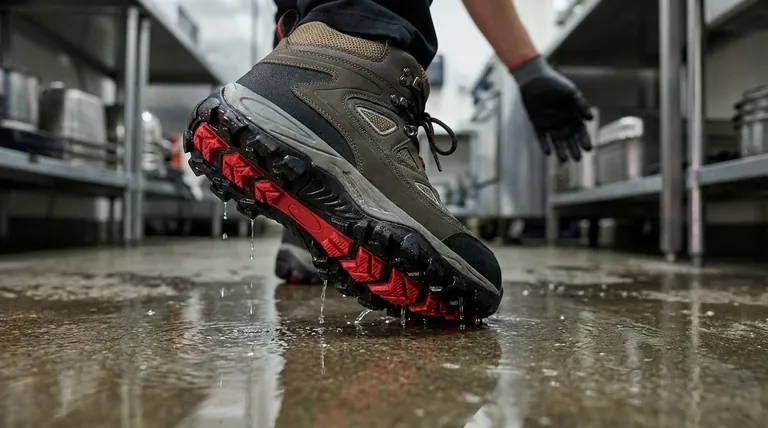
At their core, slip-resistant work shoes are specialized safety equipment designed to prevent falls in environments with hazardous, slippery surfaces. This footwear is engineered with specific materials and tread patterns to maximize traction and provide stability on wet, oily, or otherwise slick floors, directly addressing a primary cause of workplace injuries.
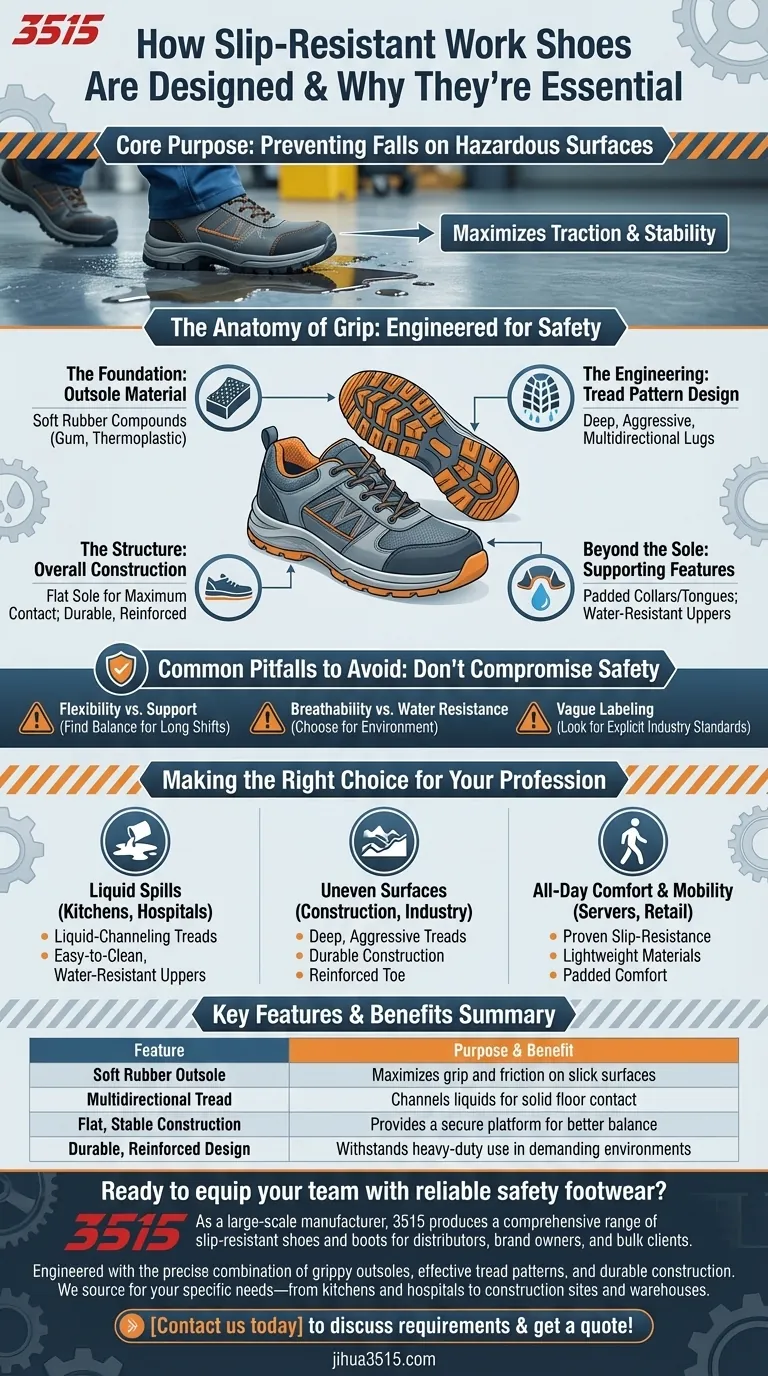
The effectiveness of a slip-resistant shoe is not due to a single feature, but a purpose-built system. It is the combination of a soft, grippy outsole material, an intelligently designed tread pattern that channels liquids away, and durable overall construction that provides reliable protection against slips and falls.
The Anatomy of Grip: How Slip-Resistant Shoes Work
To understand their value, you must look at how these shoes are engineered from the ground up. Each component serves a distinct purpose in creating a stable platform.
The Foundation: Outsole Material
The material of the outsole—the part that contacts the ground—is the first line of defense. High-quality slip-resistant shoes typically use soft rubber compounds, such as gum rubber or thermoplastic rubber.
These materials offer excellent grip and durability, creating more friction against slick surfaces than the harder plastics found on standard footwear.
The Engineering: Tread Pattern Design
The design of the tread is just as critical as the material. The goal is to maximize the surface area in contact with the floor while actively clearing away contaminants.
Look for deep, aggressive treads with multidirectional lugs or interlocked patterns like hexagons. These channels are designed to push liquids like water and oil out from under the shoe, allowing the sole to make solid contact with the floor.
The Structure: Overall Construction
Slip-resistant shoes are built to withstand demanding professions. They typically feature flat soles to ensure maximum contact with the ground for better stability.
The construction is often reinforced with durable stitching and sturdy materials to endure heavy-duty tasks, unlike everyday shoes which prioritize style or lightweight design over protection.
Beyond the Sole: Supporting Features
True work shoes address more than just grip. Many models include padded collars and tongues for comfort and to prevent chafing during long shifts.
Additionally, water-resistant upper materials are a common feature, keeping feet dry and adding another layer of protection in environments prone to spills.
Common Pitfalls to Avoid
While essential, not all slip-resistant shoes are created equal. Understanding their limitations is key to selecting the right pair and avoiding a false sense of security.
Flexibility vs. Support
There is a necessary balance between a flexible sole that allows for natural foot movement and a rigid one that provides stability. A shoe that is too flexible may not offer enough support for long hours, while one that is too rigid can be uncomfortable and compromise agility.
Breathability vs. Water Resistance
A shoe with a fully waterproof synthetic upper will excel at keeping liquids out, but it will likely offer poor breathability. This can lead to sweaty, uncomfortable feet. You must choose based on your specific environment—a chef may need water resistance more than a warehouse worker who needs breathability.
Vague Labeling
The term "slip-resistant" is not always a guarantee of tested performance. For maximum safety, look for shoes with explicit slip-resistant labeling that indicates they have been tested to meet specific industry standards.
Making the Right Choice for Your Profession
Your specific work environment dictates which features are most critical. Use your primary need to guide your selection.
- If your primary focus is working around liquid spills (kitchens, hospitals): Choose a shoe with a tread pattern specifically designed to channel liquids and an easy-to-clean, water-resistant upper.
- If your primary focus is stability on rugged or uneven surfaces (construction, industry): Prioritize shoes with deep, aggressive treads, durable construction, and features like a reinforced toe.
- If your primary focus is all-day comfort and mobility (servers, retail): Look for a balance of proven slip-resistance with lightweight materials, good breathability, and comfort features like padded collars.
Ultimately, choosing the right slip-resistant shoe is an investment in your personal safety and daily stability.
Summary Table:
| Feature | Purpose & Benefit |
|---|---|
| Soft Rubber Outsole | Maximizes grip and friction on slick surfaces. |
| Multidirectional Tread Pattern | Channels liquids away to ensure solid floor contact. |
| Flat, Stable Construction | Provides a secure platform for better balance. |
| Durable, Reinforced Design | Withstands heavy-duty use in demanding work environments. |
Ready to equip your team with reliable safety footwear?
As a large-scale manufacturer, 3515 produces a comprehensive range of slip-resistant shoes and boots for distributors, brand owners, and bulk clients. Our footwear is engineered with the precise combination of grippy outsoles, effective tread patterns, and durable construction detailed above, ensuring proven protection against slips and falls.
We can help you source the right safety shoes for your specific industry needs—from kitchens and hospitals to construction sites and warehouses.
Contact us today to discuss your requirements and get a quote!
Visual Guide
Related Products
- Wholesale Durable 6-Inch Work Boots | Custom & Private Label Manufacturer
- Durable Leather Moc Toe Work Boots for Wholesale & Custom Manufacturing
- Durable Goodyear Welt Leather Work Boots for Wholesale & Private Label
- Premium Suede Sport Safety Shoes for Wholesale & Bulk Orders
- Durable High-Traction Canvas Sneakers Wholesale & Custom Manufacturing
People Also Ask
- What are the pros and cons of steel toe work boots? A Guide to Maximum Protection vs. Comfort
- What is the history of steel toe work boots? From German Invention to Modern Safety Standard
- What are the different types of steel toe work boots? Choose the Right Boot for Your Job
- How much weight can steel toe work boots withstand? Unpacking the 3,372 lb. Safety Standard
- Is there any truth to the myth about steel toe boots causing toe injuries upon impact? Debunking Common Safety Concerns