
To be considered truly non-slip, chef clogs rely on a specific combination of sole design, material composition, and overall fit. These features work together to provide stable footing in the hazardous, often wet and greasy, environment of a professional kitchen. The most critical elements are a soft rubber sole paired with a deep, multi-directional tread pattern designed to channel liquids away from the point of contact.
The "non-slip" label on a shoe is less important than its physical construction. True safety in a kitchen comes from understanding the interplay between the sole's material, its tread pattern, and a secure fit that supports you through long hours of standing.
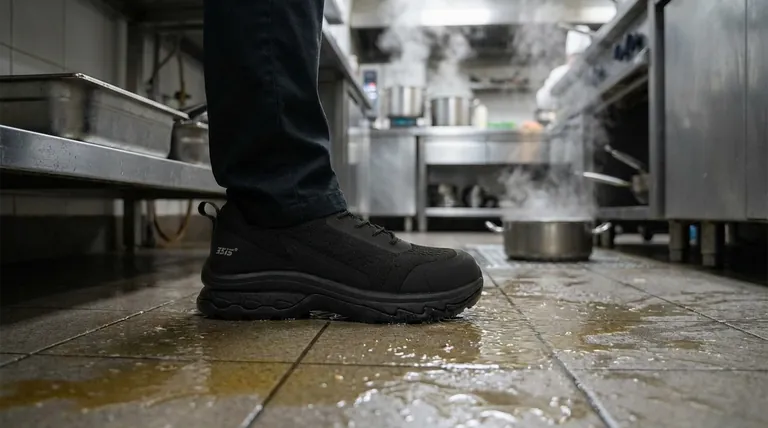
The Anatomy of a Non-Slip Sole
The foundation of any slip-resistant shoe is the sole. It's the only part that interacts with the floor, and its design determines whether you stay upright or risk a fall.
The Critical Role of Sole Material
The material used for the outsole is paramount. Soft rubber is the industry standard for high-traction footwear because it conforms to microscopic imperfections in the floor, maximizing grip.
While many clogs use EVA foam for the body due to its lightweight and waterproof properties, the most effective non-slip models will have dedicated soft rubber outsoles or pods.
Understanding Tread Pattern and Design
A flat sole is a liability on a wet floor. An effective tread pattern features deep, intersecting grooves that run in multiple directions.
This design serves a crucial purpose: it actively channels water, oil, and other liquids out from under the shoe. This allows the sole to make direct, solid contact with the floor surface, significantly reducing the risk of hydroplaning.
Beyond the Sole: Features for Kitchen Safety
While the sole provides grip, other features of the clog ensure it remains a safe and practical tool for the demanding kitchen environment.
Water and Oil Resistance
The upper part of a chef clog is typically made from synthetic materials like EVA foam. This non-porous construction prevents hot liquids or oil from soaking through to your foot.
This resistance also makes the clogs exceptionally easy to clean and sanitize, a critical factor for maintaining kitchen hygiene.
A Secure and Supportive Fit
A shoe that slides around on your foot is nearly as dangerous as one that slides on the floor. Features like a closed-back design or an adjustable strap are essential.
These elements lock your foot in place, ensuring stability during quick movements and preventing the fatigue that comes from constantly tensing your feet to keep your shoes on.
Comfort for All-Day Endurance
Kitchen work involves hours of standing. A good clog must provide cushioning and support to prevent pain and fatigue, which can lead to distraction and accidents.
Look for supportive insoles, good arch support, and a roomy toe box. This extra space accommodates the natural foot swelling that occurs over a long shift.
Understanding the Trade-offs and Misconceptions
Choosing the right shoe requires looking past marketing claims and understanding the practical realities of the product.
"Non-Slip" is a Marketing Term
It is crucial to know that terms like "non-slip" and "slip-resistant" are not officially regulated. There is no universal standard a shoe must meet to use these labels.
This is why you must ignore the marketing and instead verify the physical features yourself: inspect the rubber sole and the tread pattern to make an informed decision.
The Impact of Wear and Tear
Even the best non-slip sole will lose its effectiveness over time. As the tread pattern wears down, its ability to channel liquid diminishes, and the shoe's grip will be compromised.
Durability is a key consideration. A well-made shoe is an investment in your safety that won't require frequent replacement. Regularly inspect your clogs for signs of a worn-out sole.
Making the Right Choice for Your Goal
Select your footwear based on the specific demands of your work environment.
- If your primary focus is maximum safety on wet and greasy floors: Prioritize a soft rubber sole with a deep, multi-directional tread pattern.
- If your primary focus is all-day comfort and reducing fatigue: Look for excellent cushioning, robust arch support, and a roomy toe box to accommodate foot swelling.
- If your primary focus is hygiene and easy maintenance: Choose clogs made from a single piece of non-porous material like EVA foam with a removable insole.
By focusing on these core features, you can confidently select a shoe that delivers on its promise of safety and support.
Summary Table:
| Key Feature | Why It Matters for Slip Resistance |
|---|---|
| Soft Rubber Sole | Conforms to floor imperfections for superior grip on wet and greasy surfaces. |
| Multi-Directional Tread Pattern | Channels water and oil away from the sole to prevent hydroplaning. |
| Secure Fit (Closed-Back/Strap) | Locks the foot in place, preventing the shoe from sliding during movement. |
| Water & Oil Resistant Upper | Prevents liquids from soaking through, maintaining hygiene and stability. |
Ready to equip your team with the safest chef clogs?
As a large-scale manufacturer, 3515 produces a comprehensive range of professional footwear for distributors, brand owners, and bulk clients. Our production capabilities encompass all types of safety shoes and boots, including chef clogs engineered with the precise non-slip features detailed above.
We can help you source or create durable, high-traction footwear that protects your staff and enhances productivity. Contact our team today to discuss your requirements and get a quote.
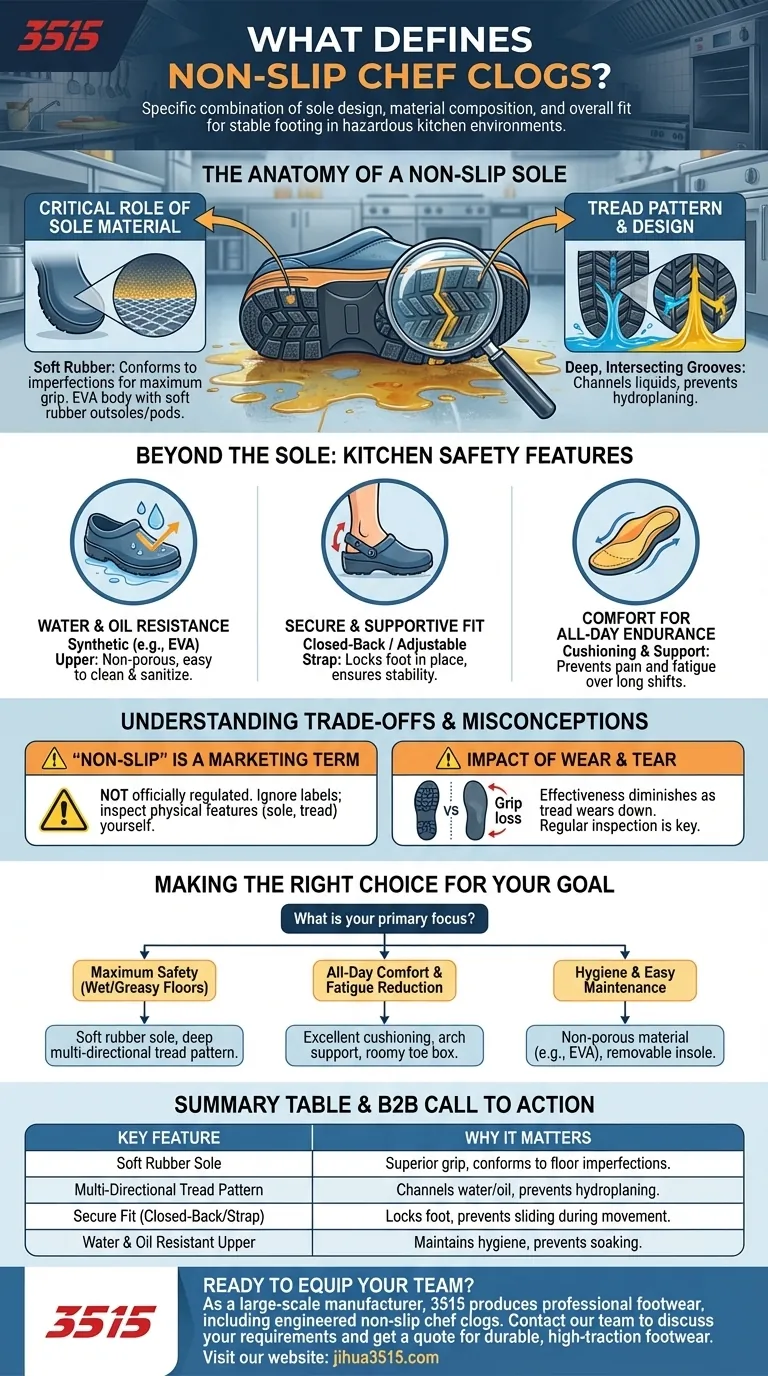
Visual Guide
Related Products
- Premium Suede Sport Safety Shoes for Wholesale & Bulk Orders
- Durable High-Traction Canvas Sneakers Wholesale & Custom Manufacturing
- Advanced KPU Athletic Safety Shoe with Steel Toe Cap Anti-Slip Rotary Lacing System
- Durable Leather Moc Toe Work Boots for Wholesale & Custom Manufacturing
- Heavy-Duty Waterproof Nubuck Safety Boots Safety Shoes for Bulk Supply
People Also Ask
- What industries have specific OSHA footwear requirements? Ensure Compliance & Protect Your Workforce
- What are the primary functions of professional safety shoes? Maximize Safety in Water Supply Confined Spaces
- What role do specialized safety shoes play in preventing falls? Engineering Stability in Industrial Environments
- Why are customized foot sensors or professional safety shoes incorporated into biomechanical testing? Precision Insights
- How do gait analysis algorithms ensure accuracy in footwear? Master Step Length Precision for Boots & Sneakers



















