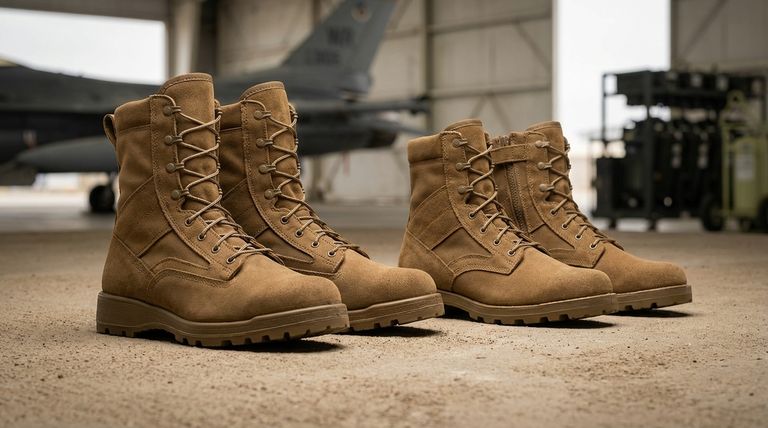
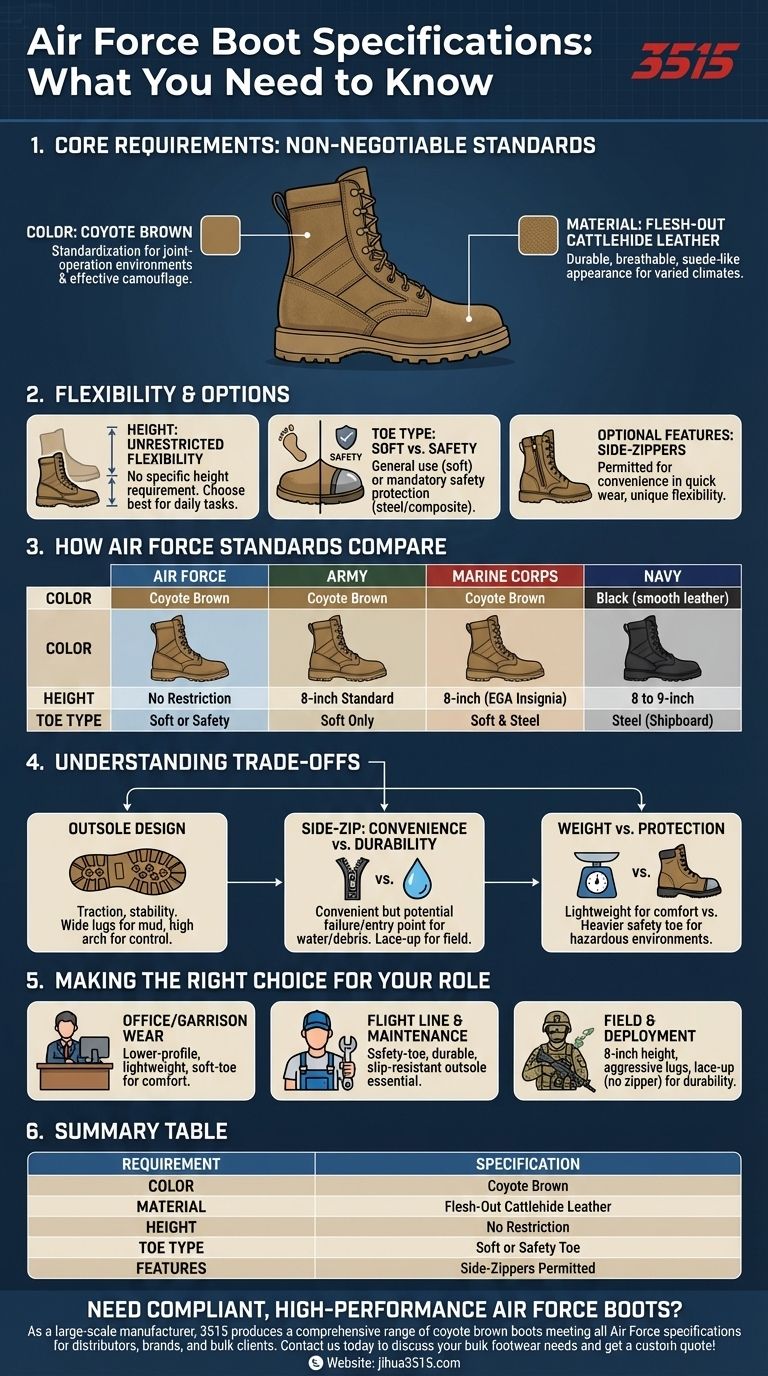
To be authorized for wear, an Air Force boot must be coyote brown, made of flesh-out cattlehide leather, and can have either a soft or safety toe. Unlike other branches, the Air Force does not impose a height restriction, and convenience features such as side-zippers are permitted.
While the Air Force provides significant flexibility in boot selection, the core requirements of color, material, and toe construction are non-negotiable. Understanding the "why" behind these specifications is the key to choosing a boot that meets regulations while maximizing comfort and performance for your specific role.
Deconstructing the Air Force Boot Requirements
Each element of the boot specification serves a distinct purpose, balancing uniformity with the diverse operational needs of Airmen.
The Coyote Brown Standard
The adoption of coyote brown is a move toward standardization across U.S. military branches. This ensures a consistent, effective camouflage color for personnel in joint-operation environments.
Material: Flesh-Out Cattlehide Leather
The requirement for flesh-out cattlehide leather dictates a durable material with a suede-like appearance on the exterior. This construction offers excellent resilience and breathability, which are critical for long-term wear in varied climates.
Height: Unrestricted Flexibility
The most notable distinction for the Air Force is the lack of a specific height requirement. This allows Airmen in different career fields—from office-based roles to flight line maintenance—to select a boot height that best suits their daily tasks.
Toe Type: Soft vs. Safety
Boots can feature either a soft toe for general use or a safety toe (often steel or composite) for protection. The choice is dictated by your job's specific safety requirements, with safety toes being mandatory in industrial or maintenance environments.
Optional Features: Side-Zippers
The Air Force permits the use of side-zippers, a feature valued for its convenience in quickly putting on or taking off boots. This is a level of flexibility not commonly found in the regulations of other branches.
How Air Force Standards Compare
Understanding the differences between service branches highlights the unique flexibility afforded to Airmen.
Comparison with the Army
The U.S. Army also mandates coyote brown boots, but strictly enforces an 8-inch height standard and only allows soft-toed boots under regulation AR 670-1.
Comparison with the Marine Corps
Marine Corps boots are also 8 inches high but must feature the Eagle, Globe, and Anchor (EGA) insignia. They permit both soft and steel toe options.
Comparison with the Navy
Navy boots are distinctly different, requiring black, smooth leather boots that are 8 to 9 inches tall and typically feature a steel toe for shipboard safety.
Understanding the Trade-offs
A compliant boot is just the starting point. The right choice depends on balancing performance, comfort, and durability.
Outsole Design is Critical
The outsole provides traction and stability. Look for wide lug patterns that shed mud and grip slippery surfaces, as well as a high, sharp arch for control when climbing or descending with gear.
The Side-Zip: Convenience vs. Durability
While convenient, a zipper can be a potential point of failure or an entry for water and debris. For demanding field conditions, a traditional lace-up boot without a zipper often provides superior durability and protection.
Weight vs. Protection
A lightweight, athletic-style boot may be more comfortable for garrison wear. However, a heavier boot with a safety toe and a more rugged outsole provides essential protection in hazardous environments like the flight line.
Making the Right Choice for Your Role
Select your boot based on a clear understanding of your daily mission requirements.
- If your primary focus is daily office or garrison wear: A lower-profile, lightweight boot without a safety toe will offer the most comfort and flexibility.
- If you work on the flight line or in maintenance: A safety-toe boot is essential, and you should prioritize a highly durable, slip-resistant outsole.
- If you frequently deploy or work in field conditions: A taller, 8-inch boot with aggressive lug patterns offers superior support and traction, and forgoing a side-zip is wise for maximum durability.
By understanding these core principles, you can confidently select a boot that is not only compliant but also a reliable tool for your mission.
Summary Table:
| Requirement | Specification |
|---|---|
| Color | Coyote Brown |
| Material | Flesh-Out Cattlehide Leather |
| Height | No Restriction |
| Toe Type | Soft or Safety Toe |
| Features | Side-Zippers Permitted |
Need Compliant, High-Performance Air Force Boots?
As a large-scale manufacturer, 3515 produces a comprehensive range of coyote brown boots that meet all Air Force specifications. Whether you're a distributor, brand owner, or bulk client needing soft-toe garrison boots or safety-toe flight line footwear, we deliver durable, regulation-compliant options tailored to your mission requirements.
Contact us today to discuss your bulk footwear needs and get a custom quote!
Visual Guide
Related Products
- High Performance Fire-Retardant Waterproof Safety Boots
- High-Traction Suede Tactical Boots Wholesale & Custom Manufacturing
- Durable Leather Tactical Boots Wholesale & Custom Manufacturing for Brands
- Durable Military Combat Boots with Water Drainage for Wholesale & OEM
- Wholesale Waterproof Tactical Boots Custom Suede & High-Traction Soles
People Also Ask
- Why are waterproof safety boots recommended for certain work environments? Essential Protection for Wet & Hazardous Jobs
- What roles do 3D vision systems and industrial robots play in the manufacturing of fire safety boots? Smart Automation
- What materials make waterproof boots durable? The Ultimate Guide to Long-Lasting Footwear
- How does boot construction affect waterproofing? The Science Behind Truly Dry Feet
- What is the difference between waterproof, water-resistant, and water-repellent boots? Choose the Right Protection for Your Feet