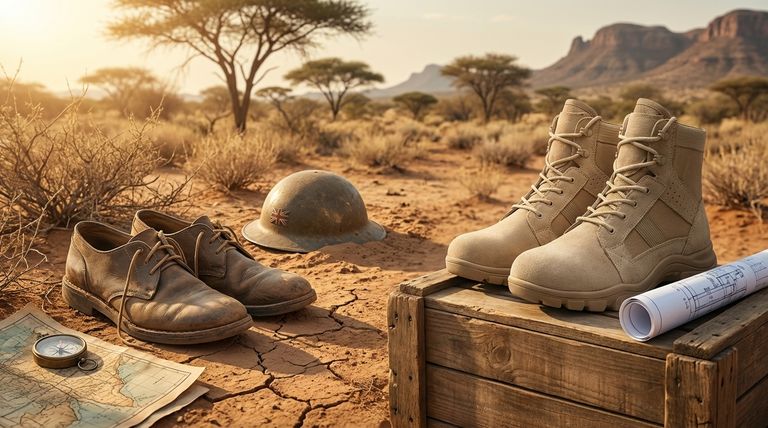
The modern desert boot is a direct descendant of the South African veldskoen. During World War II, British soldiers stationed in North Africa adopted these rough, suede "field shoes" for their lightweight durability in harsh climates. This practical military application inspired Nathan Clark to refine the rugged design, eventually launching the iconic chukka style known globally today.
The desert boot did not originate in a fashion house; it was born from the necessities of the African bush. Its defining characteristics—simple construction and suede uppers—are a direct legacy of the South African veldskoen, engineered for survival rather than style.
The Progenitor: Understanding the Veldskoen
To understand the desert boot, you must first understand the architecture of its ancestor, the veldskoen (pronounced "fell-skoon").
The "Field Shoe" Philosophy
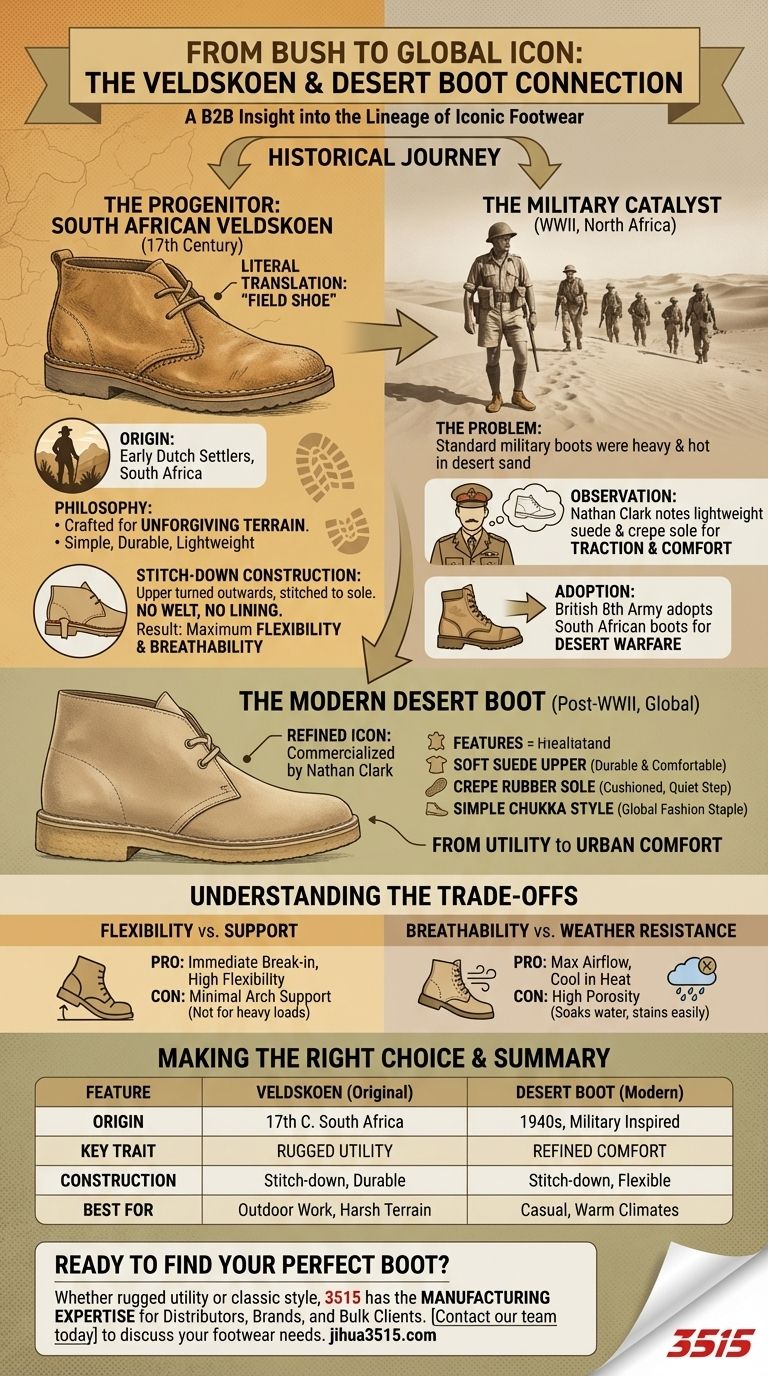
The term translates literally to "field shoe."
Early Dutch settlers in South Africa crafted these boots in the 17th century using readily available materials.
They required footwear that could withstand the unforgiving terrain of the bush without causing fatigue.
Construction Mechanics
The defining feature of the veldskoen is its stitch-down construction.
The leather upper is turned outwards and stitched directly to the sole.
This eliminates the need for a welt or lining, resulting in a shoe that is incredibly flexible and breathable.
From the Bush to the Global Stage
The transition from a regional utility boot to a global icon happened through military adoption.
The Military Catalyst
British officers in the 8th Army during World War II faced a specific problem: standard-issue military boots were heavy and stiff.
They were ill-suited for the shifting sands and heat of the North African desert.
Soldiers noticed South African troops wearing lightweight, suede boots that offered superior traction and comfort.
The Design Transfer
Nathan Clark, of the Clark's shoe dynasty, was serving in the campaign and observed this footwear adoption.
He noted that the suede uppers were soft yet durable, and the crepe rubber soles provided a quiet, cushioned step.
He brought sketches of these South African-inspired boots back to England, refining the rough "vellie" into the commercial desert boot.
Understanding the Trade-offs
While the desert boot is a design icon, its construction involves specific compromises you must be aware of.
Flexibility vs. Support
The stitch-down method inherited from the veldskoen offers immediate break-in and high flexibility.
However, this lack of structural rigidity means they offer minimal arch support.
They are not suitable for heavy load-bearing or technical hiking compared to a shank-supported boot.
Breathability vs. Weather Resistance
The use of unlined suede or rough-out leather maximizes airflow, keeping feet cool in hot environments.
The downside is high porosity.
These boots soak up water instantly and are prone to staining, making them poor choices for wet or snowy climates without heavy chemical treatment.
Making the Right Choice for Your Goal
Understanding the lineage of these boots allows you to select the right iteration for your needs.
- If your primary focus is rugged utility: Opt for a traditional South African veldskoen with a modern rubber compound sole, as this retains the original durability required for outdoor work.
- If your primary focus is urban comfort: Choose a classic crepe-soled desert boot, which sacrifices some longevity for a softer step and a more refined silhouette.
True style is rarely accidental; it is almost always the result of functional innovation adapting to new environments.
Summary Table:
| Feature | Veldskoen (Original) | Desert Boot (Modern) |
|---|---|---|
| Origin | 17th Century South Africa | 1940s, inspired by military use |
| Key Trait | Rugged utility for the bush | Refined comfort for urban wear |
| Construction | Stitch-down, highly durable | Stitch-down, flexible & breathable |
| Best For | Outdoor work, harsh terrain | Casual style, warm & dry climates |
Ready to Find Your Perfect Boot?
Whether you need the rugged durability of a traditional work boot or the classic style of a modern desert boot, 3515 has the manufacturing expertise to bring your vision to life. As a large-scale manufacturer, we produce a comprehensive range of footwear for distributors, brand owners, and bulk clients. Our production capabilities encompass all types of shoes and boots, ensuring quality, reliability, and scalability for your business.
Let's discuss your footwear needs — Contact our team today to get started!
Visual Guide
Related Products
- Wholesale Lightweight Tactical Boots Custom Manufacturer for Desert & Combat Use
- Durable Spiked Camouflage Boots Wholesale & Factory Production
- Durable Military Combat Boots with Water Drainage for Wholesale & OEM
- Wholesale High-Traction Camo Boots - Custom Manufacturer for Brands
- Durable Waterproof Rain Boots | Custom Manufacturer for Wholesale & Brands
People Also Ask
- What are the common types of combat boots? Find the Right Boot for Your Mission
- What specialized protections do tactical boots offer? Maximize Endurance with High-Performance Footwear
- How is the compatibility of polymer materials demonstrated in smart footwear? Enhancing Tactical & Training Performance
- What are the different types of tactical boots available? Find the Right Boot for Your Mission
- What are the main construction similarities between tactical boots and tactical sneakers? Built for Performance & Durability