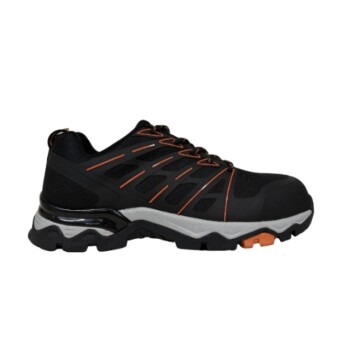
Functional requirements for safety shoes in high-load clinical environments center on exceptional grip and specialized anti-fatigue midsole architectures. For staff in Intensive Care Units (ICUs) or orthopedic wards, footwear must utilize high-rebound materials to effectively absorb impact forces generated during walking and load-bearing tasks. Furthermore, these shoes must provide significant lateral stability to assist nursing staff in maintaining their center of gravity and relieving lumbar muscle tension during frequent bending or twisting operations.
The primary goal of clinical safety footwear is not just protection, but active physical support. In high-intensity settings, the shoe must function as a shock-absorbing tool that stabilizes the wearer's posture to prevent chronic injury and acute fatigue.
Managing Physical Load and Impact
High-load environments require footwear that actively manages the energy transfer between the foot and the floor.
Anti-Fatigue Midsole Design
Standard foam is often insufficient for 12-hour shifts involving heavy lifting. Clinical safety shoes require anti-fatigue midsoles designed to retain their structure over time.
These designs prevent the material from bottoming out, ensuring consistent support throughout the entirety of a shift.
High-Rebound Material Integration
To combat exhaustion, the footwear must utilize high-rebound materials.
These materials absorb the initial shock of a step and return energy to the wearer. This reduces the metabolic cost of walking and carrying heavy medical equipment or patients.
Shock-Absorbing Components
Beyond the midsole, the shoe structure should incorporate specific shock-absorbing components.
This is particularly vital in orthopedic wards where staff frequently support the weight of patients with limited mobility. The shoe acts as a dampener against the harsh impact of hospital floors.
Enhancing Stability and Posture
The physical mechanics of nursing involve complex movements that place strain on the spine and joints.
Lateral Stability
Nurses frequently perform precise operations that require leaning or reaching. Lateral stability in the shoe prevents the foot from rolling outward.
This feature helps staff maintain their center of gravity, ensuring steady footing during critical patient care procedures.
Relieving Lumbar Tension
Frequent bending and twisting are unavoidable in ICUs.
Properly stabilized footwear aligns the lower body, which directly relieves lumbar muscle tension. This reduces the risk of back strain associated with repetitive movements.
Exceptional Grip
Clinical floors can become slippery due to fluids or cleaning protocols.
Exceptional grip is a non-negotiable functional requirement to prevent slips during emergencies or rapid movements.
Structural Integrity and Protection
The environment demands footwear that can withstand rigorous use while adhering to safety standards.
High-Strength Protective Layers
The shoe must handle external hazards. This requires the integration of high-strength protective layers capable of resisting fluids and potential impact from falling objects.
Customized Fit Capability
To function correctly, the shoe must accommodate the wearer's specific foot anatomy.
Advanced designs often support customized molding processes to account for pathological foot features, ensuring that safety features do not come at the cost of personal fit.
Understanding the Trade-offs
While advanced safety features are beneficial, they introduce specific compromises that must be managed.
Weight vs. Protection
Shoes featuring high-strength protective layers and complex shock-absorbing systems may be heavier than standard medical clogs.
You must balance the need for maximum protection with the potential for fatigue caused by heavier footwear over long distances.
Stiffness vs. Agility
Footwear designed for high lateral stability acts effectively as a brace, which increases safety.
However, this increased rigidity can sometimes reduce the natural flexibility of the foot, potentially feeling restrictive during the break-in period.
Making the Right Choice for Your Goal
Selecting the correct footwear depends on the specific challenges your team faces daily.
- If your primary focus is reducing staff exhaustion: Prioritize shoes with high-rebound materials and anti-fatigue midsoles to maximize energy return during walking.
- If your primary focus is preventing back injuries: Look for footwear emphasizing lateral stability to aid center-of-gravity maintenance and relieve lumbar tension during lifting and bending.
Investing in footwear that meets these rigorous functional standards is essential for maintaining the physical longevity and operational precision of your clinical staff.
Summary Table:
| Functional Feature | Clinical Benefit | Key Technology |
|---|---|---|
| Anti-Fatigue Midsole | Reduces exhaustion during 12-hour shifts | High-rebound, non-bottoming materials |
| Lateral Stability | Prevents rolling and aligns posture | Structural bracing & heel counters |
| Shock Absorption | Protects joints from hard hospital floors | Energy-absorbing foam inserts |
| Exceptional Grip | Prevents slips on wet or treated floors | Slip-resistant rubber outsoles |
| Lumbar Support | Relieves lower back and muscle tension | Anatomical alignment design |
| Protective Layers | Resists fluids and falling objects | High-strength, fluid-resistant uppers |
Elevate Your Medical Staff's Safety with 3515
As a large-scale manufacturer serving global distributors and brand owners, 3515 offers comprehensive production capabilities for all footwear types. Our flagship Safety Shoes series is engineered to meet the rigorous demands of high-load clinical environments, providing the perfect balance of impact protection and orthopedic support.
From anti-fatigue tactical boots to specialized medical-grade sneakers, we deliver bulk manufacturing solutions that prioritize the physical longevity of the wearer. Our extensive portfolio also covers outdoor, training, and formal dress shoes to meet your diverse procurement requirements.
Ready to upgrade your inventory with high-performance clinical footwear?
Contact us today to discuss your bulk manufacturing needs!
References
- Haya Douhal, Raed Shudifat. Nurses’ Knowledge and Practice of Appropriate Techniques of Body Mechanics and Non-specific Back Pain. DOI: 10.7759/cureus.56478
This article is also based on technical information from 3515 Knowledge Base .
Related Products
- Premium Suede Sport Safety Shoes for Wholesale & Bulk Orders
- Premium Lightweight Safety Shoes for Wholesale & Bulk Orders
- Wholesale Anti-Smash & Puncture-Proof Safety Shoes Custom Manufacturing for Brands
- Premium KPU Injection Athletic Style Safety Shoes
- Premium Safety Shoes with Rotating Buckle Safety Sneakers
People Also Ask
- What are the primary functions of professional safety shoes? Maximize Safety in Water Supply Confined Spaces
- What industries have specific OSHA footwear requirements? Ensure Compliance & Protect Your Workforce
- What role do specialized safety shoes play in preventing falls? Engineering Stability in Industrial Environments
- How do the 3R principles influence green footwear design? Master Sustainable Safety Shoe Manufacturing
- How do complex outsole tread designs in safety shoes work with coated floors? Master Slip Resistance Engineering