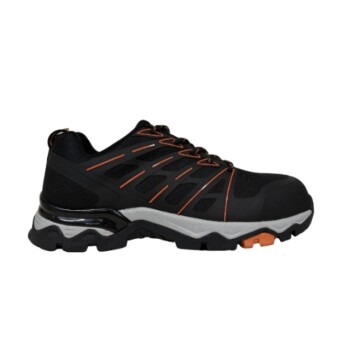
Fall risk classification acts as the definitive roadmap for selecting appropriate rehabilitation footwear. By evaluating critical variables such as vision, mobility, and environmental factors, clinicians use risk grading to prescribe safety shoes that specifically compensate for a patient's physical deficits, ensuring the equipment aligns perfectly with their health status.
Accurate risk grading transforms footwear selection from a generic choice into a precise clinical intervention. It ensures high-risk individuals receive necessary stabilizing features while guaranteeing the level of protection matches the user's specific mobility profile.
The Foundation of Clinical Selection
The selection process begins with data, not the equipment itself. Understanding the patient's specific limitations is the only way to ensure the footwear serves as an effective rehabilitation tool.
Utilizing Fall Risk Assessment Tools (FRAT)
Clinicians rely on Fall Risk Assessment Tools (FRAT) to gather objective data. These evaluations analyze key physiological and contextual markers, specifically vision, mobility, and environmental factors.
Categorizing Patient Needs
Based on the FRAT data, individuals are sorted into low, medium, or high-risk categories. This stratification is the critical filter that prevents a "one-size-fits-all" approach to safety equipment.
Translating Risk Levels to Equipment
Once a risk category is established, it dictates the specific technical features required in the safety shoes or auxiliary footwear.
Support for High-Risk Individuals
Patients classified as high-risk require the most robust intervention. For these individuals, the clinical selection focuses on safety shoes equipped with specific anti-slip and stabilizing features.
Compensating for Physical Deficits
The primary goal of this matching process is compensation. If a patient has a mobility deficit identified by the FRAT, the footwear is selected to mechanically offset that weakness.
Tailoring Protection to Health Status
Accurate grading ensures the chosen footwear provides the appropriate level of protection. It aligns the mechanical properties of the shoe with the user's current health status to support safer movement during rehabilitation.
Understanding the Trade-offs
While risk classification provides a strong framework, it requires careful interpretation to avoid unintended consequences in rehabilitation.
The Risk of Mismatched Protection
A key pitfall is ignoring the specific grade of the patient. Providing high-risk protective gear to a low-risk patient may result in unnecessary bulk that hinders mobility. Conversely, providing standard footwear to a high-risk patient leaves physical deficits uncompensated, significantly increasing the likelihood of injury.
Making the Right Choice for Patient Safety
The effective selection of rehabilitation footwear relies on allowing the assessment data to drive the equipment choice.
- If your primary focus is High-Risk Management: Prioritize footwear with aggressive anti-slip soles and enhanced stability features to directly compensate for significant mobility or vision deficits.
- If your primary focus is General Rehabilitation: Ensure the level of protection is strictly tailored to the patient's current risk category to optimize both safety and independent mobility.
By rigorously applying fall risk classification, you ensure that every piece of footwear serves as a targeted extension of the patient's rehabilitation plan.
Summary Table:
| Risk Level | Mobility Profile | Required Footwear Features | Clinical Objective |
|---|---|---|---|
| Low Risk | Independent / Stable | Standard protection, Lightweight | Maintain natural gait and comfort |
| Medium Risk | Moderate instability | Enhanced traction, Mid-sole support | Prevent slips and provide balance |
| High Risk | Significant deficits | Aggressive anti-slip, High stability | Compensate for physical weaknesses |
Partner with 3515 for Professional-Grade Safety Footwear Solutions
As a large-scale manufacturer serving global distributors and brand owners, 3515 offers comprehensive production capabilities for all footwear types. We specialize in our flagship Safety Shoes series, engineered specifically to meet the rigorous demands of clinical and industrial environments.
Our extensive portfolio—ranging from work and tactical boots to outdoor and training sneakers—is designed to help you provide targeted protection for every risk level. Whether you are stocking for medical rehabilitation or specialized work safety, we deliver the bulk manufacturing expertise and quality assurance you need to succeed.
Contact 3515 today to discuss your bulk requirements
References
- Christopher Olusanjo Akosile, Emmanuel Chiebuka Okoye. Neighborhood safety, fall indices, physical activity level and social participation restrictions from a population of community-dwelling older adults in Nsukka, Enugu State, Nigeria. DOI: 10.1186/s12877-023-04059-x
This article is also based on technical information from 3515 Knowledge Base .
Related Products
- Premium Suede Sport Safety Shoes for Wholesale & Bulk Orders
- Premium Lightweight Safety Shoes for Wholesale & Bulk Orders
- Wholesale Anti-Smash & Puncture-Proof Safety Shoes Custom Manufacturing for Brands
- Premium KPU Injection Athletic Style Safety Shoes
- Premium Safety Shoes with Rotating Buckle Safety Sneakers
People Also Ask
- What are the primary functions of professional safety shoes? Maximize Safety in Water Supply Confined Spaces
- What industries have specific OSHA footwear requirements? Ensure Compliance & Protect Your Workforce
- What role do specialized safety shoes play in preventing falls? Engineering Stability in Industrial Environments
- What are the main safety features of S1-S5 shoes? The 3 Essential Protections Explained
- Why is barefoot walking used as a baseline in gait safety research? Unlocking Natural Biomechanics for Shoe Design