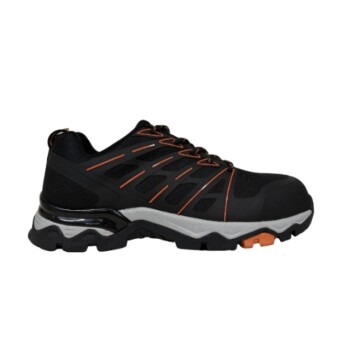
Lightweight work shoes with shock absorption actively mitigate physical fatigue, which is a primary catalyst for unsafe behavior in industrial settings. By significantly reducing the strain on lower limbs during high-intensity shifts, these shoes preserve physical stamina, directly preventing the exhaustion-induced lapses in concentration that lead to operational violations.
While standard safety gear defends against external threats like falling objects, lightweight footwear addresses the internal risk of operator exhaustion. By maintaining energy levels, you effectively weaken the propagation of risk in complex underground environments.
The Physiology of Underground Safety
Reducing Lower Limb Strain
Long-duration tunnel operations place immense stress on the human body.
Heavy footwear increases the metabolic cost of every step.
Lightweight designs minimize this burden, while advanced shock absorption dissipates the impact forces generated during walking or climbing.
Preserving Cognitive Focus
Physical fatigue does not stay isolated in the muscles; it degrades mental sharpness.
When a worker’s stamina is depleted, the probability of concentration lapses increases drastically.
By delaying the onset of physical exhaustion, these shoes help maintain the mental alertness necessary to follow complex safety protocols.
Weakening the Spread of Risk
In a tightly coupled environment like a tunnel, one worker's error can endanger the entire team.
Exhaustion often leads to "unsafe behaviors" or operational violations.
By keeping the workforce physically fresh, you reduce individual errors, thereby breaking the chain of events that often leads to systemic accidents.
Beyond Fatigue: Baseline Protections
The Necessity of Impact Resistance
While fatigue management is critical, the physical environment of a mine requires robust defensive features.
Underground tunnels present constant threats from falling heavy objects and the crushing forces of hydraulic supports.
Lightweight shoes must still meet these industrial-grade impact standards to be viable.
Environmental Stability
Tunnel floors are rarely flat or dry.
Wet, muddy, and uneven terrain poses a significant slip hazard.
High-quality footwear must combine shock absorption with aggressive slip resistance to ensure stability on sharp rocks and slick surfaces.
Understanding the Trade-offs
Durability vs. Weight
Achieving a lightweight profile often requires the use of advanced synthetic materials rather than traditional heavy leathers or thick rubber.
In highly abrasive environments with sharp rocks, these lighter materials may experience accelerated wear and tear.
You may need to replace lightweight footwear more frequently than heavier, traditional alternatives.
Stability vs. Cushioning
Shock absorption implies a degree of compression in the sole.
If a shoe is too soft, it may reduce the wearer's "ground feel" or stability on uneven terrain.
It is critical to find a balance where the shoe absorbs shock without compromising the structural support needed to prevent ankle rolls.
Making the Right Choice for Your Project
To select the appropriate footwear for your underground operations, consider the specific nature of your team's daily tasks.
- If your primary focus is reducing human error: Prioritize shoes with maximum weight reduction and shock absorption to extend worker stamina and focus during long shifts.
- If your primary focus is physical hazard defense: Ensure the lightweight materials do not compromise certification ratings for crush resistance and puncture protection against sharp rocks.
- If your primary focus is environmental traction: Verify that the shock-absorbing sole unit includes deep, self-cleaning lugs designed specifically for wet and muddy tunnel floors.
The best safety equipment protects the worker not just from the environment, but from the limits of their own endurance.
Summary Table:
| Feature | Safety Benefit | Impact on Worker |
|---|---|---|
| Lightweight Design | Reduces metabolic cost of movement | Delays onset of physical exhaustion |
| Shock Absorption | Dissipates impact forces | Protects joints and reduces lower limb strain |
| Slip Resistance | Ensures stability on wet/uneven terrain | Prevents falls and ankle injuries |
| Impact Resistance | Guards against falling objects | Prevents crushing injuries in confined spaces |
Partner with 3515 for High-Performance Safety Footwear
As a large-scale manufacturer serving distributors and brand owners, 3515 offers comprehensive production capabilities for all footwear types, anchored by our flagship Safety Shoes series. Our advanced manufacturing ensures that lightweight comfort never comes at the cost of durability or protection.
From tactical boots and training sneakers to industrial-grade work shoes and formal dress options, our extensive portfolio is designed to meet your diverse bulk requirements and help your customers stay safe and focused.
Ready to elevate your inventory with industry-leading safety technology?
Contact us today to discuss your production needs
References
- Bing Tang, Wei Lü. EXPLORING THE RISK TRANSMISSION CHARACTERISTICS AMONG UNSAFE BEHAVIORS WITHIN URBAN RAILWAY CONSTRUCTION ACCIDENTS. DOI: 10.3846/jcem.2022.16924
This article is also based on technical information from 3515 Knowledge Base .
Related Products
- Premium Lightweight Safety Shoes for Wholesale & Bulk Orders
- Lightweight Breathable Sneakers with Wet-Traction Grip for Wholesale & Private Label
- Lightweight Breathable Training Shoes for Wholesale & Custom OEM Manufacturing
- Wholesale Lightweight Cushioned Athletic Sneakers for Custom Bulk Production
- Wholesale Breathable Athletic Sneakers - Custom Lightweight Cushioned Footwear Manufacturer
People Also Ask
- How is the absence of PPE (safety shoes & helmets) categorized in construction motion data labeling? Unlock Real-Time Safety Insights!
- What role does blockchain play in footwear supply chain transparency? Enhance Safety Shoe Traceability and Verification
- What is a recommended alternative to using hairspray for slip resistance? Ditch Unreliable Hacks for Real Safety
- What workplace hazards indicate the need for safety shoes? Identify risks to protect your workforce.
- What role do specialized safety shoes play in preventing falls? Engineering Stability in Industrial Environments