
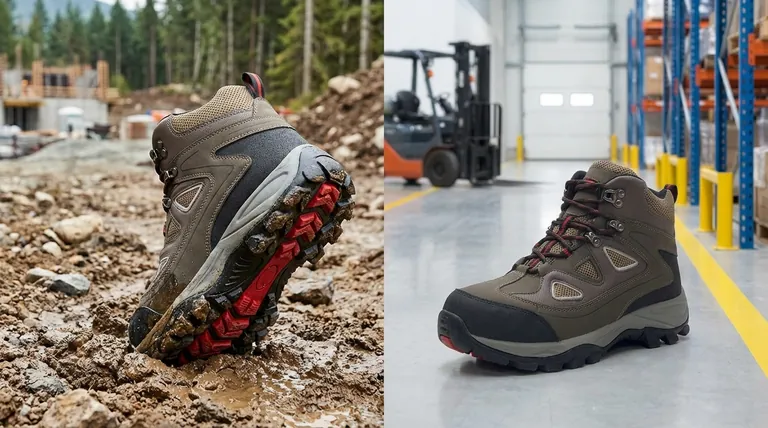
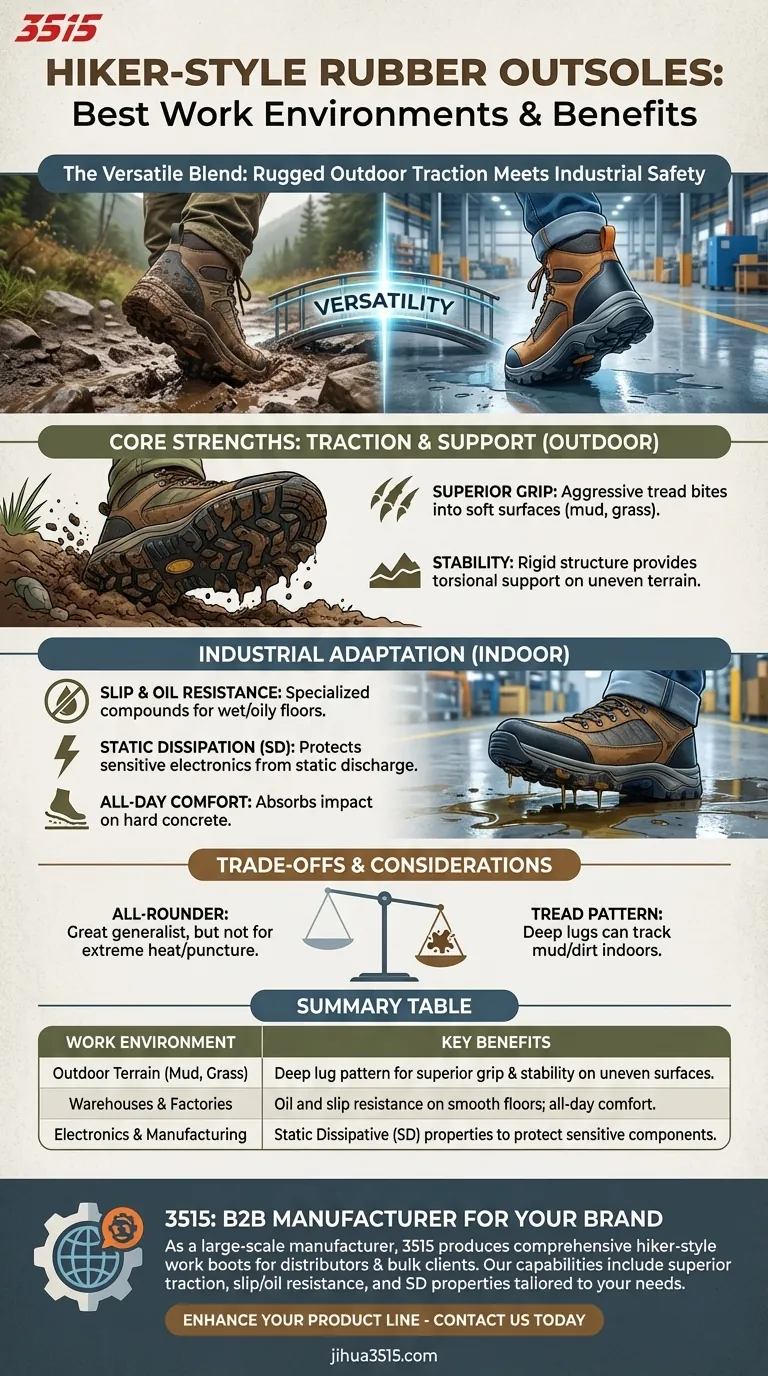
To be direct, hiker-style rubber outsoles are best for work environments that demand a blend of rugged outdoor traction and industrial safety features. This includes outdoor jobs on wet or muddy terrain, warehouse and factory floors requiring slip and oil resistance, and certain manufacturing roles where static dissipative properties are necessary.
The core value of a hiker-style outsole in a work setting is its versatility. It successfully translates the grip and support needed for natural trails to the safety and comfort demands of modern industrial and outdoor workplaces.
The Core Strengths: Traction and Support
The design of a hiker-style sole is rooted in providing stability on unpredictable surfaces. This translates directly into key advantages in specific work environments.
Superior Grip on Natural Terrain
The defining feature of a hiker outsole is its deep, multi-directional lug pattern. These aggressive treads act like claws, biting into soft surfaces like wet grass, mud, and loose soil to prevent slips.
This makes them the ideal choice for landscapers, surveyors, utility workers, and anyone whose job requires them to navigate natural, often wet, outdoor environments.
Stability on Uneven Surfaces
Beyond just grip, the rigid structure provides excellent torsional support. This reduces foot fatigue when walking on rocky ground, gravel, or other uneven surfaces by preventing the foot from twisting unnaturally.
Adapting to Industrial Environments
While born in the outdoors, the features of hiker-style outsoles have been adapted to solve common problems in indoor industrial settings.
Essential Slip and Oil Resistance
Modern work boot outsoles are made from specialized rubber compounds. These materials are engineered to resist degradation from oils and chemicals while maintaining a high coefficient of friction on smooth surfaces like sealed concrete.
This is a critical safety feature in warehouses, auto shops, and factories where spills can create hazardous, low-traction surfaces.
The Role of Static Dissipation (SD)
For some roles, footwear must do more than protect the worker; it must protect the work. Static Dissipative (SD) footwear is designed to safely conduct the body's natural static charge into the ground.
Hiker-style boots with an SD rating are essential for technicians working with sensitive electronic components, as an uncontrolled static discharge can destroy microcircuits.
All-Day Comfort for Hard Floors
The same support that provides stability on a trail also provides comfort during long hours of standing and walking on hard concrete floors. The design helps distribute weight evenly and absorb impact, reducing strain on the feet, knees, and back.
Understanding the Trade-offs
No single outsole is perfect for every single task. Understanding the limitations of a hiker-style sole is key to making an informed choice.
Generalist vs. Specialist Footwear
The hiker-style sole is an exceptional "all-rounder." However, it is not a specialist. For extreme environments, a dedicated sole may be better.
For example, it may not offer the same puncture resistance as a heavy-duty construction boot with a steel plate or the extreme heat resistance required by welders or asphalt workers.
Tread Pattern Considerations
The deep lugs that provide excellent traction outdoors can also track more mud, dirt, and debris indoors than a flatter wedge sole. This can be a concern in environments that must be kept clean.
Making the Right Choice for Your Job
Your specific work environment and daily tasks should be the deciding factor.
- If your primary focus is outdoor work on natural or uneven surfaces: The aggressive tread and robust support of a hiker-style sole are an ideal choice for traction and safety.
- If your primary focus is warehouse or factory work: A hiker-style sole offers an excellent balance of certified slip resistance and all-day comfort for standing on hard surfaces.
- If your primary focus is working with sensitive electronics: You must select a hiker-style boot that is explicitly rated for Static Dissipation (SD) to protect your components.
Ultimately, choosing a hiker-style outsole is a decision for reliable performance across a diverse range of conditions.
Summary Table:
| Work Environment | Key Benefits of Hiker-Style Outsoles |
|---|---|
| Outdoor Terrain (Mud, Grass) | Deep lug pattern for superior grip and stability on uneven surfaces. |
| Warehouses & Factories | Oil and slip resistance on smooth floors; all-day comfort. |
| Electronics & Manufacturing | Static Dissipative (SD) properties to protect sensitive components. |
As a large-scale manufacturer, 3515 produces a comprehensive range of hiker-style work boots for distributors, brand owners, and bulk clients. Our production capabilities include outsoles with superior traction, slip/oil resistance, and SD properties tailored for your workforce's safety and comfort. Enhance your product line with reliable footwear designed for diverse work environments—contact us today to discuss your needs!
Visual Guide
Related Products
- Durable Rubber Sole Outdoor Shoes Wholesale & Custom Manufacturing
- Durable Rubber-Soled Utility Shoes for Wholesale & Custom Brand Manufacturing
- Durable Canvas Work Shoes with Rubber Lug Sole | Wholesale Manufacturer
- Wholesale Durable Camo Canvas Shoes with High-Traction Rubber Soles
- Durable High-Traction Canvas Sneakers Wholesale & Custom Manufacturing
People Also Ask
- What is the function of the sole in outdoor shoes? Find the Perfect Grip and Support
- What role do outdoor shoes and sneakers play in navigating external terrains? Engineered Stability for Every Surface
- How is AI utilized in the design of outdoor and safety footwear? Harnessing Big Data for Market-Driven Shoe Innovation
- Why is durability important when selecting outdoor shoes? A Guide to Safety & Long-Term Value
- What are the key components of outdoor shoes that affect comfort and sturdiness? A Guide to Durable, High-Performance Footwear









