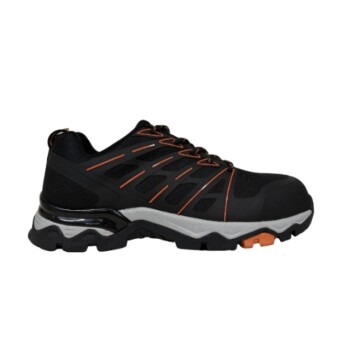
In pharmaceutical quality control (QC) laboratories, the primary protective functions of industrial safety shoes are to prevent physical crush injuries and to ensure stability against slip hazards. These specialized shoes safeguard personnel during the handling of heavy loads—such as gas cylinders and sampling boxes—while providing critical traction on floors that may be wet or contaminated with chemical reagents.
Core Takeaway Safety footwear in a QC environment is not just about durability; it is a calculated defense against specific lab hazards. The two non-negotiable requirements are impact resistance for handling heavy instrumentation and high-performance traction to prevent falls caused by liquid spills.
Protection Against Physical Impact and Crushing
The environment of a QC laboratory involves moving significant mass, often in tight spaces. Safety shoes provide a rigid barrier between heavy objects and the user's feet.
Handling Heavy Sampling Containers
QC workflows frequently require the transport of bulk sampling boxes. Reinforced toe caps absorb the impact if these heavy containers are accidentally dropped, preventing severe crushing injuries to the toes and forefoot.
Managing High-Pressure Gas Cylinders
Laboratories rely heavily on compressed gases for chromatography and other analytical techniques. The movement of high-pressure gas cylinders presents a high risk; a slip or mishandling can result in a heavy cylinder falling directly onto the foot. Safety shoes provide the structural integrity needed to deflect this weight.
Protecting Against Precision Instrument Drops
While "precision" implies small, many experimental instruments are dense, heavy, and cumbersome. During setup, calibration, or maintenance, these precision instruments can slip from a technician's grasp. Safety footwear ensures that an equipment accident does not result in a disabling injury.
Mitigation of Slip and Fall Hazards
In a laboratory setting, the floor condition is a variable, not a constant. The outsole of the safety shoe is the primary defense against loss of balance.
Stability on Chemical Spills
The handling of liquid chemicals is routine in QC labs. Accidental spills of chemical reagents can instantly transform a floor into a slip hazard. Industrial safety shoes are equipped with specialized slip-resistant outsoles designed to maintain friction even when the surface is compromised by viscous or slick fluids.
Traction on Wet Surfaces
QC labs require rigorous cleaning and sanitization protocols. This often results in wet floors, increasing the risk of slips. The tread patterns on safety shoes are engineered to channel liquid away from the contact point, ensuring stable traction and reducing the incidence of workplace falls.
Understanding the Trade-offs
While protection is paramount, selecting footwear requires balancing safety features with the realities of laboratory work.
Chemical Compatibility Limitations
Not all safety shoes resist all chemicals. While a shoe may be slip-resistant on a wet floor, the outsole material itself must be compatible with the specific reagents used in your lab. Prolonged exposure to aggressive solvents (like certain petroleum derivatives mentioned in broader industrial contexts) can degrade the rubber, reducing its protective life.
Weight vs. Fatigue
The reinforced structure required to stop a gas cylinder adds weight. In a high-throughput lab where technicians are standing or walking all day, excessively heavy footwear can lead to fatigue. It is crucial to look for composite toe caps that offer high-strength protection without the weight of traditional steel.
Making the Right Choice for Your Laboratory
To select the most effective footwear, evaluate the specific daily risks your team encounters.
- If your primary focus is heavy logistics (cylinders/bulk samples): Prioritize shoes with certified impact-resistant toe caps (steel or composite) to maximize crush protection.
- If your primary focus is wet chemistry and fluid handling: Prioritize shoes with high-grade, slip-resistant outsoles that are chemically compatible with your specific reagents.
By matching the protective features of the footwear to the specific hazards of the QC workflow, you ensure both the immediate safety and long-term health of laboratory personnel.
Summary Table:
| Feature | Protective Function | Laboratory Hazard | Benefit |
|---|---|---|---|
| Reinforced Toe Caps | Impact & Crush Resistance | Heavy gas cylinders, sampling boxes, and precision instruments | Prevents bone fractures and severe toe injuries from drops. |
| Slip-Resistant Outsoles | High Traction & Friction | Wet floors from cleaning, chemical reagent spills | Minimizes falls and stability loss on slick surfaces. |
| Chemical Compatibility | Material Integrity | Corrosive solvents and reagents | Prevents outsole degradation and maintains long-term protection. |
| Composite Materials | Lightweight Protection | High-throughput walking and standing | Reduces technician fatigue while maintaining safety standards. |
Secure Your Laboratory with Professional Footwear Solutions
As a large-scale manufacturer serving distributors and brand owners, 3515 offers comprehensive production capabilities for all footwear types, anchored by our flagship Safety Shoes series. We provide pharmaceutical QC labs with the perfect balance of impact resistance and chemical-compatible traction.
Our extensive portfolio covers work and tactical boots, outdoor shoes, training shoes, and sneakers, as well as Dress & Formal shoes to meet your diverse bulk requirements.
Ready to elevate your team's safety standards? Contact us today to discuss your bulk manufacturing needs!
References
- Rio Ginza, Tatan Sukwika. Implementation of Occupational Safety and Health at PT Menarini Indria Laboratories Bekasi. DOI: 10.36441/jamr.v4i2.2025
This article is also based on technical information from 3515 Knowledge Base .
Related Products
- Premium Suede Sport Safety Shoes for Wholesale & Bulk Orders
- Premium Lightweight Safety Shoes for Wholesale & Bulk Orders
- Wholesale Anti-Smash & Puncture-Proof Safety Shoes Custom Manufacturing for Brands
- Premium KPU Injection Athletic Style Safety Shoes
- Premium Safety Shoes with Rotating Buckle Safety Sneakers
People Also Ask
- What are the primary functions of professional safety shoes? Maximize Safety in Water Supply Confined Spaces
- What industries have specific OSHA footwear requirements? Ensure Compliance & Protect Your Workforce
- What role do specialized safety shoes play in preventing falls? Engineering Stability in Industrial Environments
- How do gait analysis algorithms ensure accuracy in footwear? Master Step Length Precision for Boots & Sneakers
- How do complex outsole tread designs in safety shoes work with coated floors? Master Slip Resistance Engineering