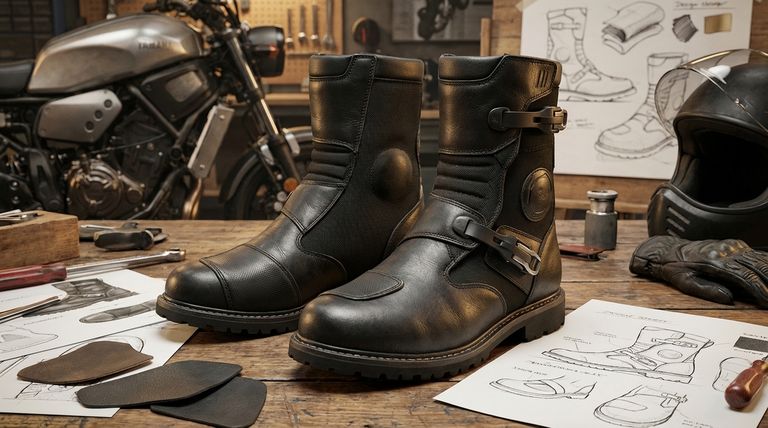
At their core, motorcycle boots are engineered to resolve three competing objectives. They must first provide robust protection against the unique dangers of a crash. Simultaneously, they need to offer sufficient comfort for long hours of riding and short periods of walking. Finally, they must deliver a style that reflects the rider's identity and the culture of motorcycling.
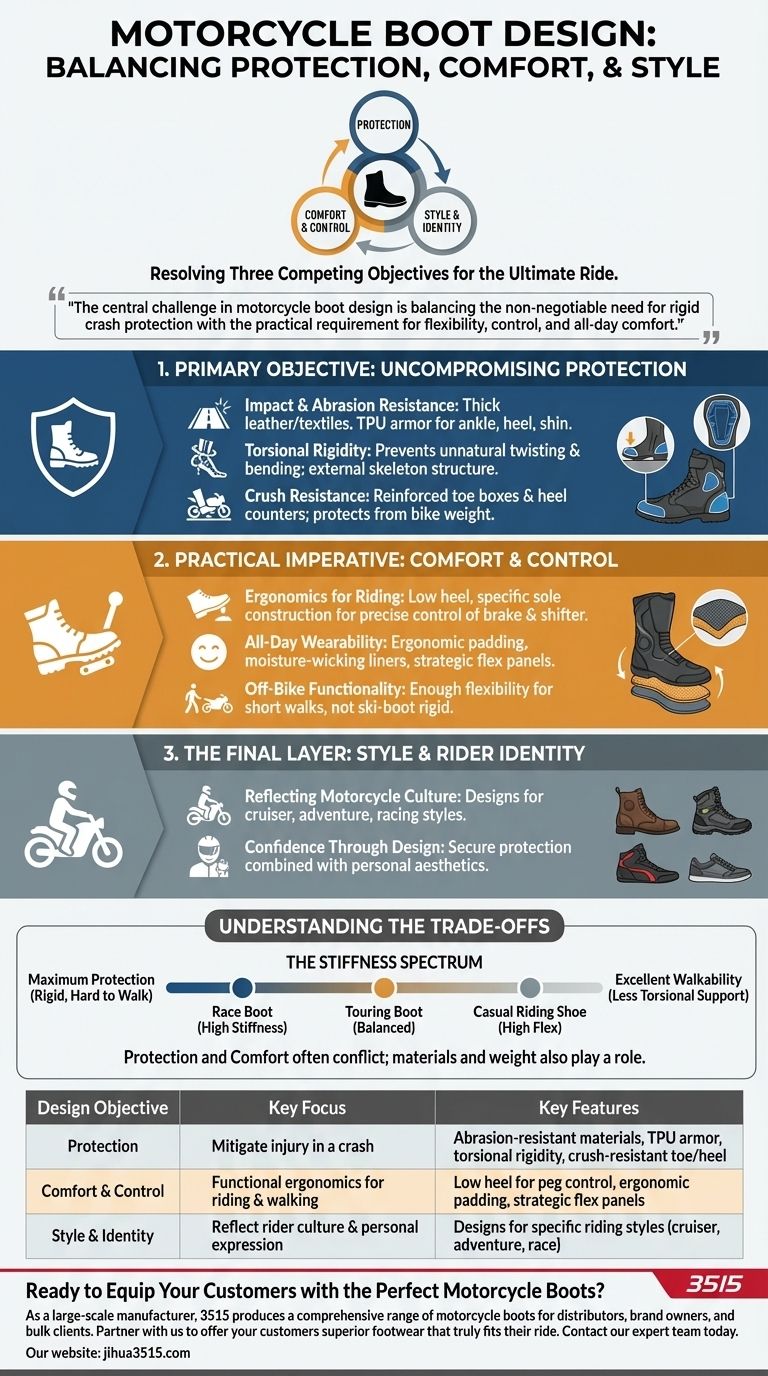
The central challenge in motorcycle boot design is balancing the non-negotiable need for rigid crash protection with the practical requirement for flexibility, control, and all-day comfort.
The Primary Objective: Uncompromising Protection
The most critical function of any motorcycle boot is to mitigate injury. This goes far beyond what a standard work boot or sneaker can offer, focusing on the specific forces involved in a motorcycle accident.
Impact and Abrasion Resistance
In a fall, your feet are highly likely to slide along the pavement. Boots use thick, heavy leather or advanced abrasion-resistant textiles to prevent the road from grinding through the material and causing severe injury.
They also incorporate hidden armor, often made of thermoplastic polyurethane (TPU), over the ankle, heel, and shin to absorb and distribute the force of a direct impact.
Torsional Rigidity
One of the most severe risks in a crash is the violent, unnatural twisting of the foot and ankle. A key design objective is to build torsional stiffness into the boot's structure.
This reinforcement acts like an external skeleton, preventing the ankle from rotating or bending in ways it shouldn't, which can drastically reduce the severity of fractures and ligament damage.
Crush Resistance
Your foot can easily become trapped between the bike and the ground. To counter this, boots are designed with heavily reinforced toe boxes and heel counters.
These structural elements are designed to resist crushing forces, protecting the delicate bones of your feet from the immense weight of the motorcycle.
The Practical Imperative: Rider Comfort and Control
While protection is paramount, a boot is useless if it's so uncomfortable or clumsy that it hinders the rider. The second objective is functional, ergonomic design.
Ergonomics for Riding
Motorcycle boots are built for the footpeg, not the sidewalk. They feature a low heel and specific sole construction designed to interface securely with the motorcycle's controls.
This ensures the rider can operate the rear brake and gear shifter with precision and feel, without their foot slipping.
All-Day Wearability
Riders spend hours in their boots, so comfort is essential. This is achieved through carefully shaped internal padding, moisture-wicking liners, and strategically placed flex panels that allow for movement without compromising structural integrity.
Off-Bike Functionality
Every ride involves some walking, whether at a gas station or a destination. While not designed for hiking, a good boot must provide enough flexibility to allow for comfortable, short-distance walking without feeling like a ski boot.
Understanding the Trade-offs
The ideal boot doesn't exist because the primary objectives of protection and comfort are often in direct conflict. Every boot represents a set of compromises.
The Stiffness Spectrum
This is the most significant trade-off. A full-on race boot offers maximum torsional stiffness for track-level protection but is extremely rigid and awkward to walk in.
Conversely, a casual riding shoe offers excellent walkability and comfort but provides far less protection against twisting and impact forces. Most boots fall somewhere in between these two extremes.
Materials and Weight
Thick leather provides legendary abrasion resistance but can be heavy and require break-in. Modern synthetic materials and textiles can offer comparable protection with less weight and better out-of-the-box comfort, but may have a different feel and long-term wear characteristic.
The Final Layer: Style and Rider Identity
Beyond pure function, boots are a key part of a rider's gear and personal expression. This objective is about more than just aesthetics.
Reflecting Motorcycle Culture
The look of a boot—whether it's a classic leather cruiser boot, a technical adventure boot, or a sleek racing boot—is a signal. It complements the rider's apparel and the type of motorcycle they ride, connecting them to a specific part of the culture.
Confidence Through Design
A boot that not only performs well but also looks and feels right can enhance a rider's confidence. The combination of secure protection and a style that resonates with the user is a powerful component of the overall riding experience.
Making the Right Choice for Your Goal
Your ideal boot depends entirely on how you ride. Prioritize the design objectives that align with your primary needs.
- If your primary focus is aggressive street or track riding: Prioritize maximum torsional stiffness, certified armor, and comprehensive ankle bracing.
- If your primary focus is long-distance touring: Seek a balance of robust protection with features like waterproofing and enough flexibility for off-bike comfort.
- If your primary focus is casual cruising or short commutes: You can lean towards more style-driven designs, but never sacrifice core protective features like over-the-ankle coverage, a reinforced sole, and sturdy construction.
Understanding these design objectives allows you to choose a boot that doesn't just fit your foot, but truly fits your ride.
Summary Table:
| Design Objective | Key Focus | Key Features |
|---|---|---|
| Protection | Mitigate injury in a crash | Abrasion-resistant materials, TPU armor, torsional rigidity, crush-resistant toe/heel |
| Comfort & Control | Functional ergonomics for riding and walking | Low heel for peg control, ergonomic padding, strategic flex panels |
| Style & Identity | Reflect rider culture and personal expression | Designs for specific riding styles (cruiser, adventure, race) |
Ready to Equip Your Customers with the Perfect Motorcycle Boots?
As a large-scale manufacturer, 3515 produces a comprehensive range of motorcycle boots for distributors, brand owners, and bulk clients. We master the critical balance of protection, comfort, and style, ensuring every pair meets the highest standards of safety and rider satisfaction.
Our production capabilities encompass all types of riding boots, from aggressive street models to comfortable touring boots and style-driven cruisers.
Partner with us to offer your customers superior footwear that truly fits their ride.
Contact our expert team today to discuss your manufacturing needs
Visual Guide
Related Products
- Heavy-Duty Goodyear Welted Pull-On Safety Rigger Boot
- Wholesale Tactical Boots High-Traction & Reflective for Bulk & Brand Orders
- High Performance Fire-Retardant Waterproof Safety Boots
- Wholesale High-Traction Camo Boots - Custom Manufacturer for Brands
- Wholesale Waterproof Tactical Boots Custom Suede & High-Traction Soles
People Also Ask
- What are the key elements of quality boot construction? Ensure Longevity & Performance
- Are Goodyear welted boots worth it? The Ultimate Guide to Lifelong Footwear
- What is a Goodyear welt on a boot? The Secret to Durable, Repairable Footwear
- What makes Goodyear Welt boots suitable for harsh environments? Unmatched Durability & Repairability
- What additional high-quality materials are used in Goodyear Welt boots? A Guide to Advanced Components