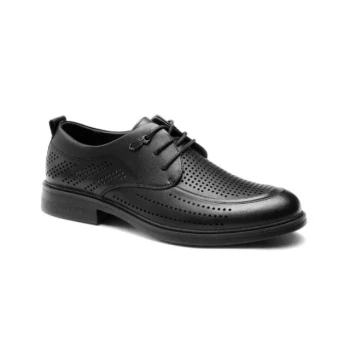
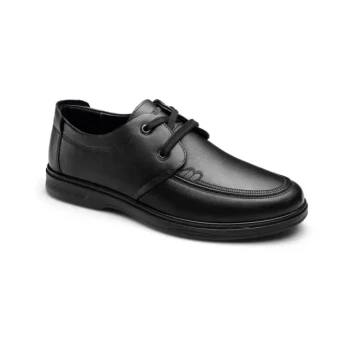
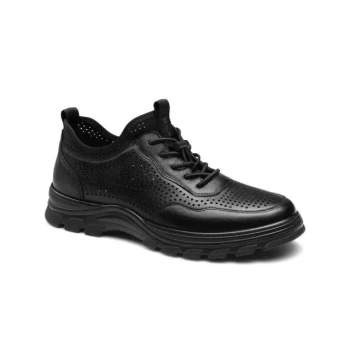
The primary difference between rough-out and smooth leather lies in which side of the hide faces outward, dictating both the aesthetic appeal and the functional durability of the footwear. Rough-out leather utilizes the fibrous flesh side of the hide as the exterior, offering extreme abrasion resistance for heavy-duty environments. Conversely, smooth leather utilizes the grain side of the hide, providing a polished, sophisticated finish that is the standard for formal and dress footwear.
Selecting between rough-out and smooth leather is a strategic decision that aligns product performance with target market needs. While rough-out excels in rugged, tactical applications where resilience is paramount, smooth leather remains the definitive choice for brands focused on classic aesthetics and refined craftsmanship.
Engineering Resilience: The Functional Role of Rough-out Leather
Maximizing Abrasion Resistance in Harsh Environments
Rough-out leather is engineered for durability by exposing the dense, fibrous underside of the hide. Unlike smooth leather, it does not require a grain-side finish that can be easily scratched or gouged in demanding conditions.
Breathability and Moisture Management
Because the natural pores of the hide are not sealed by heavy pigments or coatings, rough-out leather often offers superior breathability. This makes it a preferred material for military and tactical boots where internal temperature regulation is critical.
Ease of Maintenance for Field Use
Rough-out leather does not require polishing to maintain its functional integrity or appearance. Scuffs and scrapes blend into the natural texture of the fibers, allowing the footwear to maintain a consistent look despite heavy use in the field.
Defining Sophistication: The Market Position of Smooth Leather
The Refined Aesthetic of Full-Grain Finishes
Smooth leather, particularly full-grain varieties, represents the highest tier of aesthetic quality in the footwear industry. It retains the natural grain of the hide, offering a rich texture that can be polished to a high shine for formal applications.
Uniformity through Top-Grain Processing
For brands requiring a more consistent look across large production volumes, top-grain smooth leather provides a solution. The surface is lightly sanded to remove natural imperfections, ensuring a uniform appearance that simplifies the manufacturing process.
Versatility Across Product Lines
Smooth leather is the most versatile material for footwear, appearing in everything from high-end executive dress shoes to premium casual sneakers. Its ability to take dyes and finishes makes it ideal for a wide range of brand identities and seasonal collections.
Enterprise-Level Manufacturing and Supply Chain Stability
Massive Production Scale Since 1951
Our legacy in leather manufacturing dates back to 1951, providing the foundational expertise required to manage massive production volumes. This heritage ensures that every hide, whether finished as rough-out or smooth, meets rigorous historical standards of quality.
State-of-the-Art Equipment and Global Certifications
We utilize state-of-the-art tanning and finishing equipment to ensure consistency across large-scale B2B orders. Our operations are backed by comprehensive international certifications, guaranteeing compliance with global environmental and safety standards.
Robust OEM/ODM Capabilities for Global Brands
Our facility is optimized for high-volume delivery, offering brand owners and wholesalers a stable supply chain they can rely on. We provide premium OEM/ODM services, tailoring leather specifications to meet the exact performance and aesthetic requirements of your specific market.
Understanding the Trade-offs
Durability vs. Formal Presentation
While rough-out leather is nearly impossible to "ruin" with a scuff, it cannot achieve the formal presentation required for business or dress wear. Smooth leather offers that necessary polish but requires regular maintenance to prevent the grain from cracking or showing visible wear.
Material Grading and Cost Implications
Utilizing full-grain smooth leather ensures maximum longevity but comes at a higher price point due to the scarcity of pristine hides. Rough-out leather provides a durable alternative that can often utilize hides with surface-level grain imperfections, as those imperfections are hidden on the inside of the boot.
The Pitfalls of 'Genuine Leather' Labels
In a B2B context, it is vital to distinguish between premium rough-out/smooth leathers and "genuine leather." The latter is often a composite of lower-quality hide layers bonded with adhesives, which lacks the structural integrity and breathability of the full-grain or top-grain materials used in high-capacity manufacturing.
How to Apply This to Your Project
Recommendations Based on Your Product Strategy
- If your primary focus is Tactical or Work Footwear: Utilize rough-out leather to provide end-users with maximum abrasion resistance and a low-maintenance exterior for harsh environments.
- If your primary focus is Premium Retail or Formal Wear: Specify full-grain smooth leather to capture the high-end market that values a polished aesthetic and long-term patina development.
- If your primary focus is Large-Scale Wholesale Distribution: Opt for top-grain smooth leather to ensure visual uniformity and consistent quality across high-volume production runs.
By selecting the appropriate leather finish and grade, you ensure that your footwear line meets the specific durability and aesthetic demands of your global clientele.
Summary Table:
| Feature | Rough-out Leather | Smooth Leather |
|---|---|---|
| Exterior Side | Fibrous flesh side (underside) | Natural grain side (top side) |
| Primary Benefit | Extreme abrasion & scuff resistance | Polished, sophisticated aesthetic |
| Maintenance | Low (no polishing required) | Moderate (requires regular polishing) |
| Best Use Case | Tactical, military & work boots | Formal, dress & premium casual shoes |
| Breathability | High (unsealed natural pores) | Variable (depends on finish/coatings) |
Partner with 3515 for Large-Scale Footwear Manufacturing
As a large-scale manufacturer serving distributors and brand owners since 1951, 3515 offers comprehensive production capabilities for all footwear types. Whether you need the rugged durability of rough-out tactical boots or the refined finish of full-grain dress shoes, our state-of-the-art equipment and international certifications ensure consistent, high-volume delivery.
Our Value to You:
- Flagship Safety Shoes: Robust protection tailored for industrial and tactical markets.
- Diverse Portfolio: From tactical and outdoor boots to training sneakers and formal dress shoes.
- Premium OEM/ODM Support: Full customization to meet your specific brand standards.
- Supply Chain Stability: Reliable massive-scale production with a heritage of excellence.
Ready to scale your footwear line with a trusted manufacturing partner? Contact us today to discuss your bulk requirements and request a quote.
Related Products
- Durable Leather Work Boots for Wholesale & Custom Manufacturing
- Durable Leather Work Boots for Wholesale & Custom OEM Manufacturing
- Durable Leather High-Ankle Tactical Boots for Wholesale & Custom Manufacturing
- Durable Leather Tactical Boots Wholesale & Custom Manufacturing for Brands
- Wholesale Leather Work Boots with Customizable Wedge Sole for Brands
People Also Ask
- What is the difference between full-grain and top-grain leather? Premium Material Guide for Boot Manufacturers
- What are the common workplace hazards that can be mitigated with the right work boots? Protect Your Workforce
- What are the common foot issues workers face due to uncomfortable work boots? Prevent Pain & Deformities
- What are the advantages of leather versus synthetic work boots? A Guide to Choosing the Right Material
- What are the key components of modern work boots? Engineered for Ultimate Durability and Comfort