
Core Takeaway: Basically, those aggressive features that are designed to crush soft ground and provide ultimate grip become liabilities on hard, smooth surfaces. They negatively affect the trail, they can make you uncomfortable, and can lead to the shoe wearing down faster.
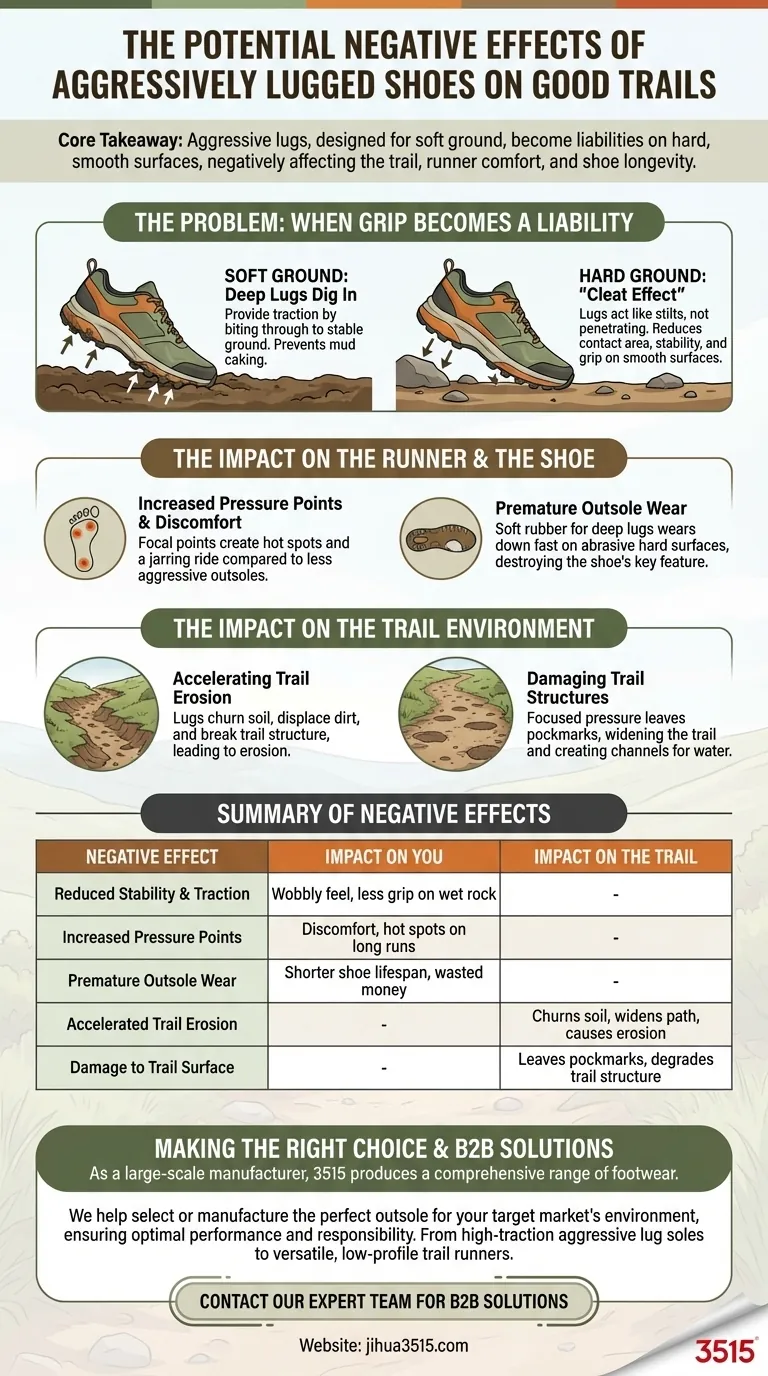
Now, let's dig into why. Those deep, widely spaced lugs are all about penetrating soft ground to find traction. On hard-packed dirt or rock, they can't dig in, they act like tiny stilts. This reduces the contact area, which can make things feel less stable and can actually decrease grip on smooth, wet rock slabs, where you want more rubber touching the surface.
Let's talk about how this affects the runner. Each lug creates a pressure point under your foot, leading to discomfort or hot spots on long runs. You'll definitely notice this in contrast to a less aggressive outsole that disperses pressure across the foot. And those tall lugs just feel awkward on firm ground; it's going to slow you down. The ride is going to feel less smooth and efficient.
Now, about the trail. That reference said aggressively lugged shoes shred the trail into pieces, leaving holes in muddy areas. This is true! And those lugs churn up the soil, much like a tiller. Over time, this displaces dirt and widens the trail, especially when things are wet. This is important to note and addresses my user's concern about being an environmentally responsible runner.
Finally, let's address some trade-offs. The soft, sticky rubber used in aggressive lugs wears down super-quickly on those hard surfaces. You're basically destroying the shoe's key feature by using it incorrectly! And even though "aggressive" sounds better, it's not universally good. An aggressive shoe can be less safe on certain surfaces like slick rock.
So, here's some actionable advice. If you're running mostly in mud, soft or off-trail terrain, definitely use those aggressively lugged shoes. If your focus is hard-packed dirt, rock, or mixed trails, choose shoes with shorter lugs. If you're doing a door-to-trail run with pavement, it's not the shoe for you, go with something less aggressive. Remember, choosing the right outsole isn't just about performance; it's about comfort, durability, and respecting the trails you run on. To be direct, using aggressively lugged shoes on well-maintained or hard-packed trails can actively damage the trail surface, create an unstable and uncomfortable experience for you as the runner, and cause premature wear on the shoes themselves. The very features that provide grip in mud become a liability on firm ground.
The core issue is a mismatch of tool and task. Aggressive lugs are designed to penetrate soft surfaces for traction; on hard trails, they cannot dig in, leading to a cascade of negative effects on the trail, your body, and your gear.
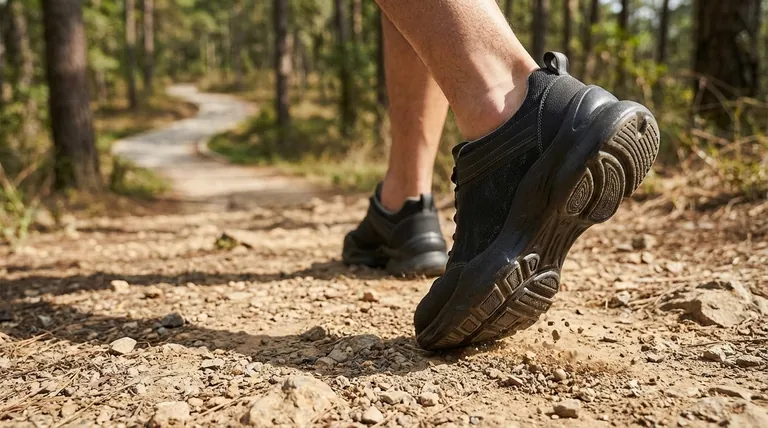
The Problem: When Grip Becomes a Liability
Trail shoes are specialized equipment. An aggressive shoe with deep, widely-spaced lugs is a tool designed specifically for mud, deep loam, snow, or loose, off-trail terrain. Using it outside of that context creates unintended consequences.
Understanding Aggressive Lug Design
The goal of a deep lug is to act like a spike, biting through a soft or loose top layer to find stable ground underneath. The wide spacing is crucial to prevent mud and debris from caking and compromising this grip.
The "Cleat Effect" on Hard Ground
On a hard-packed trail or rock slab, these deep lugs cannot penetrate the surface. Instead, they act like tiny, individual stilts under your foot. This dramatically reduces the amount of rubber in contact with the ground at any given moment.
Reduced Stability and Traction
This smaller contact area can make the shoe feel unstable and wobbly. Paradoxically, it can also lead to less traction on smooth, wet surfaces like rock, where a larger, flatter patch of sticky rubber would provide a much better grip.
The Impact on the Runner and the Shoe
Beyond a loss of traction, the mismatch between the shoe and the terrain directly affects your comfort and the lifespan of your gear.
Increased Pressure Points
Each lug becomes a focal point for pressure under your foot. Over miles on a hard surface, this can lead to discomfort, hot spots, and a generally jarring ride compared to the even pressure distribution of a less aggressive outsole.
Premature Outsole Wear
The rubber compounds used for deep, aggressive lugs are often softer to provide better grip on obstacles. When used on hard, abrasive surfaces like packed dirt or rock, these lugs wear down exceptionally fast, destroying the shoe's primary feature.
The Impact on the Trail Environment
Your shoe choice has a direct and measurable effect on the trails you use. This is where the responsibility of the trail user comes into sharp focus.
Accelerating Trail Erosion
As noted, aggressively lugged shoes can shred a trail. On softer sections of an otherwise good path, or after rainfall, the lugs churn the soil. This action displaces dirt, breaks up the trail's structure, and contributes directly to erosion.
Damaging Trail Structures
The focused pressure from deep lugs can leave lasting pockmarks in damp soil. Over time, as countless runners pass, this micro-damage accumulates, widening the trail, creating channels for water, and degrading the very path we seek to enjoy.
Making the Right Choice for Your Goal
Selecting the right shoe is about aligning your equipment with your most common running environment.
- If your primary focus is muddy, soft, or truly rugged off-trail conditions: An aggressively lugged shoe is the correct tool, providing the deep-biting traction necessary for safety and performance.
- If your primary focus is hard-packed singletrack, rocky terrain, or groomed park trails: A shoe with shorter (3-5mm), more numerous lugs will provide better comfort, durability, and more reliable traction.
- If your primary focus is a mix of road and non-technical trail: A "hybrid" shoe with a very low-profile tread pattern is the ideal choice to avoid rapid wear and ensure a smooth ride.
Choosing the right outsole is a decision that enhances your comfort, protects your investment, and preserves the trails for everyone.
Summary Table:
| Negative Effect | Impact on You | Impact on the Trail |
|---|---|---|
| Reduced Stability & Traction | Wobbly feel, less grip on wet rock | - |
| Increased Pressure Points | Discomfort, hot spots on long runs | - |
| Premature Outsole Wear | Shorter shoe lifespan, wasted money | - |
| Accelerated Trail Erosion | - | Churns soil, widens path, causes erosion |
| Damage to Trail Surface | - | Leaves pockmarks, degrades trail structure |
Need the right shoe for your specific terrain?
As a large-scale manufacturer, 3515 produces a comprehensive range of footwear for distributors, brand owners, and bulk clients. Our production capabilities encompass all types of shoes and boots, from high-traction aggressive lug soles for muddy conditions to versatile, low-profile trail runners for hard-packed paths.
We can help you select or manufacture the perfect outsole to match your target market's running environment, ensuring optimal performance, comfort, and environmental responsibility.
Contact our expert team today to discuss your footwear needs and get a quote.
Visual Guide
Related Products
- Durable Canvas Work Shoes with Rubber Lug Sole | Wholesale Manufacturer
- Wholesale Durable Camouflage Canvas Shoes with High-Traction Cleated Rubber Sole
- Wholesale Durable Camo Canvas Shoes with High-Traction Rubber Soles
- Wholesale Lightweight Tactical Boots Custom Manufacturer for Desert & Combat Use
- High-Traction Suede Tactical Boots Wholesale & Custom Manufacturing
People Also Ask
- What are the properties of canvas as a shoe material? A Guide to Lightweight Comfort & Style
- Why is the selection of high-strength fabric materials necessary in the production of canvas shoes and training shoes?
- What types of jobs are canvas work boots suitable for? Ideal for Light-Duty, High-Mobility Roles
- Can canvas shoes be worn in rainy conditions? The Truth About Water Resistance
- What are the functional advantages of choosing rubber soles over leather soles for work boots? Superior Safety & Durability











