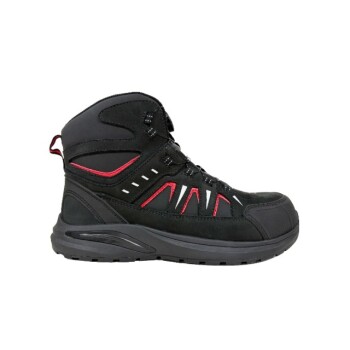
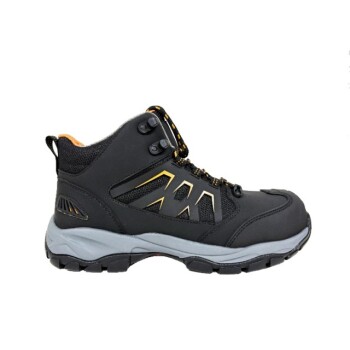
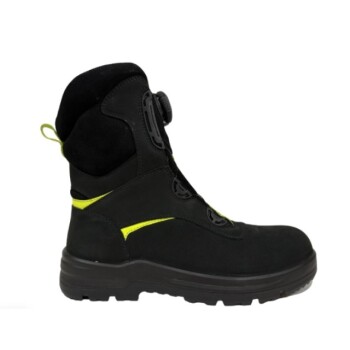
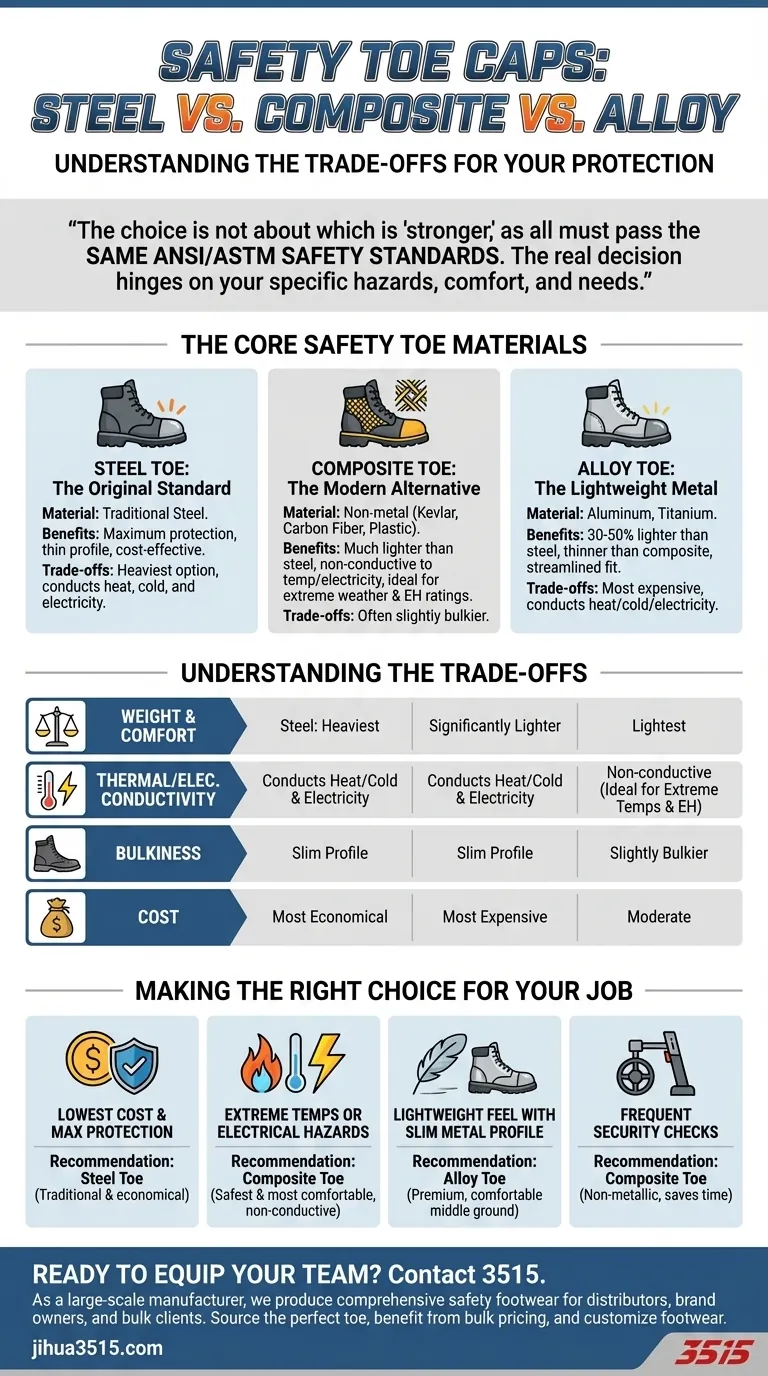
The primary types of safety toe caps are Steel, Composite, and Alloy. Each material is engineered to meet standardized safety requirements for impact and compression, but they achieve this protection with different properties, benefits, and trade-offs.
The choice between safety toe materials is not about which is "stronger," as all must pass the same safety standards. The real decision hinges on the specific hazards of your environment, your need for comfort, and factors like weight and conductivity.
Understanding the Role of a Safety Toe Cap
A safety toe cap is a crucial component of protective footwear. It is a reinforced shell integrated into the toe box of a boot or shoe.
Its sole purpose is to protect the wearer's toes from injury due to falling objects (impact resistance) or heavy rolling objects (compression resistance).
The Core Safety Toe Materials
While steel has been the traditional standard, modern material science has introduced lighter and non-metallic alternatives.
Steel Toes: The Original Standard
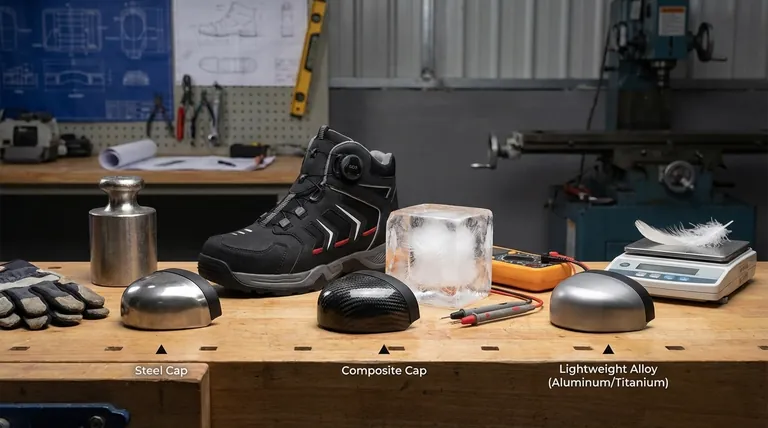
Steel is the original material for safety toes and remains a popular, cost-effective choice. It offers maximum protection in a thin profile.
Because of its strength, a steel toe cap can be made with less material, resulting in a less bulky boot. However, steel is the heaviest option and readily conducts both heat and cold.
Composite Toes: The Modern Alternative
Composite toes are made from non-metal materials like Kevlar, carbon fiber, fiberglass, or plastic. They are a significant innovation in safety footwear.
Their key advantage is being much lighter than steel, and they do not conduct electricity or temperature, making them ideal for extreme weather and for electricians. To meet the same safety standards as steel, they are often slightly bulkier.
Alloy Toes: The Lightweight Metal
Alloy toes offer a middle ground between steel and composite. They are typically made from lightweight materials like aluminum or titanium.
These caps provide the impact and compression resistance of steel but are 30-50% lighter. They are thinner than composite toes, offering a more streamlined fit, but they are often the most expensive option.
Understanding the Trade-offs
Choosing the right material requires comparing their key attributes against your daily work requirements.
Protection Level
This is a critical point: all safety toe caps must meet the same ANSI/ASTM safety standards for impact and compression. A composite toe that passes the standard provides the same rated protection as a steel toe that passes the same standard. The material choice does not compromise on safety compliance.
Weight and Comfort
Weight is a major factor in all-day comfort and fatigue. Steel is the heaviest, alloy is significantly lighter, and composite is generally the lightest of all.
Environmental Factors
If you work in extreme cold or heat, the thermal conductivity of a steel toe can be a significant source of discomfort. Composite materials do not conduct temperature, offering superior comfort in these environments.
Similarly, composite toes are essential for roles requiring an Electrical Hazard (EH) rating, as they do not conduct electricity.
Security and Metal Detectors
For professionals who frequently pass through metal detectors, such as in airports, government buildings, or secure facilities, composite toes are the clear choice. They eliminate the hassle of removing footwear for security screenings.
Making the Right Choice for Your Job
Your specific work environment and priorities should guide your decision.
- If your primary focus is maximum protection at the lowest cost: Steel toe is the traditional and most economical choice.
- If you work in extreme temperatures or around electrical hazards: Composite toe is the safest and most comfortable option.
- If your goal is a lightweight feel with the slim profile of metal: Alloy toe provides a premium, comfortable middle ground.
- If you frequently pass through metal detectors: Composite toe will save you significant time and hassle.
Ultimately, the best safety toe is the one that meets the specific demands of your job without compromising your comfort or safety.
Summary Table:
| Feature | Steel Toe | Composite Toe | Alloy Toe |
|---|---|---|---|
| Primary Material | Steel | Kevlar, Carbon Fiber, Plastic | Aluminum, Titanium |
| Weight | Heaviest | Lightest | Lighter than Steel |
| Thermal/Elec. Conductivity | Conducts heat/cold & electricity | Non-conductive | Conducts heat/cold & electricity |
| Ideal For | Cost-effective, general protection | Extreme temps, electrical hazards, metal detectors | Lightweight metal, slim profile |
| Key Consideration | Most economical | Best for EH-rated environments & security checks | Premium, lightweight metal option |
Ready to Equip Your Team with the Right Safety Footwear?
As a large-scale manufacturer, 3515 produces a comprehensive range of safety footwear for distributors, brand owners, and bulk clients. Our production capabilities encompass all types of safety shoes and boots, ensuring you get the precise protection your workforce needs.
We can help you:
- Source the perfect safety toe for your specific industry and hazards.
- Benefit from bulk pricing and reliable, large-volume production.
- Customize footwear to meet your brand's unique specifications.
Let's discuss your safety footwear requirements. Contact our expert team today for a consultation and quote!
Visual Guide
Related Products
- Advanced KPU Athletic Safety Shoe with Steel Toe Cap Anti-Slip Rotary Lacing System
- Wholesale Safety Footwear Manufacturer for Bulk & Custom OEM Orders
- Wholesale Durable Breathable Safety Boots Custom OEM Manufacturer
- Puncture-Resistant Velcro Safety Boots for Wholesale & Custom Manufacturing
- Wholesale Leather Safety Boots with Customizable Protective Toe
People Also Ask
- What are the key differences between steel toe and composite toe caps? Choose the Right Safety for Your Job
- What impact do steel toe caps have on toe skin health? Prevent Friction and Pressure in Your Safety Shoes
- What are the primary protective functions of safety shoes with steel toes in the automotive repair industry?
- What type of safety shoe is recommended for workers exposed to heavy machinery? Steel Toe Boots for Ultimate Protection
- How does defining specific friction interface models in FEA assist in predicting safety shoe toe cap failure modes?