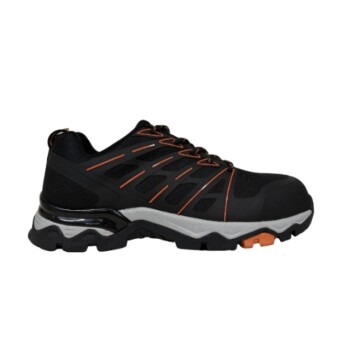
Perceived value serves as the critical bridge connecting product design to a customer's decision to buy again. In the context of Safety Shoes, this value is determined by how well the product balances core protection, price sensitivity, and durability within its specific industrial lifecycle.
Enhancing perceived value is the most effective driver of brand loyalty for industrial protective equipment. By optimizing this value, manufacturers secure stable long-term orders and significantly reduce the costs associated with acquiring new customers.
The Mechanics of Value in Industrial Gear
The Role of Functionality
Unlike consumer fashion, Safety Shoes are classified as functional industrial protective equipment.
Consequently, the consumer's evaluation is not based on aesthetics but on strict performance metrics. The perceived value is derived directly from the equipment's ability to perform its protective duty effectively.
The Lifecycle Connection
Safety Shoes have specific, finite lifecycles based on usage and wear.
Consumers evaluate the value of the product based on its performance throughout this entire lifecycle. A shoe that maintains its protective integrity until the end of its expected life generates higher perceived value than one that fails prematurely.
The Three Pillars of Evaluation
Core Protective Performance
The non-negotiable baseline for perceived value is safety.
If the shoe does not offer the requisite protection for the specific industrial environment, perceived value collapses regardless of other factors.
Price Sensitivity
Industrial buyers are often purchasing in bulk or on a strict budget.
Consumers weigh the cost of the shoe against its expected lifespan and protective capabilities. A higher price is only accepted if the perceived protective value or durability justifies the expense.
Durability
Durability acts as a multiplier for perceived value.
Because these are functional items, a longer lifespan translates directly to better value for the money. High durability reinforces the perception that the product is a wise investment.
The Business Impact of High Perceived Value
Strengthening Brand Loyalty
When a manufacturer successfully enhances perceived value, it creates a psychological lock-in with the user.
Satisfied customers who trust the balance of protection and price are significantly more likely to remain loyal to the brand.
Operational Stability and Cost Reduction
High perceived value leads to stable long-term orders.
This stability creates a virtuous cycle where manufacturers can rely on repeat business rather than constantly chasing new leads. This directly results in reduced marketing expenditures, as retaining an existing customer is far more cost-effective than acquiring a new one.
Understanding the Trade-offs
The Balance of Design
It is a common pitfall to maximize one pillar of value at the expense of others.
Increasing durability often increases production costs, which raises the retail price. If the price rises beyond the customer's sensitivity threshold, the perceived value may drop even if the product is technically superior.
The Risk of Over-Engineering
Focusing solely on advanced sustainable design features without addressing core protection can alienate users.
If the "sustainable" aspect does not translate into tangible durability or price benefits, the industrial consumer may view it as an unnecessary cost rather than a value-add.
Strategic Implications for Manufacturers
To maximize repeat purchases, you must align your design strategy with the specific priorities of the industrial consumer.
- If your primary focus is Market Stability: Prioritize consistency in durability and protection to secure long-term orders and build brand loyalty.
- If your primary focus is Cost Efficiency: Focus on enhancing perceived value to reduce the reliance on aggressive marketing campaigns to attract new buyers.
Success in this sector relies on delivering a product that justifies its cost through undeniable performance and longevity.
Summary Table:
| Key Value Pillar | Impact on Consumer Behavior | Strategic Manufacturer Benefit |
|---|---|---|
| Core Protection | Establishes baseline trust and safety compliance | Reduces product liability and returns |
| Price Sensitivity | Determines initial purchase and bulk order feasibility | Increases market penetration and volume |
| Durability | Acts as a value multiplier for long-term investment | Enhances brand reputation and lifecycle value |
| Sustainable Design | Aligns with modern procurement requirements | Differentiates brand in competitive tenders |
Elevate Your Fleet with High-Value Industrial Footwear
At 3515, we understand that for distributors and brand owners, the true value of a safety shoe lies in its ability to deliver consistent protection and long-term durability. As a large-scale manufacturer with comprehensive production capabilities, we specialize in creating footwear that balances performance with cost-efficiency to ensure your customers return time and again.
Whether you need our flagship Safety Shoes, tactical boots, or outdoor and formal options, our bulk manufacturing expertise is designed to strengthen your brand loyalty and reduce your acquisition costs.
Ready to secure stable long-term orders? Contact us today to discuss your specific footwear requirements and let us show you the value we bring to every pair.
References
- Muhammad Amfahtori Wijarnoko, Joan Santoso. Factors That Influence Repurchase Intention: A Systematic Literature Review. DOI: 10.34148/teknika.v12i3.693
This article is also based on technical information from 3515 Knowledge Base .
Related Products
- Premium Suede Sport Safety Shoes for Wholesale & Bulk Orders
- Premium Lightweight Safety Shoes for Wholesale & Bulk Orders
- Wholesale Anti-Smash & Puncture-Proof Safety Shoes Custom Manufacturing for Brands
- Premium KPU Injection Athletic Style Safety Shoes
- Premium Safety Shoes with Rotating Buckle Safety Sneakers
People Also Ask
- What industries have specific OSHA footwear requirements? Ensure Compliance & Protect Your Workforce
- What are the primary functions of professional safety shoes? Maximize Safety in Water Supply Confined Spaces
- What role do specialized safety shoes play in preventing falls? Engineering Stability in Industrial Environments
- What are the main safety features of S1-S5 shoes? The 3 Essential Protections Explained
- How do the 3R principles influence green footwear design? Master Sustainable Safety Shoe Manufacturing