
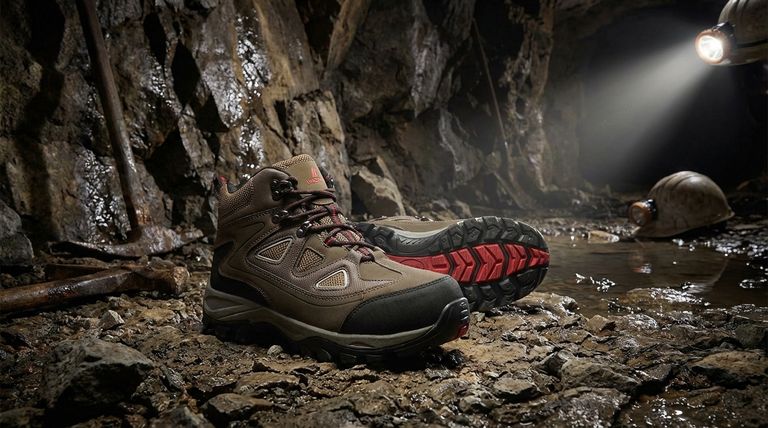
The primary safety features of mining boots are a specialized system engineered to protect against severe industrial hazards. Key components include reinforced safety toes for impact, puncture-resistant soles for sharp debris, electrical hazard protection against shock, and metatarsal guards to shield the top of the foot.
A true mining boot is more than just a heavy-duty work boot; it is a system of interlocking safety components. Each feature is deliberately designed to mitigate the specific, and often life-threatening, risks inherent to mining operations, from crushing impacts to electrical currents.
Deconstructing the Core Safety Features
To understand a mining boot, you must understand the function of each protective layer. These features work in concert to provide 360-degree protection in unpredictable environments.
Protection from Impact and Compression
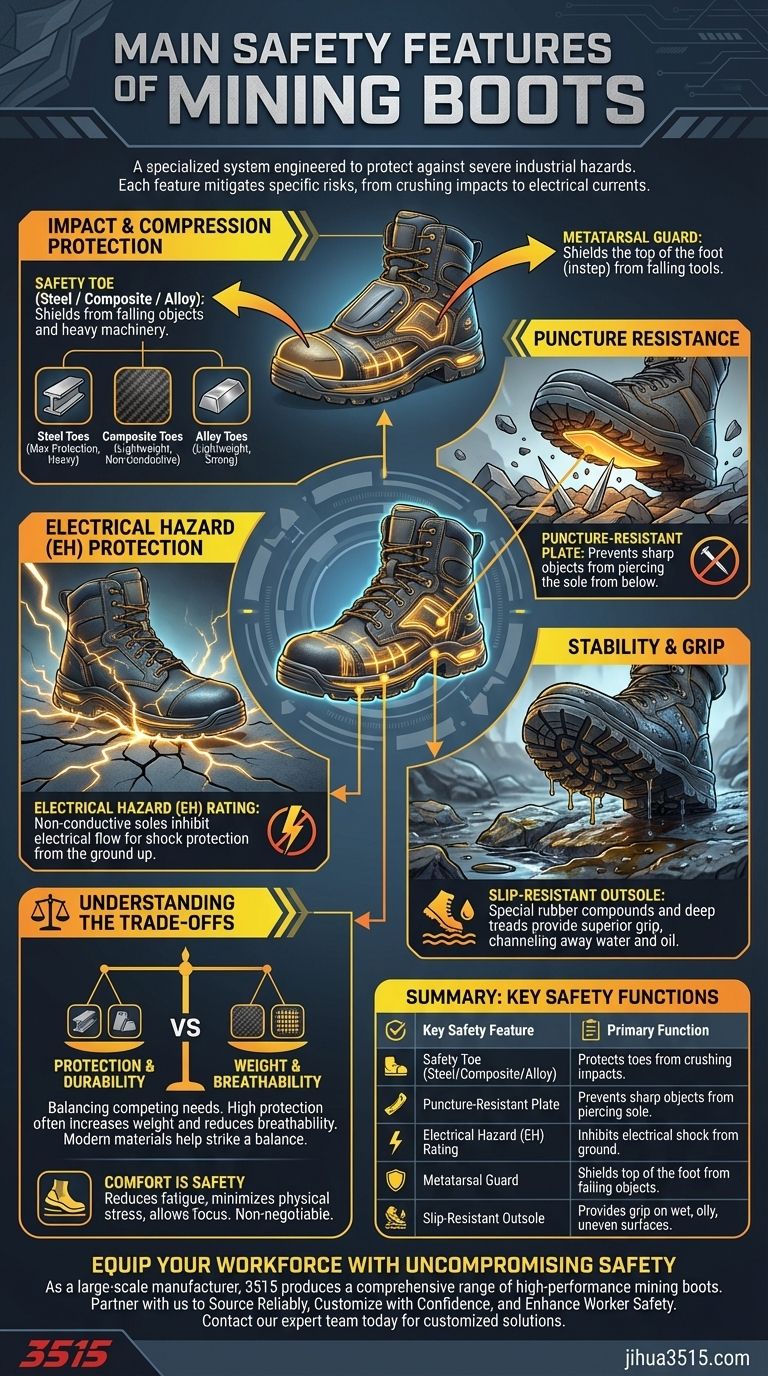
The most recognized feature is the safety toe, which shields the foot from falling objects and heavy machinery.
There are three primary types of safety toes:
- Steel Toes: These are the traditional standard, offering maximum protection from impact and compression. Their main drawback is their heavy weight.
- Composite Toes: Made from non-metallic materials like carbon fiber or Kevlar, these are lighter than steel and do not conduct electricity, making them ideal for electrically hazardous environments.
- Alloy Toes: Constructed from materials like aluminum or titanium, these offer the same safety standards as steel but in a significantly lighter package.
Guarding Against Punctures
Mines are often littered with sharp debris, from scrap metal to rock shards.
A puncture-resistant plate is embedded in the midsole of the boot, protecting the sole of the foot from being pierced by sharp objects from below.
Mitigating Electrical Hazards (EH)
Many mining operations involve high-voltage equipment, creating a risk of electrocution.
Boots with an Electrical Hazard (EH) rating are constructed with non-conductive soles and heels. This design protects the wearer by inhibiting the flow of electricity from the ground up through the foot.
Shielding the Top of the Foot
While a safety toe protects the front, the delicate metatarsal bones on top of the foot remain vulnerable.
A metatarsal guard is an essential feature that adds a layer of protection over the instep, defending against impacts from falling tools or materials.
Ensuring Stability and Grip
The ground in a mine can be uneven, wet, and slippery.
Slip-resistant outsoles are made from special rubber compounds and feature deep tread patterns designed to channel away water and oil, providing a firm grip on treacherous surfaces.
Understanding the Trade-offs
Selecting the right boot requires balancing competing needs. No single feature exists in isolation, and every choice involves a trade-off between protection, comfort, and weight.
Protection vs. Weight
The highest levels of protection often come from the heaviest materials, like steel toes and thick rubber soles.
While effective, this added weight can cause significant fatigue over a long shift. Lighter composite and alloy materials help reduce this burden but must still meet the required safety standards for your specific job site.
Durability vs. Breathability
Waterproofing is critical for keeping feet dry in damp mining environments, which is essential for both comfort and health.
However, a fully waterproof boot can sometimes trap sweat and limit breathability. Modern boots use advanced membranes and materials like leather or treated mesh to strike a balance between keeping external moisture out and allowing internal vapor to escape.
Why Comfort is a Non-Negotiable Safety Feature
Comfort is not a luxury; it is a critical component of safety. An uncomfortable boot is a distraction that can lead to a deadly mistake.
Features like shock-absorbing soles, cushioned insoles, and proper ankle support do more than just feel good. They reduce physical stress on the body, minimize fatigue, and allow a worker to remain focused and alert throughout their shift.
Making the Right Choice for Your Environment
Your specific work conditions should dictate the features you prioritize. Analyze your environment to select the boot that provides the most relevant protection.
- If your primary hazard is falling objects: Prioritize a boot with a certified safety toe and a robust metatarsal guard.
- If you work around live electrical circuits: Ensure your boot has a clearly stated Electrical Hazard (EH) rating.
- If you navigate terrain with sharp debris: A puncture-resistant sole is absolutely non-negotiable to prevent injuries from below.
- If you work long shifts on hard, uneven surfaces: Focus on comfort features like superior shock absorption and ankle support to minimize fatigue.
Choosing the right mining boot is a direct investment in your personal safety, ensuring you are protected from every angle on the job.
Summary Table:
| Key Safety Feature | Primary Function |
|---|---|
| Safety Toe (Steel/Composite/Alloy) | Protects toes from crushing impacts and compression. |
| Puncture-Resistant Plate | Prevents sharp objects from piercing the sole of the foot. |
| Electrical Hazard (EH) Rating | Inhibits electrical current flow for protection against shock. |
| Metatarsal Guard | Shields the top of the foot from falling objects. |
| Slip-Resistant Outsole | Provides superior grip on wet, oily, and uneven surfaces. |
Equip Your Workforce with Uncompromising Safety
As a large-scale manufacturer, 3515 produces a comprehensive range of high-performance mining boots for distributors, brand owners, and bulk clients. Our production capabilities encompass all types of safety footwear, ensuring every pair meets the highest standards for impact protection, puncture resistance, and electrical safety.
Partner with us to:
- Source Reliably: Access a vast, consistent supply of certified safety footwear.
- Customize with Confidence: Develop bespoke boots tailored to your specific mining hazards and brand requirements.
- Enhance Worker Safety: Provide your teams with durable, comfortable boots that reduce fatigue and prevent injuries.
Ready to enhance your safety equipment lineup? Contact our expert team today to discuss your needs and receive a customized solution.
Visual Guide
Related Products
- Durable Leather Work Boots for Wholesale & Custom Manufacturing
- Durable Leather Work Boots for Wholesale & Custom OEM Manufacturing
- Durable Leather Work Boots Wholesale Manufacturer & Custom Factory
- Premium Waterproof High-Cut Industrial Safety Boots for Wholesale and Bulk Orders
- Durable Steel Toe Safety Boots Wholesale & Custom Manufacturing
People Also Ask
- What is the difference between full-grain and top-grain leather? Premium Material Guide for Boot Manufacturers
- What are the common workplace hazards that can be mitigated with the right work boots? Protect Your Workforce
- What are the common foot issues workers face due to uncomfortable work boots? Prevent Pain & Deformities
- What are the advantages of leather versus synthetic work boots? A Guide to Choosing the Right Material
- What are the key components of modern work boots? Engineered for Ultimate Durability and Comfort


















